Baseball

Are you tired of reading these pieces from me yet? Because I’m awfully sick of writing them. In the past two years I’ve addressed the whitewashing of sexual assault, mansplaining (which for some reason has Sam as the author?? Very meta), and gender-based discrimination and the wage gap. Each of these situations were bad in their own way by highlighting persistent misogyny and distinct cultural issues that we still have in the country (and world), but this Brandon Taubman story really ticks all the boxes—workplace discrimination and undermining women’s basic competency at doing their jobs, the policy of valuing success over human decency, and minimizing the scourge of domestic violence. How could one asshole manage to do so much? Let’s examine:

The Art of the Non-Apology

See, that’s because it’s not just one asshole. Yes, this brouhaha was initially caused by the actions of one asshole, but it was a group of equally obnoxious ones that showed how odious this episode really is. You’ve got Taubman screaming weird, uncomfortable nonsense directly at women, clearly meaning to intimidate them or make them feel awkward. That’s bad enough on its own, but for the Astros to declare the story was “misleading and completely irresponsible” is, well, misleading and completely irresponsible. Dismissing the reporter out of hand and acting like Taubman was giving interviews when in fact he was spouting off because he wanted to is idiotic in the internet age when others can so quickly corroborate, but the subtext here is also, women are emotional, they’re too sensitive, her account isn’t trustworthy.

Once it finally became clear to these morons that doubling down on lies wasn’t going to work, they went with the phony contrition in the perfect non-apology: owner Jim Crane talked about money and Taubman gave the “I’m sorry you were offended” excuse. First of all, pointing to your wallet when you just hired and paid an abuser is not really a good look, and second of all, nowhere did Crane or Taubman acknowledge that Stephanie Apstein was accurate in her reporting (ya know, doing her job).

Apologizing to her for knocking her journalism might have made a little more sense. Especially since Taubman also used this opportunity to trot out the oldest and lamest excuse of them all: I’m a “loving and committed husband and father.” Listen, literally every male on this planet was birthed by a female of the species. Every single person here has a connection to a woman in the most primal of ways, so saying you’re a good guy because you know one doesn’t work. More importantly, even if you were an alien or had sprung fully formed from your father’s head like a fucking modern-day Athena, you should STILL respect women because THEY ARE PEOPLE THE SAME AS MEN ARE. This tired-ass excuse is just admitting, “I respect women because I’m putting my dick in one.” Try again, dumbshit.

At All Costs

Turning a blind eye to violence against women if it gives your team a chance to win is nothing unique to the Astros. They just really went all out in proclaiming it. Which is funny because Osuna blew the damn save so in addition to being boorish this Taubman is also just plain stupid. But we’ve seen it with Aroldis Chapman, we’ve seen it with Addison Russell, and those are just two that made headlines in these parts. It’s happened in the NFL and undoubtedly in every league more times than you can imagine. Hell, Bobby Hull is still celebrated here and he’s a monster.

And this latest situation won’t change that. Taubman and the Astros look like jerks but it’ll pass, people will forget, and front offices will continue to sign and pay men who abuse women because those men are talented athletes. If the Astros lose this series, or perhaps if Osuna himself really shits the bed, he himself will be out of a job, but there is no agreement among owners to shut these players out in the way that NFL owners blacklisted Colin Kaepernick. We know it can be done since we’ve seen them effectively freeze him out of the league, but until that dedication is turned against abusers, there will only be more stories like this, both in terms of people scratching their heads saying why is this abusive piece of shit on [fill in the blank team], and in terms of cowards like Taubman using the threat of superiority and control to intimidate women in moments when they don’t think anyone can stop them.

Same As It Ever Was

And that’s really the issue—that domestic violence is still explained away as a personal matter or a private issue, anything other than the devastating crime that it is. That’s why the Astros initially tried the smear campaign. Doing so twisted the issue of defending the indefensible to questioning whether a reporter was accurate. Accuracy is much less fraught than the former scenario and it takes the spotlight away from the fact that the team doesn’t really care if he kicked the shit out of his partner.

The worst irony of it all is the inability for these guys to admit they were wrong. Taubman was wrong for just being a douchebag, Crane was wrong for a non-apology, the organization as a whole was wrong for undermining a journalist, there’s plenty to go around. But facing domestic violence—when it’s literally happening to you—involves the harshest admission of being wrong. You have to look at yourself and everyone you know and say “I was wrong.” I was wrong about everything, I was wrong about who I thought this person was, I was wrong about what I thought my future would be, I was wrong about all the excuses I made, I was wrong about all of it. And now here I am.

The absolute inability of men in positions of power (we’ll go with sports and keep it focused here) to say that is part of why abuse is so common and so pervasive. If you can’t say you were wrong to defend this person, and you can’t say you were wrong to hire this person, then what’s going to make you say it was wrong that this abuser did what he did? It’s a culture of impunity, and unless it ever changes women will continue to be on the receiving end of that cruelty.

Photo credit: awfulannouncing.com


Baseball

It doesn’t fit for this front office to say they put on a show to justify making the choice they wanted to make the entire time anyway. Maybe they did, but while they don’t always get it right, I would be hard-pressed to ever accuse Theo Epstein’s regime of not being thorough. I don’t think there’s any move they’ve made where they were just tossing a football around the office, never even looked at a sheet or screen, and said, “Yeah sure whatever.”

So I don’t think the two interviews for David Ross were just for the sake of doing it because they gave Joe Espada two interviews. I don’t think they were just making it seem like they were doing their due diligence while they actually just got drunk with Ross and made fun of ESPN personalities (which probably did happen in addition, to be fair). My guess would be they put Ross through a pretty heavy ringer to be comfortable giving him the manager’s job.

Does the familiarity help? Sure, of course. But that goes both ways. The only thing I’m sure of with the Cubs’ manager search is they wanted a guy who will run the team in the same vision they have for it as they put it together. That doesn’t mean they’ll be calling down to the dugout during the game and telling Ross or whoever else they might have hired what to do. But when they put together this team this winter, whatever and however that’s going to be, anyone would have a clear idea of how they want the pieces moved on the board. Whether that vision is correct or not…well, that’s what a baseball season is for.

So yeah, they probably want their bullpen used more creatively than 7th- and 8th-inning guy, and then closer. Especially as it’s likely to have at least two guys–Alzolay and Chatwood–who can be used for multiple innings. They probably want that in close games, not just mop-up situations or when there’s no other option. They want a different environment for younger players, as this one kind of stalled out for some (assuming they can actually play). They probably don’t want Albert Almora leading off ever again. They want things to definitely be tighter than they were this year.

But for anyone to say, “Oh Ross will do this or that. Or he’ll bring this or that to the clubhouse…” We don’t have any idea. He doesn’t have any idea. Neither does Theo. We can guess and they might have a stronger inkling thanks to the interviews and their relationship with him, but no one knows.

Sure, he doesn’t have any experience. But he also spent his entire career as a backup catcher, which means he spent most of his career watching from the dugout, seeing how things play out. And if he thought he wanted to be a manager at any point, which he obviously did, it was probably in that context at some point long ago.

Yes, he has a relationship with some of the players, and all of the core. Maybe that means he holds them accountable better. Maybe it means he thinks he’s still their buddy. Maybe it means he knows exactly how to get through to them and immediately get on board and bring the rest of the team with them. We don’t know, and probably won’t until July.

Maybe he sets a harsher tone. He was a great clubhouse leader as a player. I mean, everyone says so. Except that all of those things that made him so are things we never saw. We take their word for it. The volume of it makes it probably true, but how does that play as a boss? He acted as something of a conduit from the manager to the players in both Boston and Chicago, so he’s not unfamiliar. But I’m not going to take him yelling at Anthony Rizzo one time in spring training as a basis for how he’ll run an entire team for an entire season and more.

But the tangible stuff? We don’t have any idea. Can he get players to change their approach at times? A few hitting coaches have failed at it now, so why will Ross be any different? He could. He might not. We don’t know. Can Ross make Quintana discover a new pitch or new way of delivering one of the ones he has to find more success? Maybe? Who knows?

Ross will probably look like a good manager if he gets a starter to slot either right below or right in the middle of Kyle Hendricks and Yu Darvish and definitely above Q and Jon Lester, along with two more bullpen arms. I bet he looks pretty smart then. Oh, and Ian Happ hits out of center and Nico Hoerner is ready to take over at second by no later than Memorial Day.

All we can say for sure is that in those interviews, the outline or vision Ross had for how this team should look and be deployed lined up with what the front office sees. But we don’t know what that vision is, they’re not going to tell us. We’ll find out during the season.

My fear is that Ross’s name and esteem amongst Cubs fans and media is part of the appeal, in that he’ll buy some breathing room and time for the rest of the organization in case they have plans they know we won’t like. That’s probably some of the appeal, but not all.

But in the end, we don’t know. We’ll fill this vacuum of nothing with our thoughts and opinions and most of all our guesses because there’s nothing else to do and you can’t leave a vacuum a vacuum, duh. But you don’t know. I don’t know. They don’t know.

And by the time we do know, it could be too late. Or it could be perfect. It could be anything. That can be exciting. That can be daunting. Again, anything.

Baseball

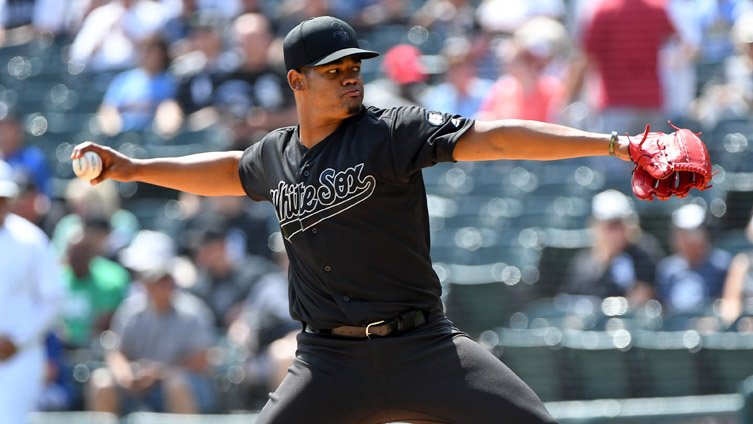
With the position players done, we move on to the starting pitching staff where we begin with what might be the biggest success story in White Sox (pitching) history. More on this after the stats jump. To The K-Mobile!


2019 Stats

Games Started: 29

14 Wins 9 Losses

3.41 ERA 1.064 WHIP

228 Ks 56 BB 24 HR

11.62 K/9 3.43 FIP

5.1 WAR


Tell Me A Story: In 2018, Lucas Giolito was the worst starter in all of Major League Baseball. That’s not hyperbole at all, it’s a statistical fact according to Fangraphs. Out of  57 pitchers who met innings pitched requirements, Giolito ranked 57th. Having personally watched a few of his starts live last season, it was a ranking well earned.

With that in mind, expectations for this season were not very high. When he started the first five games of the season with a 5.32 ERA, most were ready to write him off as not a viable core piece for The Future™ being built by Rick Hahn.

Then he went and ripped off nine-straight starts where he didn’t give up more than three runs and struck out at least seven batters. Even more impressive was the improvement of his control, only walking 16 batters in those nine starts. His changeup was electric, with the kind of downward motion that Johan Santana used to beguile Sox hitters with. His fastball was located in the upper reaches of the zone, just at the spot where a hitter can’t possibly catch up to it but it still looks like it could be a strike.

He had one burp (unfortunately) against the Cubs where he gave up six, but he rolled into the All-Star break with an 11-3 record and a 3.15 ERA. This was easily good enough for him to be selected to his first ever All Star game (along with the guy he credits for some of his improvement, James McCann), and ranked him as the 2nd best pitcher in the AL after future White Sox signee (I hope) Gerrit Cole.

After the All Star break ended, Giolito ran into some trouble. From the middle of July till the end of August his walks-per-9 spiked from around 1.55 to almost 2.50. The changeup that was dancing so well at the end of July was just spinning in the middle of the zone and getting pummeled by opposing hitters. Most pitchers that like to live at the top of the zone are susceptible to the long ball, but as long as their out pitch moves out of the zone it’s a line they can walk. That wasn’t happening in Gio’s case, and the results were showing.

As is his way, Giolito dove into the Sox video archives of his starts and dissected his mechanics to find out what his issues were with the release point in his change that were causing it to get slaughtered. Whatever he found, it worked. From his start against the A’s on August 11th (where he gave up two in six innings and took the L while striking out 13) to when the Sox pulled the plug on him in the middle of September with a lat strain Giolito had a 3.33 ERA in seven starts while striking out 70 and only walking 10.

From the 57th starter in the league last season to the 10th overall this year, Giolito is deserving of a few Cy Young votes, and is one of the three players nominated for Comeback Player of the Year Award. He’s also become the surprise gem in the Sox pitching rotation of The Future™. The most impressive thing about Gio’s stats this year (other than the BB and K rates) is the fact that very little of his success is due to batted-ball luck. His FIP is 3.43, which is only .02 higher then his actual ERA, and his BABIP sits at a cool .275, where in comparison Gerrit Cole’s is at .273.

Credit to Giolito for not imploding in on himself like a dwarf star and becoming the latest in a long list of high hype pitchers that never live up to expectations. After the disaster that the 2018 season was for him, his hard work in the off-season should be the boilerplate for Sox pitchers, and something that Reynaldo Lopez should look to emulate this winter.

Contract: Giolito earned $573,000 in 2019 and is under team control in 2020. After that the arbitration years kick in and things will get exponentially more expensive. Look for Rick Hahn to attempt to buy him out of his arbitration years like the Sox did with Tim Anderson and Eloy with a 5-6 year extension.

Welcome Back Or Boot In The Ass: This isn’t even a consideration, as Giolito has become the ace that the Sox have been looking to develop since before Chris Sale suited up. As a certified member of The Future™, Giolito will be here for the long haul and should become the Obi-Wan Kenobi of the Sox starting rotation from here on out, teaching the young Padawans his secret Jedi pitching ways. Sorry, just watched the new Star Wars trailer for the 300th time and am still buzzing.

Baseball

For most of the season, the story or narrative around Jason Heyward was that he’d finally come good with the bat. There seemed to be more power, there were better ABs, so much so that he got himself elevated to the leadoff spot. Where he was a crime against nature. And as the season went along, and we came to realize the flubber contained within the baseball, Heyward’s season didn’t seem to be so much a revival as it was just riding along with the tide. And in the end, it was pretty much the same completely average offensive season 2018 was. Except it didn’t come with stellar defense, though that really wasn’t his fault. Let’s take a trip, take a little trip…

2019 Stats

147 games, 598 PAs

.251/.343/.429

21 HR  78 RBI

11.5 BB%  18.7 K%

101 wRC+  .343 wOBA  .772 OPS

-1.7 Defensive Runs Saved  1.9 WAR

Tell Me A Story: On the plus side, Heyward’s 21 homers are by far the most he’s hit as a Cub. His on-base was the best of his Cubs career. His slugging was, again, the highest of his career on the Northside. So that all sounds good. The problem is that EVERYONE was hitting more homers than they had in years, which raised the slugging percentage of just about anyone. So when you look at league averaging stats like wRC+ or OPS+, Heyward’s doesn’t stand out in the least.

Still, there are some caveats. Heyward’s August was simply woeful (58 wRC+), but that’s where he was installed in the leadoff spot. Now, I’m not sure why batting somewhere else should make any difference, because the idea is still the same. Have a good AB, try to get on base, and try to hit the ball hard if you can. But it obviously does, and because it’s become such a Bermuda Triangle area for the Cubs, there might even be a bigger mental block for anyone trying to take it on. We’ll just leave it as something weird just happens there. When batting 5th, 6th, or 7th, Heyward’s wRC+ was 162, 120, and 101.

Second, if only against righties, Heyward’s numbers look really good. .350 wOBA and a 115 wRC+. And seeing as how he had 112 PAs against lefties, you can certainly say he was trotted out against southpaws just far too often. You don’t want to admit Heyward is just a platoon player based on his paycheck, but we can see how the season played out. It’s what he is. Perhaps the next manager will see these, or more likely be shown these, and only keep Heyward in spots where he has success.

Heyward saw a big jump in his walks this year, but also a pretty big drop in his contact numbers. His contact-rates were still above league average, though. There was an uptick, and not a small one, in his swinging strikes. A small crawl up in that category in fastballs is worrying for a player who crossed the threshold into his 30s, because that doesn’t tend to get better as a player ages (what does though, really?). The bigger uptick is whiffs on sliders is also a warning sign, as it might suggest Heyward was starting to inch a little more into cheating on fastballs, or getting there. At least trying to get started earlier, which left him susceptible to pitches that look like a fastball until breaking down.

Perhaps the most worrying aspect of Heyward’s season is the drop in defense. But that almost all comes from his shift to center, which started even before the acquisition of Nicholas Castellanos, as Albert Almora‘s skeleton fell out and forced more people into right as Heyward moved to center so the Cubs could get any offense out of those spots. Heyward still grades out above average in right. He wasn’t a disaster in center, but he’s not a plus fielder there. Which is why some like me have argued against re-signing Castellanos, because the outfield defense would be so bad. We’ll see how the Cubs feel about it. Again, as he moves into his 30s, it’s not very likely that Heyward is going to get better in center, and probably not even in right field. But he can be a plus right fielder for a while yet, you’d think.

Contract: $21M in 2020, signed through 2023. Has opt-out.

Welcome Back Or Boot In The Ass: The Cubs don’t have much of a choice here obviously. Heyward is not going to opt-out, unless he’s the nicest guy in the world. Trading him isn’t really an option either, unless some team sees intangibles that only they can see and Heyward is moved to agree to such a move. And why would he? Also, his adult presence in the clubhouse probably shouldn’t be overlooked, as the Cubs don’t have a lot of vets who’ve been around long enough to be comfortable voicing anything.

So he’s going to be on the team, and that’s not a bad thing as long as he’s only asked to do what he does well. Which is play right field, hit in the back half of the order, and only against righties. That probably affects what the Cubs will do this offseason, as they’ll need to find someone(s) who can play right and center against left-handed pitchers (which might keep Happ around?). If they keep crowbarring Heyward in the lineup against lefties and/or in center, they’re going to have some if not all the same results.

As Heyward ages, he’s going to have to adjust to get to more fastballs somehow. Shorten or quicken his swing, which is hard to do at his age and something he’s already tried to do once. Being vulnerable against sliders is probably only going to be more of a feature in the coming years. It won’t wreck him yet, though, or it shouldn’t. Heyward is still a plus to have on the team if used properly.

Baseball

As the Cubs have searched for a manager, and my fears about the offseason in general grow thanks to having far too much time on my hands and struggling to escape the cynicism of my youth, one thing I’ve tried to reassure myself with is that it’s not really in Theo Epstein’s DNA to do something completely moronic. Something you’d see the Mets or Edmonton Oilers do. Sure, some moves haven’t worked out or not gone as well as hoped, but almost every one of them you could see the logic behind at the time. The math added up.

Except for his first draft pick here in Chicago. That might have been a complete and utter whiff. Seems to be a theme in Chicago sports these days.

2019 Stats

130 games, 363 PAs

.236/.271/.381

12 HR  41 RBI

4.4 BB%  17.1 K%

64 wRC+  .271 wOBA  .651 OPS

-1.1 Defensive Runs Saved  -0.7 WAR

Tell Me A Story: This season started much like 2018 did, with a lot of people contending–even screaming from the truly unhinged–that what Albert Almora Jr. really needed was just consistent playing time. That being jerked in and out of the lineup and never starting more than three days in a row, if that, was stunting his development. It ended just like 2018 did, where it’s pretty clear that there isn’t anything to develop.

There was only one stretch of the season where Almora looked like a Major Leaguer, and that was May with a 107 wRC+. That was almost entirely due to hitting six homers in the month, and seeing as how he managed six more in the other five months, one wouldn’t count on that to happen too often again, if ever at all.

This is where the “WE NEED CONTACT” Big Audio Dynamite tribute argument kind of falls flat for me, though it’s cherry-picking admittedly. Albert Almora makes plenty of contact. He doesn’t walk much, but he doesn’t strike out much either. The problem is almost all of that contact is soft, and most of it is on the ground. So where does that get you? A negative-WAR player’s what it gets you. But hey, if you think the answers to the Cubs problems are having more guys ground out to short more often, well you go as far as you can with that, Big Shooter.

To be fair to AA, his hard-contact rate in July and August was actually pretty good, and his ground-ball rate declined throughout the season. But that’s also when his playing time dried up, which he also earned, so it’s hard to tell if that’s progress or just a few spasmed ABs out of a shallowing collection of them. And I don’t think the Cubs are going to bother to find out anyway.

If Almora was taken in the first round due to his athleticism, and you’d never followed him before, you’d swear he suffered some sort of bad knee injury in the minors or something. He’s slow, and he doesn’t have natural power because he doesn’t really have that much bat-speed. Even his instincts, which somehow had him stumble into being a decent centerfielder, went away this year as he graded out negatively in the field. Which would lead one to ask what it is he does at all. And that would be a question no one has an answer for right now, other than really upgrade the hair in the clubhouse.

But he rescues dogs, so he’s a good guy.

Contract: Team Control, Arbitration eligible in 2021

Welcome Back Or Boot In The Ass: Well, he can’t be on the team next year. All he’s earned is a fifth-outfielder role and if the Cubs have any hope, however slim, that Almora can develop into anything he’s not going to do it with four ABs a week. What the Cubs probably need to do, because he has options left and they never actually let him do it before calling him up, is play full-time in AAA for a full season. Or most of it. Almora never hit in the minors before joining the 2016 team. He just had a glove and promise. Now he doesn’t seem to have either. He’ll get you nothing in a trade, and I doubt you could even make him a throw-in to another deal at this point. He costs nothing, so there’s not much harm in letting him get at least three or four months in Des Moines to play every day and see if he can’t discover something, while Happ and Heyward and possibly an acquisition figure out centerfield at Wrigley.

At 26 at the beginning of next season, you don’t want to say that there’s no hope for Almora. But also by 26 we should have seen something, anything, to suggest there’s anything to be excavated out of him. Have you? No, you haven’t. And he’s not going to get faster, which probably means the defense is going to struggle to be plus before too long. If that ship hasn’t sailed already.

Maybe a new manager can whisper something to him, and stop putting him in spots to fail like Maddon had a habit of doing (he’s leading off again, is he Joe? How does Binny’s pay you exactly?). But everything with Almora needs to be considered a longshot at this point. And before too long, it’ll probably be in another uniform.

Baseball

So here we are, at the end of the position players who had the majority of the impact on the 2019 White Sox team. What’s left is the detritus, the flotsam, the garbage in the Death Star trash chute. Some of these guys will have a job with the Sox next year, but a good chunk of them will not. This is going to be an abbreviated stats write up, as I don’t think 2,000 words on AJ Reed will do anything for anyone. So without further ado, here is…


The Rest


ADAM ENGEL

2019 Stats

.242/.304/.383

6 HR 26 RBI 26 R

0.8 WAR +2 DRS 

Tell Me A Story: With the miserable off-season Rick Hahn had in 2018 the Sox were left with no real plan for the outfield other than Eloy Jimenez in left. They let Avisail Garcia walk down to Tampa Bay to have a career year, but made up for it by signing Friend of Manny and Human Stick Figure Jon Jay to a one year deal. This left center field pretty much Adam Engel’s by default. At this point, Engel is a known quantity. He plays plus defense at a premium defensive position, and swings what appears to be a soggy pool noodle when he’s at the plate. He’s a prototypical 4th outfielder at best, but that’s very good to have on a team that has deigns on postseason play. The Sox did not, and thus Engel started 90 games this year. To his credit, he finished the season very strong at the plate, and bumped his average above the Mendoza Line.

Contract: $516,000 under team control until 2021, then 3 years arbitration eligible.

Welcome Back Or Boot In The Ass: Unless something really wacky happens, Engel will be back in a Sox uniform in 2020. He’s great as your 4th OF, or a late inning defensive replacement and won’t actively kill you at the plate.


RYAN GOINS

2019 Stats

.250/.333/.347

2 HR 10 RBI 13 R

0.2 WAR +1 DRS

Tell Me A Story: Ryan Goins was picked up off the prospect trash heap by the Sox in 2019 and intially sent to AAA as an extra body to fill out the Charlotte roster. He responded to the move by hitting .322 down there and playing above average D for the Knights. The Sox rewarded him with a callup in July when injuries began to hurt both the infield and outfield. He actually started out pretty hot, hitting .300 in his first month before falling back to earth and ending at .250 for the season. All in all not too shabby for a guy with the ability to play anywhere in the infield or outfield.

Contract: $975,000 in 2019, 3rd year of arbitration in 2020 estimated at $900,000 by MLBTR.

Welcome Back Or Boot In The Ass: A tough one here. At $900K the price is right for a utility infielder/outfielder. Most of it depends on what the Sox do with Leury Garcia. If they think the $4 million is too much for him and he walks, Goins most likely stays. If Garcia stays, Goins probably starts the season back in AAA while he waits for another opportunity.


DANIEL PALKA

2019 Stats (Don’t Look)

.107/.194/.179

2 HR 4 RBI 4 R

-1.3 WAR -4 DRS

Tell Me A Story: In 2018 it seemed like the Sox had found a diamond in the rough when he hit 27 home runs and slashed .240/.294/.778. Granted his splits were terrible against lefties and his defense was hilariously bad (-13 DRS in LF) but he was one of the few feel good stories the Sox had in 2018 and was probably the main reason the Sox didn’t actively pursue someone like Michael Brantley in the off-season. The shine came off almost immediately in 2019, as Palka went 12 games to start the season without a hit and was summarily demoted to AAA. He reappeared a few more times during the season, but whatever fix he had down in Charlotte (where he hit .263 with 26 HRs) never came back with him. Ohhh man. I like DP, I really do. He seems like a funny guy online and very approachable. This season, however, is one for the record books and one he and the Sox want to forget as soon as possible.

Contract: $567,000 in 2019 and 2020, arbitration eligible in 2021

Welcome Back Or Boot In The Ass: This is tough, as we have all seen what Palka can do when his mechanics are working at the big league level. Most likely Palka starts down in Charlotte again next season and only comes up if the need arises. The Sox will (hopefully) address the left handed power shortage through free agency.

RYAN CORDELL

2019 Stats

.221/.290/.355

7 HR 24 RBI 22 R

-2.2 WAR -2 DRS

Tell Me A Story: Ryan Cordell is the definition of “a guy” who “plays baseball” for the “major league Chicago White Sox” in 2019. Honestly, he’s a career minor league player who has ground his way through the lower levels and finally got a break with the Sox in 2019. He played decent, looks handsome and had an awesome pinch hit home run against the Tigers in July. That’s about it.

Contract: $555,000 in 2019, under team control for the next 3 years.

Welcome Back Or Boot In The Ass: Unless Cordell plays his way onto this roster by having an unbelievable spring training he’s most likely destined to be back in AAA next season. The Sox have better options up and down their lineup.

DANNY MENDICK

2019 Stats

.308/.325/.462

2 HR 4 RBI 6 R

0.2 WAR 0 DRS

Tell Me A Story: Danny Mendick was drafted by the White Sox in the 22nd round of the 2015 draft. He moved steadily up through the lower levels of the minors hitting around .260 during his journey but always with consistent power. The Sox decided to give him a shot in September and purchased his contract during call ups. He responded pretty well, hitting for power consistently again during his time at the big league level. He played decent D in the infield and is an intriguing piece for the Sox going forward.

Contract: $550,000 in 2019, under team control for the next 3 years before arbitration

Welcome Back Or Boot In The Ass: This will be an interesting story line in spring training. Mendick has shown pretty significant power at every level of the minors, and may turn out to be more than just “a guy” for the Sox in the infield. A lot depends on what the Sox do with Leury Garcia, but Mendick has a decent chance to be on the opening day roster in some capacity. We shall see.

MATT SKOLE

2019 Stats

.208/.275/.236

0 HR 6 RBI 7 R

-0.5 WAR 0 DRS

Tell Me A Story: Honestly, I’d rather not. Skole is the latest in a loooooong line of failures by the White Sox to properly staff the DH position. He played in 9 games and was utterly unremarkable in all of them.

Contract: 55,500,000 pennies were put in Skole’s bank account. Which is good work if you can get it.

Welcome Back Or Boot In The Ass: If Matt Skole comes back in any capacity next season things have gone horribly wrong and I’m probably not watching it.


GONE AND HOPEFULLY FORGOTTEN

Jon “MIA” Jay

Charlie “I’m Not The Coldplay Guy” Tilson

Nicky “Nicky” Delmonico

Yonder “Fuck” Alonso

AJ “Fat Sami Zayn” Reed

Baseball

WITNESS ME BLOODBAG!

2019 Stats

155 games, 610 plate appearances

.250/.339/.531

38 HR  82 RBI

11.5 BB%  25.6 K%

120 wRC+  .357 wOBA  .871 OPS

-7.1 Defensive Runs Saved  2.4 WAR

Tell Me A Story: There probably isn’t a better lesson in development not being linear than Kyle Schwarber. It was a given after his Doomsday 2nd half in 2015 that Schwarber would be taking aim and eventually bringing down the scoreboard in right field. But it didn’t work that way, as The War Bear got hurt, then spent ’17 and ’18 going through the growing pains he was supposed to go through in 2016. There was the cursed leadoff spot (which I will still contend he was good at and could be again if the Cubs really needed him to be). It got to the point where some fans and media had given up on him. And hell, it even took until the second half of this season for people to be convinced that Schwarber was going to be anything like we thought he would.

Overall, Schwarber’s season is really good. If you were to focus on just the second half, where he slashed .280/.366/.631 for a wRC+ of an astronomic 151 (for comparison, a season-long 151 would have ranked 7th in all of baseball right behind Anthony Rendon), then it’s really ya-ha time. The question for Schwarber and the Cubs and all of us is whether or not Schwarber is that guy from just the second half. Of course, most teams would settle for the whole of ’19 from their left fielder. Perspective is king, people.

There isn’t too much to suggest it simply can’t be. His BABIP in the second half was .287, which is high for Schwarbs simply due to the shifts he sees but hardly out of line by league-average standards. His hard-contact rate was above 40% in both halves of the season, which would suggest he was a touch unlucky in the first more than lucky in the second (though somewhat boosted by the 54% hard-contact rate he had in September). And nothing really changed about his approach, as the direction of his hits and contact remained pretty steady from first half to second half. And on a team that had trouble hitting the ball hard, Schwarber ranked 9th in all of MLB in average exit velocity. You wouldn’t get that long of odds on him repeating the second half for a full season, let’s say.

If there’s a problem area for Schwarber, it had been breaking balls. And overall, his numbers on sliders and curves this year aren’t impressive. But at the end of the year, in September, he blistered them for a .308 average and a .373 wOBA. Now maybe that’s just a one month spike, or maybe it’s an adjustment to how pitchers adjusted after getting weary of seeing their fastballs and sinkers turned into confetti somewhere over the right field wall. We’ll need more than a month to know, but it’s at least an encouraging start.

Could it actually get better? Maybe? The thing is Kyle’s walk-rate was the lowest of his career, at a still more than decent 11.8%. It was over 15% the year before, and over 13% in his rookie year. There are more walks in there. Some of that is Kyle being a little more willing to go get things a little outside because he can still do things with those pitches, But if he’d had ’18’s walk-rate this year he would have had 23 more walks, which would have boosted his OBP from .339 to .375. There is more in there in that sense. That would see his OPS crack .900 for the year, which is where we all picture The War Bear to be.

The concern with Schwarber, as it is with pretty much everyone now, is the lack of contact. Both his in-zone and overall contact rates were below league-average, and we know the Cubs would like to boost this where they can. I would think Schwarber’s overall production, especially in the second half, would outweigh that, but what do I know? And on breaking pitches, Schwarbs still has some swing-and-miss problems. That’s going to have to be the next step.

The other knock on Schwarber was his historic and mystifying incompetence in high-leverage situations last year. Well that certainly improved this year from -62 (my brain bleeds just seeing that number) to 92 in wRC+. Of course, even in his great second half, that number was just 81 in those spots. Perhaps that’s because pitchers, at least the ones able to execute a plan, know where to go with Schwarbs when they have to get him out. This is clearly the thing he’s going to have to correct come next year.

The funny thing with Schwarber is that even with his improved offensive numbers, he had a lesser WAR than ’18. That’s because his defense didn’t grade out as highly. And that’s because he didn’t really get the chance to throw out runners this year, as the book is out on his arm. Much like Willson Contreras, he contributed to his own sliding metrics on defense because of how good he was at one thing that he negated more chances to do that one thing. We know he’s not a great left fielder. Probably not even a good one. We also know a team doesn’t need to be great in left.

Contract: 2nd of three arbitration years, projected at $8M.

Welcome Back Or Boot In The Ass: There are whispers about trading Schwarber to the AL every goddamn year. I’m sure this won’t be different. And it’s not that he’s untouchable. For a top of the rotation starter, you’d have to think long and hard about it. But that’s about it, at least to me. We got a half season of the hitter he can be, and was in 2015. So this isn’t like it came from nowhere. He’s an adjustment or two from being one of the most dangerous hitters in the league. And even with the arbitration more thandoubling his salary, he’s cheap and young. True, for the first time since 2015, he’ll actually have some real value. But other teams would be wary of a backslide. And if you move Schwarber you have to replace that production in left. There really isn’t an in-house candidate, other than Ian Happ who is a lot farther from being that hitter than Schwarber is. To do it from the outside would be expensive, even if it’s everyone’s darling Castellanos. And if the budget is selfishly and callously limited again, then what room there is has to find pitching first.

As with everything, it depends on return. But the chance the Cubs regret moving Schwarber along rather than enjoy what they got back seems a lot bigger than the reverse.

Baseball

Folks, I’m gonna be honest with you. I fear the end of the World Series. And I fear it because the day after and every single day after that I’m going to wake up thinking, “Today is the day the Cubs are going to do something truly stupid.” And really, what I’m thinking of, at the top of the list at least, is that they’ll trade Kris Bryant. It would be just about the biggest mistake the Cubs could make, save Mookie Betts coming the other way and being signed long-term. Which won’t happen. You do a rebuild, and flog whatever you can for prospects and picks hoping that just one of those picks or prospects will turn into a Kris Bryant. You don’t keep doing that cycle. They don’t come around that often. You can’t just find another one because you want to. They are unicorns, which is possibly why Bryant sparkles in the way he does.

Was Bryant’s year the best? No. For the second year in a row he dealt with nagging injuries which hampered his production. Once again, he was forced to play through it because the rest of the team was too helpless to pull away or then even compete in the division. And the Cubs medical staff working its magic again. Is this the new normal? I doubt it, but I guess you can’t eliminate it. Anyway, let’s run it through.

2019 Stats

147 games  634 PA

.282/.382/.521

31 HR  77 RBI

11.7 BB%  22.9K%

135 wRC+  .379 wOBA  .903 OPS

-4.1 Defensive Runs Saved  4.8 WAR

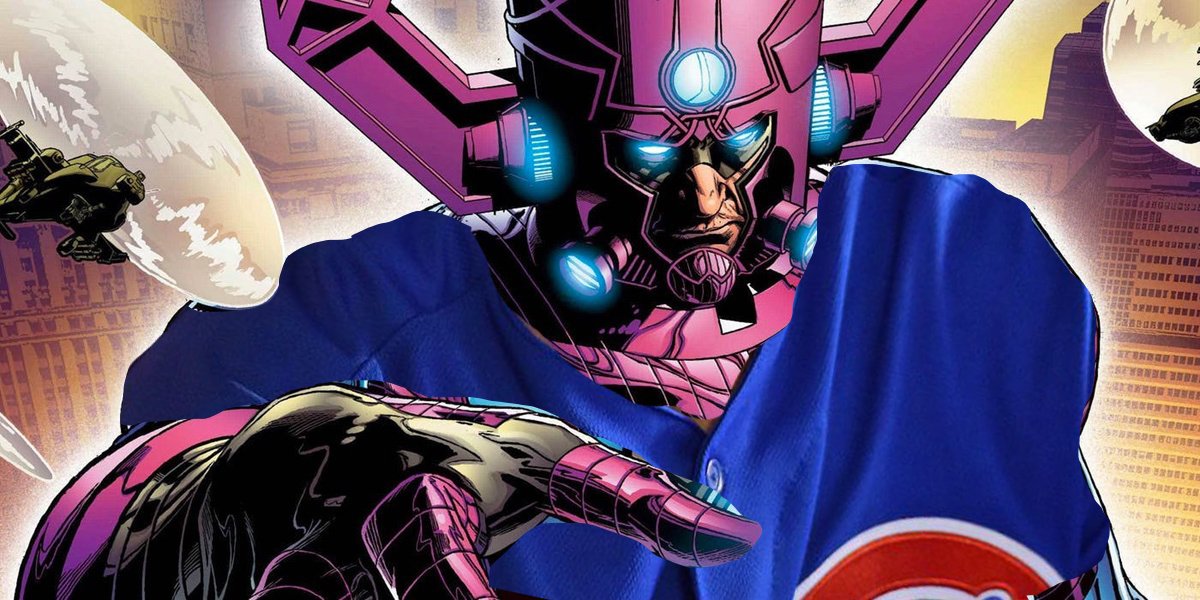
Tell Me A Story: Well, first of all, 2019 was a huge improvement on 2018. Slugging up 60 points, wOBA up 20 points, 18 more homers. Also played 45 more games. But also for the second straight season, Bryant’s season did not measure up to his first three years in the league where he was Galactus, Eater Of Worlds. How much his knee problem played into that, we just don’t know for sure. But we can guess.

April was a bit rough for Bryant. He only hit .230, but had a high walk-rate and one of his lower K-rates. He was also undone by some fiendish BABIP kung-fu treachery, with a .263 mark. That would be by far the lowest mark of any month in the season. And that explains most of it, as Bryant was carrying a hard-contact rate of just about 40% in the season’s opening, and a line-drive rate over 20%. He was just unlucky.

We know that, because everything corrected over the next three months. In May, June, and July, Bryant ran wRC+ numbers of 193, 140, and 132, the kind of dominance and destruction you know and love from #17. He slugged .719, .480, and .547. This is what it’s supposed to look like.

And then it goes to shit in August, right about the time Bryant hurt his knee. A 95 wRC+. His walks basically disappeared to a 8.5% mark. His hard-contact rate dropped to 25%, and his line-drive rate was simply a sad and lonely (Secret Machines rule!) 12.7%. And yet he played through it. He shouldn’t have, but he did.

Now his September numbers look like they rebounded. But there’s a caveat there. His numbers in September are buffeted by simply going Donkey Kong on PCP and no one took the mallet away on the Pirates in that three-game series where it looked like things might actually come correct. He went 7-for-14, with three homers. After that, he had three hits against the Reds and Cardinals and then his season was over. The knee was still a problem.

There’s a lot of teeth-gnashing about Bryant’s contact numbers, because the team as a whole didn’t make enough contact. But the thing is that Bryant made the same exact amount of contact this year that he did in his MVP year. Had he not gotten hurt in August, and carried out his middle three months the final two, and ended up with 6.0 WAR or so, no one would give a shit about Bryant’s contact rates.

When looking at how Bryant did against certain pitches, most everything in 2019 is in line with what he did in his career before. There’s been basically no change except for health. So unless the Cubs know or heavily suspect that his body is never going to be quite right, he’s going to be an MVP candidate again very soon as long as something doesn’t go TWANG!

If there’s one area of concern other than his health, it’s his defense. It was negative again, though not as bad as the previous season. Still, Bryant was a plus 3rd basemen in his first three years, and one wonders if health was a part of his not being so again. There is a worry about a 6-5 dude playing third long-term. But Bryant isn’t much better in the outfield either, even though his athleticism keeps him from being anything like a disaster out there. Again, we won’t have an answer on this until he completes another full season healthy.

Contract: 3rd arbitration year of four, projected at $18.5M

Welcome Back Or Boot In The Ass: Welcome back forever. Go to Scott Boras and hand Bryant $30-$35M a year until he’s 35 and don’t ask any questions. The idea that the Cubs “can’t” re-sign Bryant is simply ludicrous. Just hand him the most money, which he deserves. There are maybe four players you’d trade him for? Betts is one. Trout’s another. They’re not coming. Neither is Jose Altuve. I can’t stress this enough. Since he came into the league, the only more valuable players than Bryant–even with the injuries–are Trout and Betts. That’s it. You don’t let these players leave unless you’re insane or insanely greedy or both (and the Ricketts family is very likely both of those). He should be here until he retires, and then his jersey should immediately go up the left field foul pole. No waiting around. You simply don’t cut these guys adrift.

There is no way, none, where this team gets better without Bryant. At least not one that’s even a possibility. I’m fairly sure Theo knows this, but the question is can he sell that to the owners? That’s the only obstacle. Hold me to this, but if Bryant is ever allowed to leave, it’ll be at least twice as bad as when Greg Maddux was. I’ll wear it, and so will the rest of us if it happens.

Baseball

Every team needs a Swiss Army Knife, the kind of player you can throw in any position at any point in the game and can hopefully expect league average production. Leury Garcia has been that knife for the White Sox for the past few seasons, let’s see how this one went.


2019 Stats

.279/.310/.378

3.4 BB% 22.5 K%

8 HR 43 RBI 90 R 15 SB

.294 wOBA 83 wRC+

Defensive Runs Saved +1 UZR +1.6


Tell Me A Story: If consistency is one of the most valuable traits for a baseball player in the major leagues, then Leury García is a human ATM machine. For the past three seasons with the White Sox, García has hit above .270, stolen at least 10 bases, and played defense at multiple positions (2B,3B, SS, LF, CF, RF) with at least replacement-level production. He’s also been worth 2.6 WAR for the past three years combined, which for an everyday player (which he wasn’t supposed to be) is just OK but for a super utility man is way more than acceptable.

Coming into the 2019 season García was expected to play around 100 games, spelling Anderson, Moncada and Yolmer during the week and then playing occasional OF as needed. It was a solid plan, and would have worked out perfectly. Unfortunately, it turned out that Jon Jay’s skeletal system was made of balsa wood and paper mache, and the center field position had collapsed on itself like a dying star, where no offensive light or slugging percentage was able to escape its ineptitude. Before the season had even started, the plan had already been shot to shit.

Previously the most games García had played in a season was the 87 he logged in 2017. With all the crap mentioned above combined with the fact that Anderson and Moncada both still needed days off AND they ended up missing time with lower body issues meant a whopping 58 game increase for him. Predictably, this resulted in a drop off of his production the last month of the season. Even then he was still league average, which is a pretty solid baseline for your utility guy.

Offensively (as shown by his stats above) García is not an OBP machine. His 3.4% walk rate pretty much confirms that. So if he’s on base, he’s gonna have to hit his way on. That’s not the type of profile you’d want for your leadoff hitter, but low and behold that’s where Renteria had him for a good portion of the season. This isn’t a knock on Renteria (though his lineup construction was sometimes on the level of performance art), as he was just playing the hand he was dealt. The Sox didn’t have a true leadoff hitter on their team, and García was quick on the base paths so he sort of fell into the roll. Ideally, you’d have Leury hitting in the 9-hole, rolling the batting order around with speed to the #1 guy, providing multiple RBI opportunities to your #2 and #3 hole hitters. Perhaps this is what we will see next season, providing he’s not flipped at the winter meetings in a few months or priced out of the White Sox “budget.”

Contract: García is eligible for arbitration this year, and should expect a modest raise from the $1.55 million he made in 2019. I would think his camp would ask for $3 million and the Sox will settle for about $2.6. He’s a free agent in 2021.

Welcome Back Or Boot In The Ass: A lot will depend on how arbitration goes. If the number comes back in the upper $3 million range, the Sox may decide to cut bait and see what production they can get out of Danny Mendick or Ryan Goins spelling Tim and Yoan in the infield. With the team primed to fill some holes through free agency this winter, the need for García to play in the outfield should be much less, and I would expect Adam Engel to be there to fill in any needs as the team’s 4th outfielder.

The possibility for him to be at 2B full time exists if Nick Madrigal isn’t deemed ready for the big time and the Sox say goodbye to Yolmer Sanchez (which looks increasingly likely). In this instance, $3.5 million for a league average second baseman is a pretty good deal. Especially if you can move him back to the super utility role once Madrigal makes his debut later in the season.

Bottom line is as long as his price doesn’t get to exorbitant, or Rick Hahn somehow gets an offer he can’t refuse during the winter meetings I would expect Leury García to be back with the White Sox for the 2020 season.

Previous Player Reviews

James McCann

Welington Castillo

Zack Collins

Jose Abreu

Yolmer Sanchez

Tim Anderson

Yoan Moncada

Eloy Jimenez


Baseball

Ah, finally we get to have some fun like the Sox guys are. Other than Anthony Rizzo, the players we’ve looked at so far either had iffy or debatable seasons and/or might end up trade bait. Or they’re just irretrievable assholes. But Javier Baez is pure energy. He’s The Drej, but in a good way.

Where the fuck did I dig that reference up? Like maybe four of you saw “Titan A.E.” Whatever. Let’s move along.

2019 Stats

138 games  561 PA

.281/.318/.531

29 HR  89 RBI

5.0 BB%  27.8 K%

114 wRC+  .347 wOBA  .847 OPS

15.7 Defensive Runs Saved  4.4 WAR

Tell Me A Story: It might be hard to separate the decline, however small, of Baez’s ’19 from his ’18 from the pure exhaustion he assuredly felt. And that almost certainly would have had to contribute to his injury problems which basically had him out all of September. Sure, you don’t fracture your thumb because you’re tired as Baez did, but the dip from the first half to the second half was clear and his heel problem was at least partially due to overuse.

In the season’s first two months, Baez didn’t really drop from his MVP-consideration form of last year, putting up a 138 wRC+ in April and a 124 in May. But something went off the boil in June, and Baez didn’t really ever get back to the heights of the season’s first third. Part of it was that Baez simply stopped walking, which he had been doing within at least emailing distance of league average in the first two months. Now we know with Baez the walks are the outlier and the 2.0% rates of June and July are probably closer to what he is. But he doesn’t have to be.

Luck was also a part of it, as in June Baez only had a BABIP of .257 which is some 80 points off his career mark and season mark. That recovered in July and August, and Baez still slugged over .500 in those months, but it wasn’t as dominant as it had been before. Mostly because Baez just wasn’t getting on base as much, though when he was it almost always was for extra bases, and even those handful of walks he eschewed were making a difference. Baez isn’t ever going to be Adam Dunn or Anthony Rendon and he doesn’t have to be. But a walk-rate of 5-6% makes a huge difference to his overall OBP and offense, and that isn’t beyond him.

There was also a big difference in contact for Baez after the season’s first two months. Whereas in April and May he was hitting the ball as hard as just about anyone (43.4% and 51.6% hard-contact rates), he never got over 40% in the final three months he played. Part of this could have been playing every day slowing the bat a touch, part of it could have been the heel, part of it something else. 2018 saw him with a 22% line-drive rate, and we know what Baez should look like when on song. He had some pretty sad line-drive numbers in both June and August.

We know something must be wrong physically, because Baez’s average exit-velocity on fastballs went from 94.5 MPH in July to 85 MPH in August. That just shouldn’t happen. And it’s not like he was seeing more or less of them when August hit.

One thing pitchers did do was move their fastballs from high and tight to the outside, which would seem weird given that Baez has huge power the opposite way:

But Baez never really adjusted, sending less than 20% of his contact the other way which rocketed his ground-ball rate to 59% in August, by far his highest monthly mark of the year. This should never happen to Javy given the damage he can do to right field, but he gets pull-happy at times. In the season’s first two months, when over a third of his contact went to right field, you’ve seen the numbers. This is something Javy needs to lock in.

Contract: 2nd arbitration year, projected for $9.3M in 2020

Welcome Back Or Boot In The Ass: Welcome him back and never let him go. The Cubs have made noises about at least talking about an extension with Baez this winter, and he seems to be the only lock of the team’s core that will never see another uniform. There are trade whispers about Bryant and Contreras, Rizzo will be in his 30s when his contract is up, and Schwarber also will hear the trade winds blow. But the Cubs wouldn’t dare do that with Baez, though they should probably feel the same way about Bryant. Another talk coming soon. What that number would be to get Baez to sign is open to question, but you’d have to guess it starts somewhere around $22M a year. Baez and close friend Francisco Lindor probably will have some interesting conversations about this. Hopefully they’re about both playing in Wrigley together one day.

What will be interesting is how Baez meshes with a new manager. Joe Maddon saw exactly what Baez could be and never really meddled, knowing it would be a bumpy road at times until this was unveiled. A lot of other managers might have tried to shackle or smooth out Baez’s game, which would have been a waste. He’s now at least close to the finished project, so the new manager doesn’t have many decisions to make. But could he resist? Can a new manager keep Baez at least aware of going the other way at the plate, which makes him basically a doomsday device?

The other thing is getting him backup. He can’t play 155 games next year or something stupid like that, even if he wants to. Nico Hoerner being able to stick early in the season solves this, but that’s no guarantee. Giving Bote a spot-start or two there is a solution that Maddon never wanted to try. If Russell’s evil and dumb ass is catapulted into the nearest tire fire, the Cubs might have to find a cheap solution outside the organization. If they don’t, we’ll know how much they think of Hoerner already.

Either way, Engine #9 is most likely going to be thrilling you for a very long time. Keep him fresh and healthy to make sure that happens.

Previous Cubs Player Reviews

Ian Happ

Barf Bag

Ben Zobrist

David Bote

Anthony Rizzo

Victor Caratini 

Willson Contreras