Everything Else

One of the stranger themes that is constantly present with the Hawks year in and year out is the Trade Guy. It seems like each offseason – or at least every other year – there has been at least one player whose combination of play, contract, and being surpassed by other players just proving to be better, leads to him being an extremely obvious trade candidate both from the sensibility standpoint and the fan outrage standpoint.

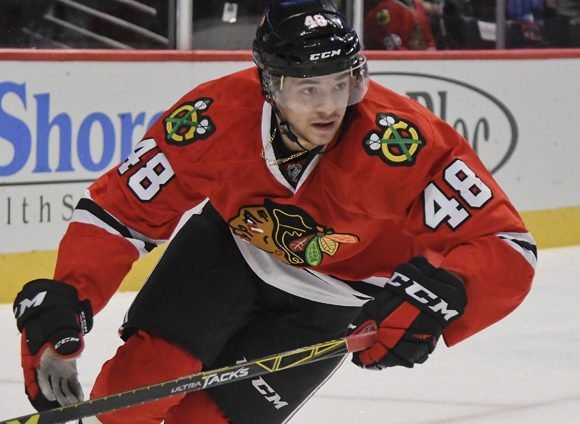
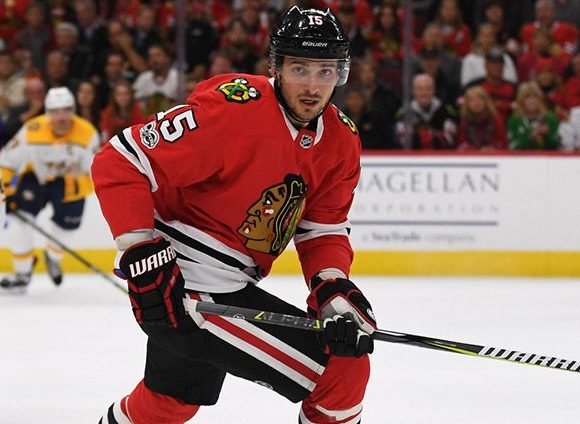
First it was Nick Leddy, then it was Patrick Sharp, followed by Bryan Bickell, and now it’s Artem Anisimov. Wide Dick proved to be the prize of the first Brandon Saad trade, and he really has been perfectly fine for the Hawks in the three years he’s been here. He’s netted at 20 goals in each of his three seasons in Chicago, a feat he had only achieved once prior to landing here. A good chunk of those are probably a direct result of playing with Patrick Kane for three years (and Artemi Panarin for two of those), but it’s still a decent selling point if your trying to build value on the trade market, which we are.

The analytically minded are not going to be as bullish on Anismov, and for good reason – he has only broken 50% shot share at 5v5 once in three years in Chicago, but he’s also never dipped below 49% so it’s not like he’s getting skulled out there. It’s basically a back and forth when he’s out there, which isn’t exactly ideal but is still adequate enough to not be maddening. Again folks, we’re going full on used car sales pitch here.

Anisimov does have some obvious shortcomings that are definitely less than ideal for a center, like the fact that is really slow and also terrible on the dot. He’s a perfectly fine player and one that might truly be able to contribute to a good team if used properly, or eat top six minutes for a middling or bad team and do a pretty good job. Basically, if Stan Bowman is worth his salt (and I think he is), he should be able to build a market for Anisimov. The question, though, is how good that market would be.

Back at the trade deadline, the Hawks were rumored to be considering trading him, but the best offer they got was a third round pick from Columbus. But the trade deadline doesn’t always bring out the full market because it seems like teams are always hesitant to players that aren’t the “biggest” names on the market at that time. The NHL Draft and free agency season has become the big event for major moves as teams try to restructure themselves for the new seasons by plugging holes or adding new elements, so Anismov’s market is probably going to have at least a few takers. But the market isn’t your only obstacle.

Anisimov has a full NMC that runs until July 1, so that throws a major wrench in any plans that Stan may have had to try and move him at Friday’s draft. And this is where it gets murky, because if you’re Anisimov you might be smarter to waive that NMC this week and give yourself a bit more control over where you play next year rather than handing in a 10-team list on June 30 only to have a 1-in-1o shot at your preferred location come July. Not that Stan would ask Wide Dick where he wants to go and then only try to make it work there, but if Stan gets a deal put together on Friday and calls up Anisimov’s agent, maybe it makes more sense to just say “yes” then and know you’re wanted where you’re headed rather than go into the new league year with only an inkling of an idea of where you’ll be come October.

I think the Hawks might be able to sell a team like Carolina on taking Anisimov as part of a package for Justin Faulk, and I genuinely think Carolina would be a nice landing spot for Wide Dick while also striking me as a nice place to play. Is that more attractive than trying to sort through which third of this league is desirable enough to play in to include them on an “okay” list?

Given that the Hawks are pretty much set at their top two center spots at this point with Toews and Schmaltz, while also being rumored to have interest in John Tavares, it’s starting to feel more like “when” Anisimov gets traded rather than “if” he gets traded. It doesn’t feel particularly likely that it happens this week, but stranger things have happened, and it’s all going to come down to what level of control Wide Dick wants on his future. It’s at least something to keep an eye on come Friday.

Everything Else

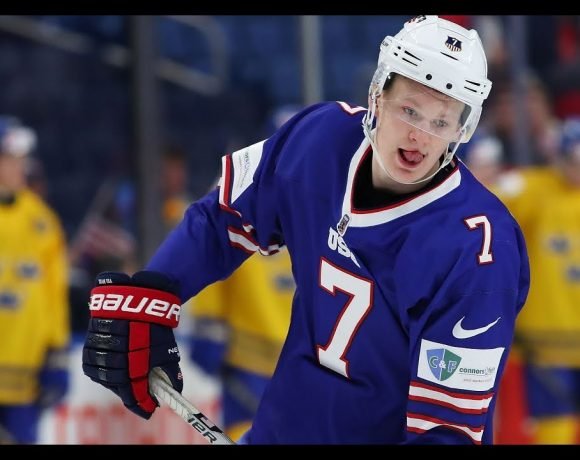
After two of the dream picks yesterday, we move to the likelier draftees for the Hawks. And even Oliver Wahlstrom might be a stretch. But some mock drafts have him getting to #8, and some even have him falling farther than that.

There are some who will tell you that Wahlstrom is the best offensive talent, or potential to be, in this draft. He might be the best American in the draft, ahead of Tkachuk and Hughes as well. There’s certainly a lot to work with here.

Wahlstrom was significantly the youngest player invited to last summer’s US Junior camp, which is what makes everyone take notice. Some will tell you he already has a professional-level shot, especially one-timer, which Wahlstrom himself has already boasted about. Whenever Wahlstrom gets to an NHL team he’ll already have a weapon that can contribute even if every other part of his game has to be brought along.  You could plug him on the left side of your power play and probably get 8-10 power play goals from jump street.

Wahlstrom isn’t just a sniper, though that’s the main feature of his game. He’s got good enough hands and vision that some have suggested he can play center, but wing appears to be where he will star. He’s also not small at 6-1, but is more than an average skater. Other than Svechnikov, there might not a better offensive force in the draft.

What’s even more intriguing about Wahlstrom is what he might spend next year doing. He was slated to go to Harvard, but considering that no one ever leaves Harvard early he’s now slated to attend Boston College. Wahlstrom holds dual-citizenship in Sweden, and it might make the most sense for him to play in Sweden in a professional league for a year. But given BC’s prowess and rep for building talents to be ready for the NHL, that’s where you’d likely find him.

And Wahlstrom is only going to need a season either in Europe or college. He’s already got NHL-level skills in one area, which means any team would get production from the first year of an ELC without wasting it by having him do anything the AHL. For the Hawks, they are short on top six talent in their pipeline, now that DeBrincat and Schmaltz have become part of the NHL roster and important ones. Sikura and Ejdsell are basically what they have bubbling underneath the surface. So adding someone of Wahlstrom’s quality would immediately make him the best forward prospect they have.

Everything Else

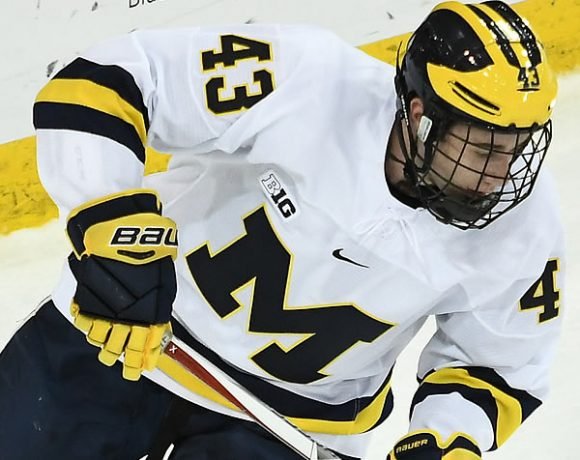
We’ll continue our look at possible Hawks picks with another son of a former player, and one who probably isn’t going to make it to the Hawks at #8 but would be a boon if he did. And that’s Quinton Hughes from Michigan.

Whatever team takes him had better realize that what Hughes does is kind of the future of the position. Not that he’s going to revolutionize the game or anything, but as more and more teams replicate what has made the Penguins successful the past three years, the Knights successful this one, and a handful of others, no longer are teams going to be content with having just one or two mobile d-men and filling out the rest of the blue line with atom-smashers. That’s going to get you beat in this league. The first team that basically throws out five or six puck-movers is probably the next one to have sustained success. Your d-men have to get themselves out of trouble, they have to be good with the puck to dodge aggressive forecheckers, and they have to then get up in the play. As the game speeds up it’s going to be harder and harder to pass your way through trouble. And to do that teams might have to forgive undersized d-men.

Hughes fits the bill. He’s only 5-10, so if teams are going to count on him to clear the crease or wrestle with guys continuously down low, that’s not going to fly. What he is is extremely graceful already for his age, and racking up 29 points in 34 games for the Wolverines in his first year there is nothing to sneeze at. He’s a gifted passer as well, so he can spring breaks from his own end when his feet won’t get him there. He’s basically going to a be a high-end Jared Spurgeon, and if you follow analytics at all you know that Spurgeon is actually one of the more effective d-men in the game and moving the play the right way.

Some teams are going to be scared off by his size, and I fear that the Hawks are one of them. And they can use all the help on the blue line they can get, even if Hughes is a year or two away. What are the sure things for three years from now? Keith will not be? Jokiharju? Ian Mitchell? Gustafsson and Forsling are definite questions still. The pipeline doesn’t have much more, and Hughes would certainly add to that.

Yes, Hughes might have a rough adjustment period figuring out angles and plays to compensate for his size. He’ll probably need to bulk up a bit to at least be a solid frame. But hey, Duncan Keith in reality is no more than 5-10 or 5-11 and figured it out, and you can be hard to play against in the corners with quick and smart hands, which Hughes already has.

While there are some real moronic teams ahead of the Hawks, it’s hard to see the Red Wings at six skipping on him, given his connections to the state through going to Michigan and having lived there now for a couple years. But hey, a boy can dream.

Everything Else

While it wouldn’t be our first choice, the Hawks are certainly making all the noise they can that they’re going to keep the #8 pick. And hey, they just might and Stan Bowman’s drafting record is not bad, and he hasn’t ever had a pick this high to play with. The highest pick Bowman has had since 2011 was #18, twice, and he took Mark McNeill (whoops!) and Teuvo Teravainen the next year (I hurt myself today…to see if I still feel…). Stan has only had two other first round picks, as some have been dispatched for deadline trades and the like, and those were Nick Schmaltz (good!) and Henri Jokiharju last year (probably good?).

So let’s start looking at some names the Hawks might take with that pick, if they do indeed keep it. There’s no player there that’s going to help this team next season, at least it’s very unlikely. And we’ll kick it off with Keith Tkachuk’s latest garbage son to enter the draft, Brady Tkachuk.

2017-2018 with Boston University: 40 games, 8 goals, 23 assists, 31 points, 61 PIM

I don’t even know why we’d list other players this week, because if the Hawks keep the pick, and Tkachuk is there, they’re taking him. You know it, I know it, they know it. It’s so obvious it’s like the current humidity just sitting on your head. The Hawks have kind of been obsesses with the Tkachuk family for a while. Keith was the preferred return for Roenick once upon a time, after the Hawks half-heartedly tried to just sign him while Bill Wirtz was asleep. While Stan Bowman has seemingly tried to change the organization’s focus to speed and skill, this is still a front office that values “GRITHEARTSANDPAPERFAAAAAAARRRRT” and you know if “Tkachuk” is the last name, there’s plenty of that.

At first, Tkachuk’s numbers at BU don’t jump out. But we went straight to the man on the ground, one Ryan Lambert of Puck Daddy, who watches more Boston area college hockey than anyone who has any dreams of happiness in life would. And he sent this along, which are Tkachuk’s peripherals of the BU games Ryan attended, something like 15-18 of their 40.

Pretty dominant stuff. Tkachuk did play with other high draft picks, as one tends to do on Comm Ave in Boston, in Shane Bowers and Patrick Harper. Later, he was on a line with Jordan Greenway, who finished the year in the Olympics and then the Minnesota Wild. But according to Lambert, all of those players did worse without Tkachuk.

The eight goals only are a concern, but Tkachuk shot 6% all season and it’s unlikely that’s where he is as a player. Also, given his size a lot of his shots should come from in close.

Where Tkachuk has looked particularly tasty is in the past two World Juniors, and we know the Hawks love them some Yanks. He racked up 16 points in 14 games total, and drove the Canadians especially nuts this past tournament in the outdoor game.

Tkachuk isn’t just yap and size. He has exceptional hands and while he’s not a burner, he’s shiftier in traffic than his size would indicate. He’s a gifted playmaker as well, so he might be an oversized DeBrincat, though without the same marksmanship.

All of it signals that Tkachuk has a very good chance of being gone by the time the Hawks are on the clock, and even if I’m skeptical of what they like and would accentuate in Tkachuk’s game he would be a borderline-steal at #8. Tkachuk could probably contribute to an NHL team now, but the general thought is he’s going to play one more year at BU. He probably does need to get a little faster at least to be a real weapon at the top level, and that will be the focus for him next season.

Everything Else

The Rockford IceHogs were deep on the defensive side in 2018-19. It was in this area where the club had an abundance of experience to start the season. It only got better in the spring as some key pickups further strengthened Rockford on the way to a long playoff run.

Back with a look at the back end of the roster, here are my thoughts on the defense.

The Sparkplugs

Cody Franson (37 games, 9 G, 19 A, plus-nine)

Adam Clendening (38 games, 4 G, 26 A, plus-two)

The addition of these two veteran blueliners completely changed the course of the IceHogs fortunes. The power play went from being a laughing stock to the most dangerous in the AHL.

Franson performed like you would expect a NHL-level talent to upon arriving in Rockford. The 30-year-old Franson immediately became a locker room sage and offensive catalyst, with six power play goals in the regular season, then four more in the playoffs. A point a game player in the postseason (6 G, 7 A), Franson totaled 15 goals and 41 points in 50 games in an IceHogs sweater.

Clendening, who was returning to Rockford after stints in several other organizations, saw his scoring touch return in a big way. After five points in 21 games for Tuscon to begin the season, Clendening went on a tear and wound up leading all Hogs defensemen in scoring despite joining Rockford well into the season.

So far as a return engagement from this exciting duo…

Franson was quite open about his future (or non-future to be more accurate) in the organization past this season. His steamrolling through the AHL might open a few doors as an unrestricted free agent this summer.

On the other hand, Clendening is an RFA and could be re-signed at low cost to the Blackhawks. The question is, will Chicago tender an offer to a player who couldn’t secure an NHL spot in the organization in his first go-round? Clendening would be a nice piece to start building next fall’s Hogs roster; we’ll see what transpires in the next couple weeks.


The Big Guy

Viktor Svedberg (73 games, 6 G, 18 A, plus-18)

The 6-9 Swede began his time in the organization as a project; Svedberg is now a UFA following his fifth season, most of which was spent with the IceHogs.

I’ll come right out and say it. Svedberg brought an awful lot to the table in 2017-18. Here’s why:

This was easily his best season from an offensive standpoint. He also potted a couple of big shootout goals when called upon.

Svedberg began the season healthy and stayed that way, playing a career-high 73 games. For a guy who had trouble staying on the ice in past years, it was satisfying to see him showcase his game.

Svedberg still gets a bad rap from some Rockford fans for his defensive liabilities, which were on full display for most of his first three seasons. That’s too bad, because he was arguably the IceHogs best defender this year.

I could count on one hand the number of times that Svedberg was caught out of position in his own zone, leading to an open shot attempt. He is never going to be a player who can use his skating ability to get him out of trouble. However, he has learned to take advantage of his reach and positioning to be effective.

Svedberg was often an alternate captain (coach Jeremy Colliton never named a captain this season) and was one of the few skaters (before DiDomenico and Lance Bouma showed up) willing to stick his nose into a scrum. When Franson arrived, Svedberg completed a very solid (and physically imposing) top pairing.

Svedberg has come a long way in five years and certainly could provide some organizational depth and leadership in Rockford. It will be interesting to see what offers he fields in free agency.


The All-Star

Carl Dahlstrom (64 games, 3 G, 28 A, plus-14)

Dahlstrom was a substitute for Erik Gustafsson in the AHL’s All-Star Classic and took his game up a notch in his second full season in Rockford.

Dahlstrom was a steady defender and took a bigger role at the other end of the ice in 2017-18. He looked a lot more confident bringing the puck out of his zone this season and earned a stint in Chicago late in the spring. It seems likely that he is in line to earn a spot on the Hawks roster in training camp the way things look right now.

Franson and Clendening altered the pecking order among the defensemen; Dahlstrom definitely had a reduced role on the power play. His shot attempts at even strength took a hit as well, with a drop in frequency of about 23 percent after he came back from Chicago in March.

Dahlstrom last drew cord for the Hogs on January 13. In his last 26 regular season games with the Hogs, he managed just nine assists. Dahlstrom rebounded in the playoffs with three goals and six helpers.


The Passed Over

Gustav Forsling (18 games, 2 G, 3 A, minus-four)

The other player most affected by Franson and Clendening’s presence was Forsling. When he was sent to Rockford in January, he scored in his season debut with the Hogs, then went dormant offensively. Once the vets joined the team the next month, there wasn’t much of an offensive role for the 21-year-old.

Forsling got some time quarterbacking the second power play unit. He had one assist on the man advantage in the regular season and another one in the playoffs. He was a bit more noticeable in the postseason, with a goal and five helpers. However, most of his time was spent on the bottom pairing.

Forsling did not distinguish himself on the scoreboard in his time in Rockford. At the same time, he didn’t defend very well either, at least in my opinion. Had Forsling had a more prominent spot in the lineup, he might have picked up his play in the latter part of the season. That didn’t happen.


The Prospects

Darren Raddysh (66 games, 5 G, 17 A, plus-ten)

Luc Snuggerud (40 games, 5 G, 12 A, minus-three)

Robin Norell (63 games, 2 G, 5 A, plus-two)

Raddysh had the biggest impact of these three players, earning himself an NHL entry deal from Chicago last month. He found himself in the lineup over several players with NHL contracts this past season, something that also held true nine times in the playoffs.

Snuggerud’s rookie season was interrupted for two months after suffering an upper body injury December 8. He had a pair of goals and eight assists after returning in February, but did not suit up in the postseason.

Norell’s campaign began with a savage beat-down at the hands of Brett Gallant in Cleveland opening night. It ended in the press box in the postseason.

After a four-game point streak in December, Norell went 43 games without a goal or an assist until getting a goal in the regular season finale in Chicago. This, despite playing as a forward for much of that time with line mates who regularly found the net.

His defensive play at forward was often praised by Colliton, though apparently not enough to get him on the ice at any position in the playoffs.

Norell skates hard, but isn’t a real physical player and isn’t gifted with a great shot. It may be hard for him to find time on the blueline this fall.


The Other Guys

Ville Pokka (4 G, 18 A) played 46 games in Rockford before being traded to Ottawa for Chris DiDomenico. Pokka was perfectly serviceable for the Hogs but was spinning his tires in the organization. The return on the exchange was a vital part of Rockford’s late season success.

Gustafsson (3 G, 14 A) was with the Hogs for 25 games before spending the remainder of the season in Chicago. Joni Tuulola was scoreless in two regular season games and four postseason appearances.

Also putting up goose eggs in limited action in 2017-18 were AHL contracts Brandon Anselmini and Robin Press, who each got into seven games.  Former Hog Nolan Valleau was brought in on a PTO for three games and then released.


Where Does The D Go From Here?

Chicago has added Dennis Gilbert, Lucas Carlsson and Henri Jokiharju to the list of prospects on defense. With Tuulola set to begin his rookie season and five holdovers, the position is crowded even without a veteran signing like Clendening or Svedberg.

As is the case at every position, the next month will surely see some turnover. The blueline will certainly be a lot younger in 2018-19.

This week, I hope to start sifting through the forwards in one additional installment of my year-end look at the IceHogs. Follow me @JonFromi on twitter for thoughts on the Hogs throughout the summer.


Everything Else

Generally on Friday afternoon is when anyone that has bad news to announce will release it, figuring most will miss out as they’re on their way home for the weekend and media departments are depleted. The signings of John Hayden and Vinnie Hinostroza to contract extensions aren’t exactly that, as they’re not bad news, but still basically flying under the radar before the draft.

John Hayden signed a one-way deal for two years at $750K. I’m just going to go ahead and state that if John Hayden has any serious role to play on the Hawks in those two years, the Hawks will then suck. Hayden really is only a body, and not even a strong or powerful one. He was sent down to Rockford in the middle of the season so he could play with the puck more, which he wasn’t on a fourth line. He then proceeded to not play with the puck in the AHL. I’m fairly sure “John Hayden” is another way to say, “Jimmy Hayes” or “Kyle Baun,” but will reserve judgement. The one-way deal is somewhat intriguing, I guess, but the Hawks have kept one-way deals down in the minors before and I fully expect if things turn around for the Hawks, that’s where Hayden can expect to be until injuries hit.

As for Hinostroza, he signed for twice that for two years, $1.5 million a year. As most anyone knows, I’m bullish on Vinnie Smalls as his underlying numbers suggest something of a secret weapon. Ideally he’s driving play on a third line and creating multitudes of chances against bums, and we’ll see if the Hawks can get him there instead of needing him to moonlight on the top six. I feel there’s a poor man’s Sheary or Guentzel here though, if the Hawks could stop fixating on his size for five minutes and worry about getting him and his game-breaking speed in open ice more often. $1.5 million might seem like an utter steal soon.

Anyway, that’s about it for the day. We’ll be here next week doing full draft-preview and maybe even reaction to a trade or two, given how the past has gone.

Everything Else

The Rockford IceHogs had a bit of a revolving door when it came to the crease this past season. Injuries to some key personnel made for some vertical movement for several of the goalies in the organization.

As the first installment of some “in-depth” looks at the Hawks AHL affiliate, let’s cast our gaze squarely between the pipes and the four players that patrolled that area for Rockford in 2017-18.


Collin Delia-28 Games (17-7-4), 2.72 GAA, .900 Save Percentage

Timing is everything in the development of a prospect. Case in point…the rookie campaign of Collin Delia.

Delia earned himself an entry contract with some strong showings in the Hawks past two prospect camps. He began the season as quite the rambling man, working out with the Hogs staff and trekking to the Indy Fuel of the ECHL for game action.

It was not a successful formula for Delia.

Yes, the same 23-year old who stood so tall in the first two rounds of Rockford’s playoff run was flat-out terrible in Indy. In ten starts, he was giving up over four goals a game and sported an .887 save percentage. In a spot start for the Hogs in Iowa on November 9, he gave up four goals on 16 shots and looked completely overwhelmed.

When he was pressed into action against the Wild on December 28, Delia had not played a game in Indy or Rockford in over a month. At that point, he was only playing because the cupboard was bare. J.F. Berube was injured and Jeff Glass was in Chicago. The IceHogs had to go with Delia and Matt Tomkins in net and try like hell to limit quality shot attempts.

Again, with a veteran at Jeremy Colliton’s disposal, I doubt Delia would have had many starts in the two months that Berube missed. Opportunity was rapping at Delia’s door…and you know what? The kid responded big-time and began getting his act together.

It took several games (with the Hogs D playing a big part in limiting high percentage shots), but Delia began to look a bit more comfortable in the crease. He put up a 5-0-1 stretch from January 6 to the 26th, then took his game up a notch from there.

In his last 15 starts, Delia was 11-3-3 and limited opponents to three goals or less in 12 of those contests. His eight starts against Chicago and Manitoba in the Calder Cup Playoffs proved to be the high-water mark. Delia took over in the first two rounds, led the Hogs to the conference final and completed an astounding turnaround to his first professional season.

Delia’s style has him winding up on his backside quite a bit. It’s something I think he needs to address in Rockford this fall. However, I believe that Delia has shown the potential the organization saw when they offered him an NHL contract.


Jean-Francios Berube-15 Games (7-8), 2.37 GAA, .920 Save Percentage

The former Islanders farmhand helped get Rockford off to a strong opening, winning his first five starts. Berube then dropped five straight decisions, though he was playing solid in the net when he was called up for a week of backup service in Chicago.

Returning to the IceHogs December 8, Berube stopped 18 shots in the first half of the next night’s start against Grand Rapids when he suffered a knee injury that kept him out of action for the next two months. He came back in February, lost two starts despite playing well, then was moved up to back up Anton Forsberg the rest of the season.

That December injury was pivotal for several reasons. A healthy Berube would likely have gone up to Chicago when Corey Crawford went down later that month. Rockford would then have ridden Jeff Glass for the majority of the last four months of the regular season. Glass and his feel-good run with the Hawks may not have come to fruition.

Flip Berube and Glass if it pleases you, though Berube was by far the better candidate for a recall prior to his injury. Either way, there is no way that Delia would have been able to work his way into the role he enjoyed (and certainly deserved) in the latter stages of the season.


Jeff Glass-28 Games (15-9-2), 2.82 GAA, .904 Save Percentage

Glass had his own success story in reaching the NHL this season. In Rockford, he served as half of a pretty successful veteran tandem in net until Berube got hurt.

Starting in the second period of the game Berube was injured to when he was recalled to the Blackhawks, Glass had a 2.39 GAA and a .935 save percentage in six games, during which Delia was planted firmly to the bench.

Glass surrendered eight goals against Manitoba when the Moose were an offensive juggernaut in November and ten more in his first two games back with Rockford in February. Aside from that, he was a steady presence in goal. Glass held opponents to three goals or less in 23 of his 28 appearances and to two goals or less in 14 games.

Glass was also a much-needed veteran voice in the locker room who came into the Western Conference Final after sitting for a month and was tremendous in his four starts. I’m not sure how much interest he’ll draw as a potential NHL backup heading into this summer, but he is a solid addition to an AHL roster.


Matt Tomkins-Eight Games (1-4-2), 4.04 GAA, .871 Save Percentage

Chicago’s seventh-round selection in the 2012 NHL Draft was on an AHL deal after completing his college career at Ohio State. Tomkins was injured for six weeks early in the season while in Indy but was playing well for the Fuel when he was recalled to Rockford to form a rookie goalie platoon with Delia in late December.

The Chicago Wolves put up six goals in to spoil his debut December 30. His best start came against Cleveland January 19, when he stopped 32 of 35 shots and helped the Hogs rally from a 2-0 deficit to beat the Monsters 4-3.

Tomkins dropped his last two starts for Rockford before Berube’s return sent him back to the ECHL February 8. He did see action late in the season, losing a 4-3 decision to Texas April 7 as the Stars rallied for three goals in the final period.

Tomkins’ Indy stat line (11-9-2, 3.47 GAA, .912 save percentage) was about par for a Fuel squad that gave up 3.41 goals a game this season. He didn’t show enough to merit an entry contract from the Hawks, in my opinion, but who’s to rule out another one-year AHL deal?


So…How Does The Goalie Situation Look Like For 2018-19?

The two goalies behind Corey Crawford, as was the case last year, are Forsberg and Berube…at least for the moment. Both are under contract for next season, as is Delia and recently signed Finnish goalie Kevin Lankinen.

Unless one of these players are moved in a trade, it’s difficult to see Glass remaining in the organization. I’m guessing that the Blackhawks have seen what his ceiling is. As I mentioned before, Glass is a solid veteran at the AHL level but a Delia-Lankinen pairing in Rockford would be best for developing potential NHL talent.

The Ivan Nailimov situation could be an x-factor in the goalie picture. It has been reported that Nailimov, a 2014 sixth-rounder, wishes to be traded. Even from Russia, the 23-year-old can see a crowded crease behind Crawford in terms of securing an NHL job in Chicago.

Could Delia, one of the Hogs postseason heroes, find himself with the Fuel again this fall? In the present configuration, someone is destined for Indy. It’s hard to see Chicago signing Lankinen to throw him to the ECHL. Delia has proved he’s capable of handling substantial AHL minutes, but I don’t believe he’s vaulted over Forsberg or Berube on the depth chart.

To assume that Chicago maintains their goal-tending collection with no changes may be a bit foolhardy. The Hawks appear to want an upgrade at the spot behind Crawford (Carter Hutton, anyone?), which could further muddy the waters. Expect a deal involving Forsberg, Berube or Delia sometime this summer, or possibly after the three get a hard look in training camp.

Depending on how much baseball I find myself watching in the next few days, I’ll take a gander at the defensive landscape Monday morning and the forwards sometime after that. Meanwhile, follow me @JonFromi on twitter for any thoughts I can belch out over the summer.


Everything Else

Let’s pause from the offseason merry-go-round for a bit and talk about Dan Carcillo’s cause/drive/plea, whatever term is best. If you haven’t seen it, he posted a video to Twitter this week that’s worth the time:

At the top, it is clear that Carcillo is sincere, he is angry, he is still grieving, and he is concerned. He wants to see change and is willing to do the work and convincing to see it through. Overall, it should be highly commended.

Still, there’s a couple aspects where I feel Car Bomb is just a little off the path.

One, I’m not sure he’s attacking the right thing here. Clearly, the NHL and NHLPA have a lot of work to do. The NHL already has a lawsuit to deal with that almost assuredly will not go well for them, and the union could obviously do more to open the NHL up with information and actual, concerted plan for how to deal with head injuries. This half-in, half-out, quiet room if it’s a third-liner and it’s not the playoffs garbage clearly isn’t working.

And yet, the NHLPA works for the players, at least in theory. And it brings into question what the endgame for Carcillo and others is. Essentially, much like the NFL, it feels that the result should be that all players coming into the league, as well as parents and children just starting the game, know what the risks down the road are. You can’t remove head injuries from hockey. The game moves too fast and especially at the higher levels they guys are too big. There are obviously things the NHL, and NCAA and juniors and all the way down can do, and we’ll get to that. But you’re never going to remove risk from the game, just as you can’t in football.

Parents can make informed decisions, so can players as they get older. And the thing is, if given all the information and warned of what can be waiting when the playing career is over (and no matter how concussed you are, you can still be a GM of course), if a player has a chance at the NHL, I think we know what their choice is going to be. I think you’d find the same with football as well. Most, and maybe an overwhelming most, are going to still play and take the glory, money, fame, whatever else. And while that might not be the choice for us, it’s certainly one we can understand. Players want to keep playing, and while we may say they have to be protected from themselves, how many honestly would agree to that?

Really, it seems to be a debate of what we, the viewing public, can live with instead of what the players want, and yet it’s never framed that way. At this point, players in both the NHL and the NFL would have to have their head in the sand to not know what they’re risking, at least in some ways. Clearly there could be more done, but it no longer is a secret. And they’re still out there. More and more I hear people saying they can’t watch football because of what they now know it’s doing to the players. That could easily come to hockey, too. And that’s our choice. Pretty soon, everyone on the ice and in the stands is going to know exactly what’s going on, what’s at stake, and it’s up to them whether they want it in their lives or not.

Secondly, Carcillo only makes a passing mention of how he played the game, though finally acknowledging at long last that he did cause injuries to others. He fails to mention all the injuries he tried to cause, but baby steps to the elevator. We’ll get there.

And that doesn’t mean that Carcillo’s career and/or style should disqualify him from speaking out or leading this charge. In fact, he might be the right voice to do so. But only if he fully recognizes what he did on the ice, and is then speaking to those who are doing the same now (hi there, Tom Wilson, Brad Marchand, Ryan Reaves, I could go on…). I think we’ll all accept the occasional hit that goes bad or collisions. What the game has to rid itself of is deliberate attempts to injure, and more ex-players who did that speaking out would be a huge step in that. A sort of, “I was once like you and now look at what I have…” kind of thing.

Yes, the NHL needs a better head trauma protocol. But it also needs its players to want it. Players don’t want to leave the ice. They don’t want to get checked out. They jake their baseline tests to appear less hurt than they are when they have to take them again. And while Carcillo wants to lay all of the blame at the feet of the union and league, the “Warrior Mentality” is just as at fault. That players and fans either label those who want any attempt at a headshot out of the game weak or those that do are afraid of speaking up. Players don’t want teammates suspended for 20 games or more, which is what it will take and what Wilson or others should have already banked. Coaches and GMs need to stop employing and deploying players who do nothing else, forcing others to respond in kind.

The problems are there, and it’s a very good thing that Carcillo wants them addressed and now. But they’re more widespread than he either realizes or wants to admit.

Everything Else

It feels like Stan Bowman is going to have another “June 23rd” in the coming week. That was the day last year when he went more aggressive than we’d seen before, some might say he went “a little funny in the head,” and shipped out Artemi Panarin and Niklas Hjalmarsson (hilariously not telling his coach) for Brandon Saad and Connor Murphy. We’ve already been down the road on whether these were good trades or not, so we don’t have to do that again right now.

What’s clear is that Stan knows the temperature under his office chair is getting turned up, and Rocky Wirtz going “Kiss Of Death” after his flavorless Manhattan of a season in Crain’s made that abundantly clear, as well as John McDonough stomping around the Hawks offices like Dracula and Miranda Priestly’s lovechild.

So earlier in the week we talked about Justin Faulk, as that’s been the big rumor. Yesterday, the Sun-Times’s Mark Lazerus (closer than you know…love each other so…Mark Lazerus) put forth a rumor that Faulk might cost the Hawks one Brandon Saad. When reading that for all of us here, we cringe a bit, mostly because we love Saad and mostly because we feel that trading him after this season would A) be selling low and B) evidence that the Hawks don’t really have any sort of plan.

And yet, when you begin to think about it, this might make more sense. While Faulk didn’t have his best year last year, that kind of return for Saad certainly wouldn’t be selling low, per se. As previously stated, the Hawks don’t have a lot of pieces. While we dream about centering a deal around Artem Anisimov, fooling some GM with his goal totals and size for the far too many GMs who are still concerned about that sort of thing, it’s unlikely. The Hawks simply can’t lose Schmaltz, because they don’t have much depth down the middle. DeBrincat is almost certainly untouchable, given that he could very well be a 35-goal scorer if deployed properly. To give you some idea how valuable that is, there were only seven 35-goal scorers in the league this year. Dylan Sikura wouldn’t have much value, one would think. Below the main roster, it’s hard to see what else the Hawks can throw at a team. There’s no surefire prospect, though we’ll get to Jokiharju in a second.

Still, the loss of Saad makes the Hawks look awfully short at forward. You have….this?

– Toews – Hinostroza?

DeBrincat – Schmaltz – Kane

Sikura – Anisimov/Ejdsell – Duclair?

Jurco – Anisimov/Ejdsell – DUHHHHHH?

No offense, but I’m not going to make plans for that team in May. I guess this is the balance. Toss in David Kampf and an almost certainly returning Tommy Wingels (it’s a name, not a condition) and you’re still not inspired to write poetry about it. If the Hawks had another kid you were confident could step in to a top six role, you’d be more comfortable losing Saad, but he doesn’t exist yet.

You could argue the Hawks should just load the top line and let the rest fall where it may and have Top Cat, Toews, and Kane up there and just pray they jump into hyperspace, and maybe that’s the plan. I guess I can live with a second line of Sikura-Schmaltz-Hinostroza… I just won’t live comfortably. Or happily. Or healthily.

Which brings us around to Henri Jokiharju, who signed his entry-level deal yesterday. Now, normally, I would bet pretty good money the Hawks bring him to camp, throw him out in a couple preseason games, and then punt him back to Portland for his last year in the WHL. But this is not a normal time, and both Q and Stan might have to get outside their comfort zone here.

Yes, Jokiharju is only 19. But his numbers compare favorably with Mikhail Sergachev, who played a role on the best regular season team in the league. And Jokiharju did it in the WHL, which is a much tougher scoring environment than the OHL where Sergachev was. He also squares with Ivan Provorov, who has been the Flyers best d-man the past two years (and don’t give me any Ghost Bear bullshit).

Basically, what I’m saying is the Hawks are desperate, and it may come to toss Jokiharju in the deep end and leave with it. That doesn’t mean pairing him with Keith, but a heavily sheltered role with Murphy on his off-side or Dahlstrom or something I haven’t thought of and see where you are after 40 games. If he plays his way up the lineup, even better. But even at his tender age, he almost certainly can give you something in the same usage that Sergachev provided, assuming that Quenneville wouldn’t turn psychedelic purple at the thought of using a d-man who isn’t 20 yet. He did it before with Leddy…though we all know how that went at first.

While Stan might say something about “development,” he isn’t going to be here for the end of Jokiharju’s apprenticeship at lower levels if the Hawks don’t turn it around.

It would take quite the set of tires to pin that much on Jokiharju before he’s ever played professionally, but if the Hawks sold out on him in their minds they might consider cheaper additions on the blue line, like de Haan or Hickey from the Islanders or whatever they could fashion out of Anisimov (which is clearly Nurse from Edmonton because Peter Chiarelli would totally do that) and keep Saad around.

It’s not going to be boring.

Everything Else

Let’s be honest—there are many, many things the Blackhawks need to change next season, and there are also a few things we already know will not be changing: Stan will remain GM, and Q will remain the coach, and as we’ve discussed here that’s probably as it should be (history of success, not hitting rock bottom yet, etc., etc.). I’m not here to argue the wisdom of those choices because I can’t say for certain that they’re wrong.

But what I do know is that of the things that need to change, of the refreshers that should take place regardless of managerial continuity, one whose time has come is to ditch the most horrid goal-celebration song in history, Chelsea Dagger.

For any of you out there who actually like this song, you will not like the rest of this post. Tough shit. For those of you who maybe have a nostalgic attachment to it because it commemorated so many exhilarating moments in the not-so-distant past, I get it. But that doesn’t mean it should mark every exhilarating moment to come. Hear me out.

Songs used for chants, singalongs, or when any extremely large group of people are gathered somewhere are by necessity simplistic—and nowhere is this more true and more necessary than American sporting events where thousands of people in various states of inebriation are attempting to say something in unison. So of course, any goal celebration song will be monosyllabic or damn near close to it, but Chelsea Dagger takes this trend to a new low. This isn’t a three-beat “Let’s Go Hawks.” This isn’t even actual words. It’s literally “duh duh duh, duh duh duh, duh duh duh duh duh duh duh.” Did you see how many fucking “duhs” that is? That’s not a chorus; it’s a mindless slurring of sound. And yes, I had to sit here saying it out loud to make sure I actually typed the correct number of duhs, there are that many of them.

I know there are actual verses to this song, but they are not the reason the Hawks use it. Can you sing any of them? I think the line “know me well” is in there? The only time we hear those verses is when a goal is being reviewed and they leave the damn song playing too long.

So the chorus is mindless and stupid. But Rose, you’re a Phish fan, you say. The rest of the FFUD staff pillories me for this, and can you blame them? This is the band of such hallowed poetry as “Give the director a serpent deflector.” But nonsensical as those words may be, at least they’re words. The Chelsea Dagger chorus doesn’t even qualify as such.

And even more importantly, its lilting melody is easy to sing while drunk but that doesn’t make it good. It’s a head-bobbing, rising-and-falling chorus that achieves its purpose: to make you feel like you’re in a raucous Irish pub celebrating. I get it. But that feel is redundant—eventually that raucousness just turns to nausea. The lilting nature that makes it so memorable is exactly what makes it so tiresome. There are only so many times you can hear “duh duh duh” in a short range of rising and falling notes before you feel like that Irish pub is closing in around you and you’re getting shoved out of the way trying to reach the bar (but I wouldn’t know anything about that).

But oh, the memories. Chelsea Dagger is the soundtrack to so many joyous moments over the last decade, right? That may be, but riddle me this: at any given home game recently when the Hawks’ putrid defense gave up a bunch of goals and the team played like shit, and they managed one goal late in the third with the extra attacker to stave off a shut-out but it mattered zero for the outcome of the game, did that drunken-ish melody and pounding series of duhs really make you happy? Did it celebrate the moment, or did it sound like a shrill, hollow reminder of how pointless that score was? This Hawks team (meaning last year’s team or whatever configuration of jabronis they’re going to trot out this coming season) is not the Hawks of 2009, or hell, even of 2013 or 2015. The cast, the mood, and the plot have all changed—there’s no reason the soundtrack shouldn’t change too.

This of course begs the question, what should the goal song be? And fair reader, I don’t pretend to know the answer to that. Something driving and loud and in a major key? Yes. There has to be some pop song or some metal song or ANYTHING out there that could check the boxes of loud, upbeat, and easy enough to hum. Because that’s really all it needs to be, although something unique obviously wouldn’t hurt. And no, I don’t want it to be a Phish song—that would actually be my nightmare, albeit a hilarious one.