Baseball

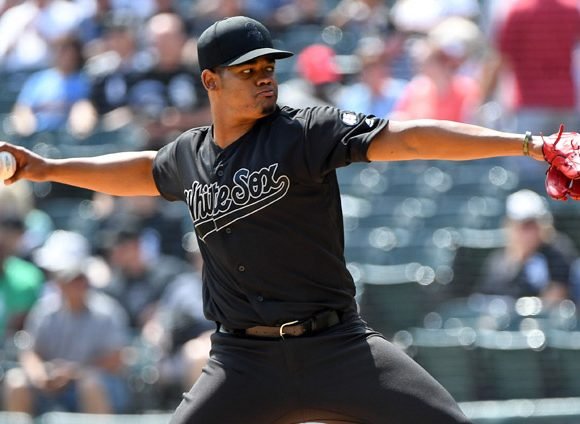
Now to the last of the starting pitchers, the guy who I thought was going to be a depth starter and a placeholder for Dylan Cease at the start of the year, and ended up leading the Sox in innings pitched after Carlos Rodon’s elbow evaporated and Lucas Giolito got shut down early in September. All things considering, Nova earned his paycheck this year, despite a very shaky start.

2019 Stats

34 Starts  187 Innings

11-12 Record

4.72 ERA  4.98 FIP

114 Ks  47 BB

5.49 K/9  2.29 BB/9  1.45 WHIP

2.0 WAR


Tell Me A Story: The Sox and Rick Hahn traded for Nova back in December of 2018 during the winter meetings. They sent 19 year old Yordi Rosario and $500,000 international bonus pool money to the Pirates for Nova and his $8.5 million in what was essentially a salary dump for Pittsburgh.

At the time I was intrigued by the move, as it really didn’t cost the Sox anything in the way of immediate assets and provided what Don Cooper loves best: a reclamation project with good stuff but no real sustained success. Nova was an international signee of the Yankees way back in 2004 when he was a teen in the Dominican Republic. He debuted in 2010 for the Yanks, and quickly turned heads in 2011 and 12 when he went a combined 28-12 in his first two full seasons.

After that, the consistency waned considerably the rest of his tenure with the Yankees and he finished with them in 2015 with a 5 ERA and a 6-11 record. He was traded to the Pirates thereafter and the consistency issues followed him West. Last year he had his best run in a Bucs uniform with a 9-9 record and a 4.14 ERA on a less than stellar team.

His first few weeks with the Sox were…less than inspiring. His first 9 starts saw him net a 2-4 record with a 7.12 ERA. He wasn’t really walking many or giving up a lot of dingers, his stuff wasn’t being located very well and that shit was getting hit all over the place.

After Carlos Rodon went down with his elbow issue, however, something clicked into place for Nova and he went on a pretty solid if not excellent run. Through the heat of the summer months he was locked in, starting 19 games and going 7-7 with a surprising 3.28 ERA. The true highlight was his start against the Cubs, holding them to 5 hits in the start, walking 1 while striking out 5 and getting an assist from Eloy with another bombshot into dead center that bounced off the fan deck and gave the Sox a 2 run lead Nova would keep safe.

If you take out the first 6 weeks of the season, Nova had a good year for someone who would be a 5th starter on most other average teams with a 3.80 ERA and a 9-8 record. Something that many teams would gladly take out of the 5 hole in their starting rotation. Unfortunately for the Sox, after Rodon went down Nova was more like the #2 starter with the inconsistencies of Reynaldo Lopez, the Rookie-ness of Dylan Cease and the absolute fucking black hole that was whatever started on the 5th day.

All in all, I would say that this was $8.5 million well spent on a guy who was acquired to be a 5th starter and ended up leading the team in innings pitched. Nova doesn’t strike a lot of people out, but he keeps the walks down and when effective keeps the ball in the park. You could (and the Sox did…hello Dylan Covey!) do much worse.

Contract: Made $8.5 million in 2019, the last year of his deal. Unrestricted free agent in 2020.

Welcome Back Or Boot In The Ass: As well as Nova performed this season in the position he was put in by the Sox, he’s just not going to be necessary next year. His spot in the rotation will most likely be filled by Reynaldo Lopez as Michael Kopech, Gerrit Cole (Hi Fels!) Dylan Cease and Lucas Giolito take the other spots with Carlos Rodon and his rehab waiting in the wings. Thanks for your help in making this summer a little more watchable, Ivan. Best of luck to you in Toronto.


Baseball

Maybe there will come a point where I can just fully enjoy the work of The Cerebral Assassin and not have this niggling little voice in the back of my head that fears when the bottom will drop out on him. I’m not the only one, I know. You see the stuff and wonder just how long the magic can go on, even though it’s gone on this long. When will I not worry that the tiny margins of error Hendricks has will be eaten up by just a tick of a loss in velocity or movement, and suddenly he’s going to be crab meat for everyone. It’s been four years of this. Four years of being one of the best pitchers in baseball. No, seriously, he is. If you go by WAR he’s 14th. If you go by ERA he’s ninth (ahead of Chris Sale if you can believe it). FIP he’s 23rd. WHIP he’s 12th, nestled between Zack Greinke and Madison Bumgarner. You have to ask yourself how much longer this has to go on before I and others relax. Anyway, over the river and through Hendricks’s 2019…

2019 Stats

30 starts  177 innings

3.46 ERA  3.61 FIP

7.63 K/9  1.63 BB/9   1.13 WHIP

41.3 GB%  10.4 HR/FB%

79 ERA-  4.1 WAR

Tell Me A Story: Quite simply, it was Hendricks’s best season since his Cy Young finalist season of 2016. He set a career-low for walks, and he did all that while actually getting the least amount of grounders he ever has. And that was seemingly by design, which at first you would think is insane from a pitcher whose fastball couldn’t break wind. And yet, Hendricks himself said he was trying to go high in the zone and above it more often, given how hitters had adjusted their swings. The charts are there for all to see:

And it clearly worked. Hitters couldn’t do much with any of Hendricks’s offerings up, as they didn’t manage an average over .220 in any of the three sections of the upper part of the zone .

Hendricks also upped the use of his curve, especially on first pitches to lefties (18% to 24%) and overall to righties, going over 10% for the first time when ahead or with two strikes. He had never really used it as an out-pitch before, but wasn’t afraid to do so this term. I don’t know that Hendricks’s curve is all that good, and maybe now that it’s entrenched in scouting reports and hitters will be looking for it it could be a problem. I also know that Hendricks will probably keep working on it and turn it into more of a weapon than it was, because that’s just kind of what he does.

Durability might be something of a question. This is the second year in three that he’s had some IL time, and he’s only been over 180 innings twice in five seasons. That could also be due a little to Joe Maddon’s itchy trigger finger with him at times, but it’s not a concern until it becomes one.

As seems to be a trend with Kyle, he had a rough start with an ERA over 5.00 in April, and his career mark is around 5.00 as well in the season’s opening month. Maybe it just takes him a little time to find the feel for everything or adjust to the cold. If he ever dominates an April to go with the most of the rest of his work, he’ll probably contend for a Cy Young again. Kyle had a rough August, but that’s mostly to do with giving up six of the 19 (!) homers he gave up all season in that month and some fiendish BABIP treachery.

Contract: Four-year extension begins at $12M.

Welcome Back Or Boot In The Ass: For the deserved kvetching over the Cubs and their payroll, it has to be said that the four-year, $55M extension they signed Hendricks to last spring training is an absolute steal. Again, if you look at the pitchers Hendricks ranks among the past four season, almost all of them are at least $20M pitchers and some are near or over $30M. He might not have any of their stuff or flash, but he has their results. Which in the end is all that matters.

It’s hard to say if Hendricks’s new gambit of going up in the zone will work over time, but the thing about Kyle is he’s always ahead of the game. He’ll adjust back down the zone or something new before hitters have caught up to his elevated ways.

Yeah, there’s worry about the loss of velocity, as even Kyle probably can’t dodge, duck, and dodge his way around hitters if he’s only throwing 85 MPH. His fastball is down a mile and a half per hour since 2016, and his sinker has lost nearly two. But we’re probably a few years from really having to worry about it.

We should just relieved that will all of the variables on this roster going forward, Hendricks is a known known. Even if my brain will never let me fully accept that about him.

Baseball

No one outruns time. We knew when Jon Lester signed this contract in the winter before the 2015 season, the end of it could get a little hairy. The Cubs have gotten just about what they could have expected, if not a little more. But the fear is that the END has come for Lester, and the Cubs and him are just going to have to survive the last year of it in 2020. Is there hope for better?

2019 Stats

31 starts  171.1 innings

4.46 ERA  4.26 FIP

8.65 K/9  2.73 BB/9  1.50 WHIP

1.36 HR/9  14.6 HR/FB%

102 ERA-  2.8 WAR

Tell Me A Story: Let’s start with the good stuff, just for funsies. Lester struck out more and walked less hitters in 2019 than he did in 2018. He had a better ground-ball/fly-ball rate. He gave up less line drives. So hey, that’s all good, right? Maybe he didn’t have as bad of a year as we thought?

That’s somewhat true. Lester was undone by a horrible BABIP of .347, 46 points worse than his career norm and a 57-point rise over 2018. That’s just luck…for the most part. Lester suffered from a bad hard-contact rate against, by far the worst of his career. Which followed ’18’s mark…which was also the worst of his career. That’s not luck. Lester gave up an expected average against of .282, which is some 60 points worse than his brilliant 2016 for comparison. It was a similar story with the expected slugging and weighted on-base against him, so though he probably could expect a few more balls to land in gloves, considering the amount of rockets he was giving up he can’t really depend on the good fortunes of BABIP Treachery either.

Lester tried to bat away the ravages of age by going less and less to his declining fastball and using a cutter more, probably to get in on righties a little easier. It did not go particularly well, as hitters went for a .294 average against it and a .506 slugging. Perhaps more worrying is this:

Whenever Lester threw that cutter in the zone, it got pulverized. And while Lester lives on the edges, he does have to throw a strike, y’know, occasionally. Whenever he did with the pitch he used most, it was plasma. This is a problem, and leads you to believe there will have to be a change in approach come the ’20 season. In previous seasons, Lester had found success by keeping that cutter up and in on righties. But even that, as you can see here, didn’t do much good this past season. Is he going to have to be Gio Gonzalez now, and just wager that hitters can’t stay patient enough to not swing at four balls before they get themselves out? It might be worth a shot.

It got to the point with Lester where the rotation was rearranged in September so that he wouldn’t pitch against the Cardinals in that series at home. Lester was ok in September overall, giving a good outing against the Reds in that Week-us Horriblus and holding the Mariners down on Labor Day. But he also got horsed by the Brewers and Pirates when the Cubs needed at least length against the latter and a win against the former. You always counted on Jon to somehow gut through a game the Cubs had to have, and either he didn’t at times or they stopped counting on him to do so. That’s probably the surest sign of age right there. Overall, Lester was blowed up in August and not much better in September, which again might have to do with age more than anything.

Contract: One more year at $20.0M, and a $10M buyout or $25M option in ’21 if he were to pitch 200 innings in 2020.

Welcome Back Or Boot In The Ass: There’s no boot in the ass option, and as Lester’s salary drops to $20M this year it’s not really egregious at all for what he will most likely be. You can do a lot worse in the #4 or #5 spot in the rotation than what Lester looks lined up to provide, and seeking it on the open market would probably still cost $12M-$15M anyway. So an extra five or so isn’t really killing the Cubs, though that won’t stop them from claiming so. Lester isn’t going to make 200 innings, as he hasn’t done so in three seasons now. He may want to, and he may try and pitch through some stuff to get there, but that will only make things worse. And maybe one bonus of having David Ross as manager now is Lester is less likely to either want to or be able to bullshit his way back to the mound if something on him is barking.

The question is whether Lester can be anything more than a competent seat-filler at the back of the rotation, and if the Cubs will need more than that depending on what they go and get to fill it out, if anything. The declining stuff can’t be gotten around, and it’s not like Lester is some loaf who can invent a new offseason training regiment or something. He’s already a tireless worker. This is just what happens to pitchers in their mid-30s who have logged these miles (2500 career innings). It would appear Lester’s plan of attacking hitters on their hands just isn’t going to work anymore, because he simply can’t get in there with the velocity or movement he has. At least he can’t in the strike zone. Maybe he can tweak that cutter to get a little more movement, but we’ll have to see on that one.

Lester has a decent enough curve, but he’s not going to be Rich Hill and snapping it off nearly half the time. Perhaps Jon needs to hone in on the outside corner, and as soon as hitters begin leaning out there can surprise them with the cutter in instead of using that as his main office.

Whatever for Vaughn. The Cubs can’t count on anything more than #4 production from Lester, and plan accordingly. That said, this being his last year in a Cub uniform should be something of a love fest for him. It was his signing that signaled the Cubs were ready for deep shit. It was he who pretty much dominated the 2016 playoffs, staring down Johnny Cueto first, keeping the Dodgers at bay twice, and then gutting out six innings of one-run ball in Game 5 against the Tribe when the Cubs had no choice. He’s been more than just a loyal servant and usually found a way to give you something even as his stuff and health have slipped. He was definitely a tone-setter in the clubhouse as one of the few players who had been around a lot.

Yeah, he got a lot of money. I doubt there’s a Cub fan worth a shit that would do that contract over, though.

Baseball

In some ways, the future success of this Sox rebuild could end up depending on just how good Dylan Cease ends up being. There are legitimate questions about his ceiling, and he probably is not going to end up being a true ace, but he could very well be a top of the rotation starter. With Giolito asserting himself as the ace and Michael Kopech only having a ceiling placed on his potential by TJ surgery, the Sox don’t need Cease to be a world beater, but they do need him to be good. 2019 served as a decent starting point. Let’s dig in:

2019 MLB Stats

14 starts  73 innings

4-7 Record

5.79 ERA  5.19 FIP

9.99 K/9   4.32 BB/9  1.55 WHIP

45.7% GB-rate  68.1 LOB%  21.4% HR/FB

128 ERA-  0.7 fWAR

Tell Me A Story: After tearing a hole through AA in 2018, Cease was pretty close to MLB ready at the start of the season but still started out in Charlotte. I actually didn’t mind that approach because we all know TINSTAAPP, and that really was less about service time (they left him down until July, after all) and more about him finding a groove with his stuff before coming to the bigs. He was solid through his 15 starts for the Knights, though not nearly the dominant pitcher he had been in Birmingham last season. Still, he struck out 24% of his hitters and posted a 3.79 FIP, though his actual ERA was 4.48 and he walked 10.5% of batters.

Once he got to the majors, those K- and BB-rates were nearly identical. He actually struck out batters more frequently, with a 24.9% K-rate, but still had that 10.7% walk rate. The walk rate might just always be a thing for him – even in 2018 with the Barons he walked 10.8% of batters, he just had the fastball and curveball to beat guys after the fact, and ended up with an 85.8 LOB%. It’s not exactly surprising that moving up to AAA and then MLB resulted in him getting away with the walks far less often. That’s just going to be something he has to overcome moving forward if he can’t stop walking guys, and right now there isn’t really a reason to believe he will.

Luckily, the fastball is still electric and his curveball is one of the best in baseball, at least by average break. As he hones those in more and hopefully starts to throw more strikes, hitters aren’t gonna be able to wait him out as much, and he is going to keep them off-balance.

Perhaps strangely, I think one of the best things Cease has going for him is that by all reports he is one of the mentally strongest dudes in the Sox organization. He is a super-zen yoga guy who literally traveled to meet a yoga guru and wears #84 because that’s how many poses there are in yoga apparently. There’s almost always been reports on him being very calm on the mound and being someone who can easily keep his focus. He also has apparently invested himself briefly in the brain training Lucas Giolito did to help himself get back on track mentally, which should just help with all that even more.

Contract: Team control through 2025, likely arb eligible in 2023.

Welcome Back or Boot In The Ass: Easy call here that you’re keeping him. Overall, Cease absolutely has a high ceiling, but the control is a legitimate concern going forward. He won’t necessarily have to sort it out entirely to succeed, but he’s gonna need to improve at least a little bit to force hitters to not wait him out so much moving forward. He also needs to find a way to keep guys in the yard, although I am not wildly concerned about those considering that he gave up 15 homers in 14 starts last year after only surrendering 16 in his entire MiLB career. I’m confident (perhaps irrationally) that he isn’t going to live in the 20+% range on HR/FB. With Giolito and Kopech likely to be an elite 1-2 punch going forward, Cease being able to be a #3 in this rotation could be a huge advantage for the Sox in the years to come.

Baseball

And now the big debate. It’s actually a couple rolled into one. Is Nicholas Castellanos the player he showed for the two months he was a Cub? Is he what came before that? Is he what the final numbers on 2019 with both Detroit and Chicago say? Somewhere in-between? And then you add to those questions whether he should be re-signed or not. It’s a lot to figure out, and that’s before getting into the Cubs’ figment budget questions that they’ve made real.

2019 Stats (DET & CHI)

151 games  664 PAs

.289/.337/.525

27 HR  73 RBI

6.2 BB%  21.5 K%

121 wRC+  .357 wOBA  .883 OPS

-12.6 Defensive Runs Saved   2.8 WAR

Tell Me A Story: You could say that Castellanos was THE story for the Cubs last year, at least on the positive side. He came in at the trade deadline and immediately started hitting, and never really stopped. He inarguably brought a jolt to the Cubs, and they were a team that definitely could have used it. Castellanos was certainly more explosive than either Almora or whoever else he actually replaced in the lineup by pushing Heyward to center.

If you were to only look at his numbers with the Cubs in the last two months, he looks like an MVP candidate. .321/.356/.646 for an OPS of 1.002 and an OPS+ of 151. As Castellanos himself pointed out, the more friendly environs of Wrigley made a difference in his home run production, as he hit 16 in the season’s final two months after hitting only 11 in the first four in Detroit. And half of them came at home, so over a full season that projects out to over 40 homers and near 50 for a season. Of course, Castellanos isn’t going to ever match the 32% HR/FB rate he had in August as a Cub. But even the 14% he had in September was higher than anything he did in Detroit last season, and above his career rate.

What Castellanos did do, regardless of where he was playing, is hit the ball damn hard. He had a hard-contact rate over 40% every month of the season, which the Cubs simply don’t have a lot of. Only he and Schwarber eclipsed that mark for the whole year. For comparison’s sake, the Dodgers had nine guys who did. The Astros seven. Maybe the problem isn’t the amount of contact, fellas?

And that’s just about the story with Nic At Nite. There wasn’t that much of a change from the Tigers to the Cubs. He mashed fastballs and sinkers there, and he did so here, and with a slice more luck and a smaller park, the numbers swelled. He’s a good hitter who got hot and he will almost certainly remain a good hitter.

A key aspect to the Castellanos debate is his defense. It was better in ’19 than it was in ’18, and there isn’t nearly as much ground to cover in Wrigley as there is in Comerica, even if you have to deal with the sun and wind and Ryker from Highland Park throwing beers at you. But it still wasn’t good, The optimistic will tell you it was only his second season playing there and the improvement from ’18 to ’19 will only continue. The pessimistic will tell you he looks awkward as fuck out there, his routes are Dali-esque, has next to no range, and he just doesn’t have a feel for it out there and probably belongs in left. Which probably means the truth is somewhere in the middle as always.

Contract: Free Agent

Welcome Back Or Boot In The Ass: Oh if it were only so simple. Yes, with no budget constraints-perceived or real or self-imposed or necessary–you’d re-sign Castellanos and have him and Schwarber in the corners to mash and you’d find a better solution in center to cover for their defense and maybe provide some offense and consign Heyward to the 4th outfielder role he’s been hurtling toward for four seasons. But life isn’t that simple.

These days, it’s impossible to know what Castellanos can make on the free agent market. A couple years ago, you’d be sure it was over $20M a year for five years at least. Now three years for between $51M-$54M seems the more likely, and even then who knows what the collusion owners will dictate.

But even at that $17M figure, it’s a tough squeeze for the Cubs. Even with just their arbitration raises as projected, the Cubs end up near $180M in payroll. And that’s if they don’t get to extend anyone with a bigger figure. And it could be more than that. That might leave somewhere between $35M-$40M to play with. But if you and Castellanos half of that, is $17M-$20M enough to get the extra starter and bullpen arm or two the Cubs need more desperately? It could be but would be a tight squeeze.

On the other side, having Castellanos on the team most certainly can’t hurt and if he’s anything close to the August-September guy, $17M is a bargain. If a third season sees his defense improve…maybe you can get away with it? Can you live with Heyward for a full season in center? Doubtful. Would you trade Schwarber? That’s production you’d have to find again and probably pay premium, either through money or trade, to do so. Isn’t that running in place?

On the plus side here, I don’t think there are any wrong answers. You can sign Castellanos and just say you’re going to bash the shit out of the ball and hope that’s enough to outrun your at-best subpar outfield defense. Or you can let him walk, use that money for the pitching you don’t have, and mitigate not having that offensive production. And maybe with a smart trade you can get some of it back anyway.

Looking at it though, Castellanos hits the ball awfully hard. The Cubs don’t. They’ll have to answer that somehow.

Baseball

As AJ said yesterday, the hopeful and wandering eyes (ewww) of Sox fans are going to turn from Lucas Gioilito to Reynaldo Lopez next year. Is Lopez a candidate for such a turnaround? Let’s get in up to the wrist.

2019 Stats

33 starts  184 innings

10-15

5.38 ERA  5.04 FIP

8.27 K/9   3.18 BB/9  1.46 WHIP

35% GB-rate  69.2 LOB%  14.0% HR/FB

119 ERA-  2.3 WAR

Tell Me A Story: It was something of a strange year for Lopez, as in a lot of ways he had the same exact year as he did in 2018. And in some ways better, except without any of the results or numbers that would agree with that. He struck out slightly more hitters than he did in ’18, he walked slightly less hitters. He got ever so slightly more ground-balls, and considering what the baseball was his hard-contact against was essentially the same. And yet his ERA jumped nearly a run and a half and his FIP almost half a run. What’s going on here?

Some of this is luck. Lopez gave up more homers simply because more of them floated out of the park, which happened to just about everyone this season (at least not named Gerrit Cole). Whereas his fly ball-to-homer ratio previously was under 10%, it rose to over 14% this year. But Lopez didn’t give up hardly any more flies than he did previously, nor was the contact on them any more lively than before. They just ended up in places in various parks that were homers where they didn’t before, which is essentially just kind of random. Lopez wasn’t helped either by a dip in his left-on-base percentage, which is just sequencing. His 69% mark is three to four points below league average, and could just rebound simply because next year. More solo homers instead of them with men on would improve his ERA and such, without him actually doing anything differently.

Still, that’s not all of it. Lopez’s stuff suggests he should strike out more hitters than less than one per inning. And yet he doesn’t. Lopez’s fastball velocity ranked in the top-10 of all starters this year. The guy behind him was Max Scherzer. The guys ahead of him were Marquez, Alcantara, Castillo, Buehler, Wheeler, deGrom, Cole, and Thor. Almost everyone of them have much bigger K numbers than Lopez, and if not that than better success. Why so?

The easy answer is that they have better offspeed and breaking pitches, but that’s only partially true. The thing with Lopez’s fastball is though it’s one of the hardest around, it doesn’t get the whiffs you might think:

With Lopez’s velocity, you want him living at the top and above the zone. But all the other pitchers mentioned get whiff-per-swing rates in those six spots in the 30% range or 40%. Some even 50%, which Lopez has only in one spot and is probably more due to a weird spike than any skill. Maybe hitters just see Lopez’s fastball better than those others’. Maybe he needs some more deception in his delivery, but considering he’s throwing 95-97 regularly he should be blowing that pitch by hitters more often. And he’s not. And that’s a bigger problem because it’s still the pitch he goes to most often when ahead and with two strikes.

Lopez has good breaking stuff, but they don’t seem to come out of the same plane as his fastball. He mostly keeps his fastball up int he zone or above, but his slider breaks from the middle or low in the zone and out. Hitters can pretty much suss out when it’s not up it’s not a fastball, though they still offer and whiff at a decent amount of them. Though hardly a heroic amount. When pitching to lefties, his change still comes out of a lower plane as well. Perhaps using his curve more, which does come out of his hand looking higher in the zone, is the key. Or given how hard he throws, not being afraid to use the middle of the zone more often on the edges, and then the slider and change will look a little different. Clearly the tools are there.

Contract: Team control, arbitration eligible in 2021.

Welcome Back Or Boot In The Ass: Well this is obvious. Lopez will be part of the rotation next year and hopefully for a good long while after that. And seeing as how he’s put up over 180 innings his first two full seasons, his durability will be needed in a season where the Sox don’t know what they’ll get from Carlos Rodon or Michael Kopech in terms of innings. He’s clearly the next project in the Giolito mold, how they can unlock what is clearly a lot in that closet. Feels like a delivery tweak is coming for him too to give him more deception and to make sure that fastball gets on hitters instead of them seeing it the whole way. Lopez will be 26 next year, so there’s still time but there isn’t the oodles of time it might feel like. If they can boost him as they did Giolito next year, then the games might matter in August again.

Baseball

Are you tired of reading these pieces from me yet? Because I’m awfully sick of writing them. In the past two years I’ve addressed the whitewashing of sexual assault, mansplaining (which for some reason has Sam as the author?? Very meta), and gender-based discrimination and the wage gap. Each of these situations were bad in their own way by highlighting persistent misogyny and distinct cultural issues that we still have in the country (and world), but this Brandon Taubman story really ticks all the boxes—workplace discrimination and undermining women’s basic competency at doing their jobs, the policy of valuing success over human decency, and minimizing the scourge of domestic violence. How could one asshole manage to do so much? Let’s examine:

The Art of the Non-Apology

See, that’s because it’s not just one asshole. Yes, this brouhaha was initially caused by the actions of one asshole, but it was a group of equally obnoxious ones that showed how odious this episode really is. You’ve got Taubman screaming weird, uncomfortable nonsense directly at women, clearly meaning to intimidate them or make them feel awkward. That’s bad enough on its own, but for the Astros to declare the story was “misleading and completely irresponsible” is, well, misleading and completely irresponsible. Dismissing the reporter out of hand and acting like Taubman was giving interviews when in fact he was spouting off because he wanted to is idiotic in the internet age when others can so quickly corroborate, but the subtext here is also, women are emotional, they’re too sensitive, her account isn’t trustworthy.

Once it finally became clear to these morons that doubling down on lies wasn’t going to work, they went with the phony contrition in the perfect non-apology: owner Jim Crane talked about money and Taubman gave the “I’m sorry you were offended” excuse. First of all, pointing to your wallet when you just hired and paid an abuser is not really a good look, and second of all, nowhere did Crane or Taubman acknowledge that Stephanie Apstein was accurate in her reporting (ya know, doing her job).

Apologizing to her for knocking her journalism might have made a little more sense. Especially since Taubman also used this opportunity to trot out the oldest and lamest excuse of them all: I’m a “loving and committed husband and father.” Listen, literally every male on this planet was birthed by a female of the species. Every single person here has a connection to a woman in the most primal of ways, so saying you’re a good guy because you know one doesn’t work. More importantly, even if you were an alien or had sprung fully formed from your father’s head like a fucking modern-day Athena, you should STILL respect women because THEY ARE PEOPLE THE SAME AS MEN ARE. This tired-ass excuse is just admitting, “I respect women because I’m putting my dick in one.” Try again, dumbshit.

At All Costs

Turning a blind eye to violence against women if it gives your team a chance to win is nothing unique to the Astros. They just really went all out in proclaiming it. Which is funny because Osuna blew the damn save so in addition to being boorish this Taubman is also just plain stupid. But we’ve seen it with Aroldis Chapman, we’ve seen it with Addison Russell, and those are just two that made headlines in these parts. It’s happened in the NFL and undoubtedly in every league more times than you can imagine. Hell, Bobby Hull is still celebrated here and he’s a monster.

And this latest situation won’t change that. Taubman and the Astros look like jerks but it’ll pass, people will forget, and front offices will continue to sign and pay men who abuse women because those men are talented athletes. If the Astros lose this series, or perhaps if Osuna himself really shits the bed, he himself will be out of a job, but there is no agreement among owners to shut these players out in the way that NFL owners blacklisted Colin Kaepernick. We know it can be done since we’ve seen them effectively freeze him out of the league, but until that dedication is turned against abusers, there will only be more stories like this, both in terms of people scratching their heads saying why is this abusive piece of shit on [fill in the blank team], and in terms of cowards like Taubman using the threat of superiority and control to intimidate women in moments when they don’t think anyone can stop them.

Same As It Ever Was

And that’s really the issue—that domestic violence is still explained away as a personal matter or a private issue, anything other than the devastating crime that it is. That’s why the Astros initially tried the smear campaign. Doing so twisted the issue of defending the indefensible to questioning whether a reporter was accurate. Accuracy is much less fraught than the former scenario and it takes the spotlight away from the fact that the team doesn’t really care if he kicked the shit out of his partner.

The worst irony of it all is the inability for these guys to admit they were wrong. Taubman was wrong for just being a douchebag, Crane was wrong for a non-apology, the organization as a whole was wrong for undermining a journalist, there’s plenty to go around. But facing domestic violence—when it’s literally happening to you—involves the harshest admission of being wrong. You have to look at yourself and everyone you know and say “I was wrong.” I was wrong about everything, I was wrong about who I thought this person was, I was wrong about what I thought my future would be, I was wrong about all the excuses I made, I was wrong about all of it. And now here I am.

The absolute inability of men in positions of power (we’ll go with sports and keep it focused here) to say that is part of why abuse is so common and so pervasive. If you can’t say you were wrong to defend this person, and you can’t say you were wrong to hire this person, then what’s going to make you say it was wrong that this abuser did what he did? It’s a culture of impunity, and unless it ever changes women will continue to be on the receiving end of that cruelty.

Photo credit: awfulannouncing.com


Baseball

It doesn’t fit for this front office to say they put on a show to justify making the choice they wanted to make the entire time anyway. Maybe they did, but while they don’t always get it right, I would be hard-pressed to ever accuse Theo Epstein’s regime of not being thorough. I don’t think there’s any move they’ve made where they were just tossing a football around the office, never even looked at a sheet or screen, and said, “Yeah sure whatever.”

So I don’t think the two interviews for David Ross were just for the sake of doing it because they gave Joe Espada two interviews. I don’t think they were just making it seem like they were doing their due diligence while they actually just got drunk with Ross and made fun of ESPN personalities (which probably did happen in addition, to be fair). My guess would be they put Ross through a pretty heavy ringer to be comfortable giving him the manager’s job.

Does the familiarity help? Sure, of course. But that goes both ways. The only thing I’m sure of with the Cubs’ manager search is they wanted a guy who will run the team in the same vision they have for it as they put it together. That doesn’t mean they’ll be calling down to the dugout during the game and telling Ross or whoever else they might have hired what to do. But when they put together this team this winter, whatever and however that’s going to be, anyone would have a clear idea of how they want the pieces moved on the board. Whether that vision is correct or not…well, that’s what a baseball season is for.

So yeah, they probably want their bullpen used more creatively than 7th- and 8th-inning guy, and then closer. Especially as it’s likely to have at least two guys–Alzolay and Chatwood–who can be used for multiple innings. They probably want that in close games, not just mop-up situations or when there’s no other option. They want a different environment for younger players, as this one kind of stalled out for some (assuming they can actually play). They probably don’t want Albert Almora leading off ever again. They want things to definitely be tighter than they were this year.

But for anyone to say, “Oh Ross will do this or that. Or he’ll bring this or that to the clubhouse…” We don’t have any idea. He doesn’t have any idea. Neither does Theo. We can guess and they might have a stronger inkling thanks to the interviews and their relationship with him, but no one knows.

Sure, he doesn’t have any experience. But he also spent his entire career as a backup catcher, which means he spent most of his career watching from the dugout, seeing how things play out. And if he thought he wanted to be a manager at any point, which he obviously did, it was probably in that context at some point long ago.

Yes, he has a relationship with some of the players, and all of the core. Maybe that means he holds them accountable better. Maybe it means he thinks he’s still their buddy. Maybe it means he knows exactly how to get through to them and immediately get on board and bring the rest of the team with them. We don’t know, and probably won’t until July.

Maybe he sets a harsher tone. He was a great clubhouse leader as a player. I mean, everyone says so. Except that all of those things that made him so are things we never saw. We take their word for it. The volume of it makes it probably true, but how does that play as a boss? He acted as something of a conduit from the manager to the players in both Boston and Chicago, so he’s not unfamiliar. But I’m not going to take him yelling at Anthony Rizzo one time in spring training as a basis for how he’ll run an entire team for an entire season and more.

But the tangible stuff? We don’t have any idea. Can he get players to change their approach at times? A few hitting coaches have failed at it now, so why will Ross be any different? He could. He might not. We don’t know. Can Ross make Quintana discover a new pitch or new way of delivering one of the ones he has to find more success? Maybe? Who knows?

Ross will probably look like a good manager if he gets a starter to slot either right below or right in the middle of Kyle Hendricks and Yu Darvish and definitely above Q and Jon Lester, along with two more bullpen arms. I bet he looks pretty smart then. Oh, and Ian Happ hits out of center and Nico Hoerner is ready to take over at second by no later than Memorial Day.

All we can say for sure is that in those interviews, the outline or vision Ross had for how this team should look and be deployed lined up with what the front office sees. But we don’t know what that vision is, they’re not going to tell us. We’ll find out during the season.

My fear is that Ross’s name and esteem amongst Cubs fans and media is part of the appeal, in that he’ll buy some breathing room and time for the rest of the organization in case they have plans they know we won’t like. That’s probably some of the appeal, but not all.

But in the end, we don’t know. We’ll fill this vacuum of nothing with our thoughts and opinions and most of all our guesses because there’s nothing else to do and you can’t leave a vacuum a vacuum, duh. But you don’t know. I don’t know. They don’t know.

And by the time we do know, it could be too late. Or it could be perfect. It could be anything. That can be exciting. That can be daunting. Again, anything.

Baseball

With the position players done, we move on to the starting pitching staff where we begin with what might be the biggest success story in White Sox (pitching) history. More on this after the stats jump. To The K-Mobile!


2019 Stats

Games Started: 29

14 Wins 9 Losses

3.41 ERA 1.064 WHIP

228 Ks 56 BB 24 HR

11.62 K/9 3.43 FIP

5.1 WAR


Tell Me A Story: In 2018, Lucas Giolito was the worst starter in all of Major League Baseball. That’s not hyperbole at all, it’s a statistical fact according to Fangraphs. Out of  57 pitchers who met innings pitched requirements, Giolito ranked 57th. Having personally watched a few of his starts live last season, it was a ranking well earned.

With that in mind, expectations for this season were not very high. When he started the first five games of the season with a 5.32 ERA, most were ready to write him off as not a viable core piece for The Future™ being built by Rick Hahn.

Then he went and ripped off nine-straight starts where he didn’t give up more than three runs and struck out at least seven batters. Even more impressive was the improvement of his control, only walking 16 batters in those nine starts. His changeup was electric, with the kind of downward motion that Johan Santana used to beguile Sox hitters with. His fastball was located in the upper reaches of the zone, just at the spot where a hitter can’t possibly catch up to it but it still looks like it could be a strike.

He had one burp (unfortunately) against the Cubs where he gave up six, but he rolled into the All-Star break with an 11-3 record and a 3.15 ERA. This was easily good enough for him to be selected to his first ever All Star game (along with the guy he credits for some of his improvement, James McCann), and ranked him as the 2nd best pitcher in the AL after future White Sox signee (I hope) Gerrit Cole.

After the All Star break ended, Giolito ran into some trouble. From the middle of July till the end of August his walks-per-9 spiked from around 1.55 to almost 2.50. The changeup that was dancing so well at the end of July was just spinning in the middle of the zone and getting pummeled by opposing hitters. Most pitchers that like to live at the top of the zone are susceptible to the long ball, but as long as their out pitch moves out of the zone it’s a line they can walk. That wasn’t happening in Gio’s case, and the results were showing.

As is his way, Giolito dove into the Sox video archives of his starts and dissected his mechanics to find out what his issues were with the release point in his change that were causing it to get slaughtered. Whatever he found, it worked. From his start against the A’s on August 11th (where he gave up two in six innings and took the L while striking out 13) to when the Sox pulled the plug on him in the middle of September with a lat strain Giolito had a 3.33 ERA in seven starts while striking out 70 and only walking 10.

From the 57th starter in the league last season to the 10th overall this year, Giolito is deserving of a few Cy Young votes, and is one of the three players nominated for Comeback Player of the Year Award. He’s also become the surprise gem in the Sox pitching rotation of The Future™. The most impressive thing about Gio’s stats this year (other than the BB and K rates) is the fact that very little of his success is due to batted-ball luck. His FIP is 3.43, which is only .02 higher then his actual ERA, and his BABIP sits at a cool .275, where in comparison Gerrit Cole’s is at .273.

Credit to Giolito for not imploding in on himself like a dwarf star and becoming the latest in a long list of high hype pitchers that never live up to expectations. After the disaster that the 2018 season was for him, his hard work in the off-season should be the boilerplate for Sox pitchers, and something that Reynaldo Lopez should look to emulate this winter.

Contract: Giolito earned $573,000 in 2019 and is under team control in 2020. After that the arbitration years kick in and things will get exponentially more expensive. Look for Rick Hahn to attempt to buy him out of his arbitration years like the Sox did with Tim Anderson and Eloy with a 5-6 year extension.

Welcome Back Or Boot In The Ass: This isn’t even a consideration, as Giolito has become the ace that the Sox have been looking to develop since before Chris Sale suited up. As a certified member of The Future™, Giolito will be here for the long haul and should become the Obi-Wan Kenobi of the Sox starting rotation from here on out, teaching the young Padawans his secret Jedi pitching ways. Sorry, just watched the new Star Wars trailer for the 300th time and am still buzzing.

Baseball

For most of the season, the story or narrative around Jason Heyward was that he’d finally come good with the bat. There seemed to be more power, there were better ABs, so much so that he got himself elevated to the leadoff spot. Where he was a crime against nature. And as the season went along, and we came to realize the flubber contained within the baseball, Heyward’s season didn’t seem to be so much a revival as it was just riding along with the tide. And in the end, it was pretty much the same completely average offensive season 2018 was. Except it didn’t come with stellar defense, though that really wasn’t his fault. Let’s take a trip, take a little trip…

2019 Stats

147 games, 598 PAs

.251/.343/.429

21 HR  78 RBI

11.5 BB%  18.7 K%

101 wRC+  .343 wOBA  .772 OPS

-1.7 Defensive Runs Saved  1.9 WAR

Tell Me A Story: On the plus side, Heyward’s 21 homers are by far the most he’s hit as a Cub. His on-base was the best of his Cubs career. His slugging was, again, the highest of his career on the Northside. So that all sounds good. The problem is that EVERYONE was hitting more homers than they had in years, which raised the slugging percentage of just about anyone. So when you look at league averaging stats like wRC+ or OPS+, Heyward’s doesn’t stand out in the least.

Still, there are some caveats. Heyward’s August was simply woeful (58 wRC+), but that’s where he was installed in the leadoff spot. Now, I’m not sure why batting somewhere else should make any difference, because the idea is still the same. Have a good AB, try to get on base, and try to hit the ball hard if you can. But it obviously does, and because it’s become such a Bermuda Triangle area for the Cubs, there might even be a bigger mental block for anyone trying to take it on. We’ll just leave it as something weird just happens there. When batting 5th, 6th, or 7th, Heyward’s wRC+ was 162, 120, and 101.

Second, if only against righties, Heyward’s numbers look really good. .350 wOBA and a 115 wRC+. And seeing as how he had 112 PAs against lefties, you can certainly say he was trotted out against southpaws just far too often. You don’t want to admit Heyward is just a platoon player based on his paycheck, but we can see how the season played out. It’s what he is. Perhaps the next manager will see these, or more likely be shown these, and only keep Heyward in spots where he has success.

Heyward saw a big jump in his walks this year, but also a pretty big drop in his contact numbers. His contact-rates were still above league average, though. There was an uptick, and not a small one, in his swinging strikes. A small crawl up in that category in fastballs is worrying for a player who crossed the threshold into his 30s, because that doesn’t tend to get better as a player ages (what does though, really?). The bigger uptick is whiffs on sliders is also a warning sign, as it might suggest Heyward was starting to inch a little more into cheating on fastballs, or getting there. At least trying to get started earlier, which left him susceptible to pitches that look like a fastball until breaking down.

Perhaps the most worrying aspect of Heyward’s season is the drop in defense. But that almost all comes from his shift to center, which started even before the acquisition of Nicholas Castellanos, as Albert Almora‘s skeleton fell out and forced more people into right as Heyward moved to center so the Cubs could get any offense out of those spots. Heyward still grades out above average in right. He wasn’t a disaster in center, but he’s not a plus fielder there. Which is why some like me have argued against re-signing Castellanos, because the outfield defense would be so bad. We’ll see how the Cubs feel about it. Again, as he moves into his 30s, it’s not very likely that Heyward is going to get better in center, and probably not even in right field. But he can be a plus right fielder for a while yet, you’d think.

Contract: $21M in 2020, signed through 2023. Has opt-out.

Welcome Back Or Boot In The Ass: The Cubs don’t have much of a choice here obviously. Heyward is not going to opt-out, unless he’s the nicest guy in the world. Trading him isn’t really an option either, unless some team sees intangibles that only they can see and Heyward is moved to agree to such a move. And why would he? Also, his adult presence in the clubhouse probably shouldn’t be overlooked, as the Cubs don’t have a lot of vets who’ve been around long enough to be comfortable voicing anything.

So he’s going to be on the team, and that’s not a bad thing as long as he’s only asked to do what he does well. Which is play right field, hit in the back half of the order, and only against righties. That probably affects what the Cubs will do this offseason, as they’ll need to find someone(s) who can play right and center against left-handed pitchers (which might keep Happ around?). If they keep crowbarring Heyward in the lineup against lefties and/or in center, they’re going to have some if not all the same results.

As Heyward ages, he’s going to have to adjust to get to more fastballs somehow. Shorten or quicken his swing, which is hard to do at his age and something he’s already tried to do once. Being vulnerable against sliders is probably only going to be more of a feature in the coming years. It won’t wreck him yet, though, or it shouldn’t. Heyward is still a plus to have on the team if used properly.