Everything Else

As a fan of a team with still- recent success, and a lot of it, perhaps there has come a time when you’ve been perplexed how a different fanbase could become so infatuated with a player that isn’t as good as the one you have in the same position. Perhaps you’ve been exasperated at even attempting to explain that the entrenched nature of said player is part of the reason of that particular team’s failure to progress. But you can only judge the players in front of you as a fan, and the scale you’re given is dependent on the talent around them. Remember, it wasn’t so long ago that Tuomo Ruutu was a beacon of hope and we tried to talk ourselves into Mark Bell, It was what was on offer, and there wasn’t anything else on the menu.

Fans will always generate affection for what is before them, but it is an organization’s job to be above that. Even if that can get a little callous at times.

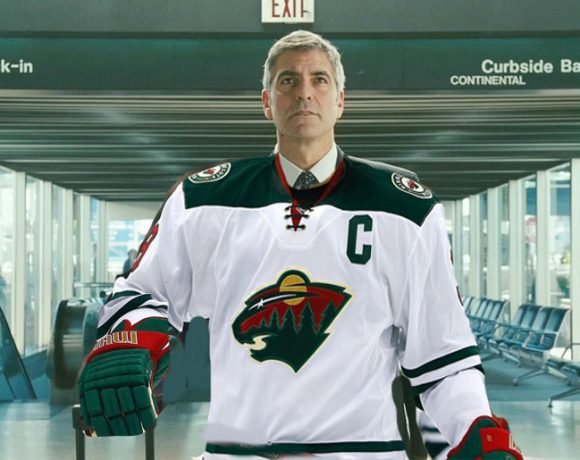
If you can believe it, this is Mikko Koivu‘s 14th season, all of them in St. Paul. And he’s been very far removed from a bad player. He’s amassed 193 goals and 660 points in 927 games, or just about 50 points per season. He’s been about as all-around of a player as you can ask, with impressive underlying numbers for as long as they’ve been tracked. Certainly, he’s been a loyal servant to the Wild, and you wouldn’t be shocked if one day his #9 goes into the rafters if for nothing else being the longest-serving player in their history. In a lot of ways, Koivu is the best Wild player in their history, which tells you about as much as you need to know.

Koivu has never broken the bank, but he’s done well. His highest contract was for $6.7M  for seven years, which ended after last season. He re-upped for two more $5.5M starting this season, and you have a hunch these could be the last two. Certainly, Koivu hasn’t been a huge issue when it comes to the Wild’s cap problems.

And yet for most of his time in Minnesota, the Wild checked him off as a #1 center. And quite simply, he’s never been that. He’s been over 70 points once. He’s never broken 0.9 points-per-game. He’s never scored more than 22 goals.

Basically, those numbers along with his defensive prowess make for the resume of a very good #2 center. And yet it’s only recently that Minnesota has tried to make him that, first by moving Mikael Granlund to center and now paying for the aging Eric Staal. And perhaps it’s too late.

Chuck Fletcher rarely saw Koivu as anything but. Certainly Koivu was perfect for the Jacque Lemaire/Doug Riseborough era, as he was defensive first who wouldn’t try anything crazy on the offensive end (and why original draft pick Marian Gaborik never really fit). But that style was ushered out by the Great Lockout of ’05, and the Wild took too long to adjust.

You can see the affinity for Koivu. The second first-rounder in team history. Never rocked the boat like Gaborik. Showed up and did his job every day, and well. Connected with the community. Anything that demotes him would be given a side-eye in defense of a player who never really did anything wrong. It’s hard not to fall for a guy like that.

But Koivu is a symbol of how it’s always been just not enough for the Wild. Koivu wasn’t Henrik Sedin when they were in the Northwest Division. He wasn’t Jonathan Toews when they were chained into the Central, though he did give the latter a fair share of headaches. He wasn’t Ryan Getzlaf or Joe Thornton or Anze Kopitar. But you can’t help but feel that the Wild viewed him as that for too long, and didn’t bother to pursue someone who would be.

Koivu is what he is, and he doesn’t have to apologize for that. He can’t help what the team viewed him as and what they sought to put around him instead of in front of him. Sometimes a good player embodies what is good about a team. Unfortunately for some, sometimes they symbolize where a team fell short.


Game #4 Preview Suite

Preview

Spotlight

Q&A

Douchebag Du Jour

I Make A Lot Of Graphs

Lineups & How Teams Were Built

Everything Else

In this strange world of hockey writing we are more and more forced to deal with the unhinged and downright strange. So today, we have a salvo from something called The Noogie. When you send these things out into the abyss, you can’t be made when the abyss sends something weird back. You can find it on Twitter @The_Noogie.

The Wild have pretty much brought back the same crew from last year. Why do you think this version will turn out better or worse?

It’s not so much that the Wild brought back the same crew as last season. It’s just that the biggest addition of the offseason happened in the front office when owner Craig Leipold released former GM Chuck Fletcher after nine seasons and brought in Paul Fenton who previously was the Assistant GM for the Nashville Predators. Fenton was brought in with the understanding that Leipold was not looking for a complete rebuild, but more a new set of eyes to look upon an old problem.

So, with one hand essentially tied behind his back, Fenton made few moves in the offseason, certainly nothing that was sending shockwaves across the NHL. Role players like defenseman Greg Pateryn and centers Eric Fehr and Matt Hendricks were brought in to provide depth and a little cushion for some of the younger guys coming up through the system. They are by no means game-changing additions for the Wild which has a lot of the fanbase feeling lethargic about this squad that despite making the playoffs the past six seasons, have not made it past the first round in their las three tries.

At the same time, injuries plagued the Wild last season. It didn’t matter the time of season, one of the Wild’s every-day starters was likely out of the lineup. With that in mind, one could make the argument that if this team can stay healthy, they have a great shot to make some noise. Then again, they’ve been healthy before, with much of the same core intact.

The Wild also bought out the remaining year of Tyler Ennis’ contract and shed the husk of Matt Cullen as well. But don’t worry, Nate Prosser is still floating around eating popcorn somewhere. Some things never change, and that notion very much applies to how this season will probably shake out for the Wild. Not noticeably better and not noticeably worse.

We watched Jordan Greenway crush fools in the WJC a couple years ago. He was one of the few younger players to make the Olympic squad last winter. What are the reasonable expectations for him in his first full NHL campaign?

Greenway certainly has been fun to watch as he came up through Boston University, made a few international tournaments along the way, and participating in the most recent Winter Olympic Games in PyeongChang as well. His performance in the WJC in 2016-17 was the bright spot. The gold medal winning USA squad also featured another Wild prospect in Luke Kunin, both players are worthy of your attention as their careers progress in the NHL.

Hockey Wilderness runs a series every fall where we rank the teams top 25 players under 25 years old. This year Greenway finished 4th in our rankings. We are mostly excited about this kids’ potential, but he is going to need some time to figure things out at the next level. It’s not underselling it to say this guy is a monster on the ice though. Standing at 6’6” and tipping the scales at 230 lbs. he’s a big body who will be hard to dislodge from the puck, and if he lines you up for a check, watch out!

Greenway made the team right out of camp this season and has been centering the 3rd line with a couple of utility wingers in Charlie Coyle and Joel Eriksson-Ek. Don’t count on him making his way into the NHL lexicon this season though. It’s early in the season and he is still adjusting to the speed of the game at this level. He has been successful at every level of hockey, so there is no reason to assume he won’t find a solid NHL game over the next couple seasons.

The Wild are once again up against the cap after re-signing Jason Zucker and Matt Dumba. What’s the plan to free themselves up a bit in the coming years?

The salary cap has been the rallying cry for some disgruntled Wild fans who want to see Ryan Suter and Zach Parise’s heads on a spike. Until those two contracts are off the books, the Wild are on the hook for their matching 13-year, $98 million contracts signed on July 4th, 2012. If one were to retire after the season, or be bought out… let’s just say it gets really gross looking in 2022-23, and worse in 2023-24 and 2024-25. If both contracts expire after this season, X2. YAY!!!

We don’t like to talk about the salary cap in Minnesota, but if we must. Zucker’s 5-year, $27.5 million and Dumba’s 5-year, $30 million contracts are hardly the albatrosses on the roster. Both players who signed extensions this past offseason showed significant growth over the previous season, and their contracts cap hits are right in line with what Nino Niederreiter and Mikael Granlund signed in the summer of 2017. In these four players, you will find many admirers in Minnesota. This is the young core the Wild look to be building around.

With the cap, the plan is to wing it, because what else can you do? You have a pair of the last great old school bananas contracts which the 2013 CBA (that cost half a season) was designed to put a stop to and penalize. But who knows, that CBA expires after 2021-22, they could blow it all up again and the Wild could avoid a very painful future.

What are you expecting out of the Wild this year?

Same old Wild, and with how this season has started that old looks like it’s starting to show. Mikko Koivu, Devan Dubnyk, Eric Staal, Suter, Fehr, Hendricks, and Zach Parise will round out your over 30 crowd. Jared Spurgeon will be joining them in a years’ time as well. Entering this season on the active roster the Wild boasted a league-leading 9,637 combined games played. These guys have been around the sun a few times. Suter is also coming off a nasty ankle injury from late last season that caused him to miss the playoffs as well as the final few regular season games, so he’s looked an extra step off to start the season.  

The Wild have looked a step behind out of the gate losing 4-1 to a speedy Colorado Avalanche squad and dropping their home-opener after giving up a late-game lead and losing in a shootout to the Vegas Golden Knights. If the Wild get their possession game going, they’re as dangerous as anyone. And it’s not as if the Wild are just a bunch of potted plants out there. Zucker can be elusive and is very speedy, Granlund and Nino are pretty quick as well, and Staal has been sneaky in his ability to get behind the defense.

So where might the Wild finish? I’m inclined to believe this team will do well in the regular season and make the playoffs once again as either a 3rd seed in the central or fighting for a wildcard spot. Unless we see some significant growth from the younger guys, especially players like Charlie Coyle who really need a good bounce back year, it’s tough to believe this team is worth much more than what their recent history has shown with them bowing out of the playoffs early. One hopes for the best, but this is Minnesota sports. Good things don’t tend to happen here. (Don’t worry, Khalil is coming to help with that for the next five years. -ED)


Game #4 Preview Suite

Preview

Spotlight

Q&A

Douchebag Du Jour

I Make A Lot Of Graphs

Lineups & How Teams Were Built

Everything Else

We’re not blaming Eric Fehr. After all, who wouldn’t take a paycheck to play NHL hockey? You only get a certain window to play at the top level, and every player wants to extend it as long as they can.

The thing is, Fehr has been terrible for three or four seasons at least. There’s a reason the Leafs had him in the AHL for most of last year. Fehr hasn’t scored over 14 points since 2015. Not that Fehr ever was considered a scoring threat, but there was a time when he was a bottom-six, support-scoring guy. He’s always skated well enough, though even that’s changing at 33.

But Fehr’s underlying numbers have been terrible for a long time. Relative to his team, his possession-number hasn’t been positive since 2014 with Washington. And he’s been aggressively bad for most of the time since, posting relative-Corsis like -6.8, -9.4, -9.5, and -7.6. That’s not just bad, it’s aggressively so. Yes, Fehr has taken an overwhelming majority of shifts that start in the defensive zone. So he’s not likely to turn the play the other way most of the time. Still, you’d like him to be able to do it at all. It’s been five years since he’s done that.

As the game skews younger, you’d think players like Fehr are going to be moved out. There are certainly middle-six veterans who struggle to find the money they deserve thanks to the salary cap. But Fehr isn’t one of them. NHL teams and general managers are suckers for a veteran fourth-liner who like, growls a lot and “knows how to be a professional.” Or at last that’s what they say.

Fehr is hardly taking up much cap space at $1M for one year. It’s no risk. But the thing is, with the cap in place you have to maximize the time you have a guy on an entry-level deal.  A player like Luke Kunin, who has a much bigger future, should be here. There’s a few others.

Fehr will be paste by February. He’ll probably get another job next year. So it goes.


Game #4 Preview Suite

Preview

Spotlight

Q&A

Douchebag Du Jour

I Make A Lot Of Graphs

Lineups & How Teams Were Built

Everything Else

Let’s jump ahead about two and a half years or so. Basically, the ’20-’21 season. It doesn’t really matter what the Hawks fortunes are then, though it will have an influence. During that season, barring a major injury before, both Jonathan Toews and Patrick Kane will play their 1,000th regular season game.

Now imagine the build-up to both. How long do you think it is? A week? Maybe more? Certainly more than a few days. Clearly, a couple national publications will get in on the fun. There will be reminiscing of the Hawks’ glory days, and a rehashing of the debate about where they rank in the pantheon of all-time great teams. Certainly it will be an event, two of them actually, and assuming you can ignore the particularly grossness of one of them, you won’t be able to miss it. The team’s best ever winger and perhaps it’s second or third greatest center getting a silver stick.

So why isn’t there more of a buzz about the player who was more important than both of them?

Duncan Keith will play his 1,000th game on Saturday night. He is the best Hawks d-man of all-time. Of this there can be little debate. Two Norris Trophies, a Conn Smythe (unanimously won, and really should have been a second for him after 2010), two gold medals. There is no Hawk who can come close to matching this haul of silverware. Three rings to go along with it, as well, and a couple more Conference Final appearances.

You could only make an argument for Chris Chelios, really. Two Norris Trophies as a Hawk, a World Cup winner’s medal, one Conference Final appearance and one Final appearance. And folks, let me tell ya, Chris Chelios is not Duncan Keith.

Some may bristle at the notion that Keith was the most important Hawk. You can if you’d like, except you’d be wrong. When Keith was good, the Hawks were good. It was that simple. When he was quite simply Daredevil right in front of his blue line, the Hawks did no worse than a conference final in ’09, ’10, ’13, ’14, ’15. When his play dropped off, so did the Hawks’. Patrick Kane has played his best hockey the past three seasons. The Hawks have three playoff wins. When Keith played his best hockey, they were at least in touching distance of the Cup.

I know why Keith hasn’t gotten even the buzz that Seabrook did. Seabrook’s night came at the end of a lost season, and the Hawks needed anything to glom onto to make fans feel good. Keith’s night comes at the beginning of the season when the Bears are still very much on everyone’s mind and interest in the team is low overall.

Seabrook has always been more media friendly than Keith. Keith has been prickly at times, outright dismissive at others, and is still the only Hawk who has occasionally raised a middle finger to John McDonough’s media policies (such as always wearing a Hawks hat during scrums, and this only endears him to me even more). Keith has a couple ugly suspensions on his record (he should have gotten way more than he did for trying to behead Charlie Coyle). Though I suppose Seabrook trying to turn David Backes into plaster in ’14 is a blotch as well (though it’s something we’ve all dreamed of, and strangely led to the best two games of Sheldon Brookbank‘s career. The world is indeed strange).

We probably can’t ignore that Keith was somewhat front and center of the first off-ice controversy of this Hawks run, you may remember it as “Patrick Sharp And His Lack Of Traveling Pants,” though he was more an innocent bystander. Tellingly, it was Seabrook who took the lead on trying to quash that in the dressing room. Keith remained silent, which is basically how he’s always preferred it.

Keith has never been the pivot in the Hawks’ ad campaigns or marketing drives. He’s left that to Toews and Kane or Sharp. It just hasn’t mattered to him. He’s had his charity and his fundraising nights, but even those were a little more underplayed than Brian Campbell‘s or others’. That’s another reason you don’t hear as much as you might think about his upcoming milestone.

But on the ice, Keith was the Hawks when they were rolling over the league night-in and night-out. It was his ability to step in front of traffic before the line that was the root of their entire game. To turn around the play before it ever got dangerous, and get the puck quickly to the forwards in space and with the opposition caught.

Keith’s unnatural quickness and physical condition allowed him to do things no other d-man could get away with, and to do it for 25 minutes a night at least. He could travel outside the circles to dispossess a forward or chase behind the net, because A. he was on them so quickly he almost always won the puck before anyone had time to calculate what to do and B. he could recover in time to get away with not doing so. Those skills have gone now, but they were vital to everything the Hawks did.

What’s funny about Keith is that he’s not nearly as talented as some. He’s never been a great passer. He’s nowhere near the puck-handler that Karlsson or Subban are. You know about his shooting skills. He’s not particularly big, though he’s far stronger than you’d think. What he was wasn’t just fast, but fast-twitch like no one else. Keith’s entire game, his instincts, were basically a constant, “Fuck it, I’m going.” And he’d get there. Every damn time.

He was the anchor for the only three Cup teams almost all of us have ever known. The picks and development of Henri Jokiharju, Adam Boqvist, Nicholas Beaudin…are all meant to try and replicate what Keith was.

And it’s not like Keith’s dead. He’s looked better given a partner who can do some of the stuff he used to, when it’s not dependent on only him to do it. He’s 35 now, and while he’s always been a conditioning freak, who knows how much longer he wants to do this. He’s backed off his claims of wanting to play until he’s 45, though given his fitness he probably could have made a run at it.

Perhaps the most rewarding thing for fans is that we got to watch the whole arc of Keith. He didn’t come up anywhere near the finished product like Toews or Kane or even Seabrook was close to being. Those first two years under Trent Yawney or Denis Savard, it was like watching Nightcrawler on a coke binge (what can I say? I’m in a Marvel mood. Blame the Spider-Man game). He was flashing everywhere, and most of the time is was where he wasn’t supposed to be. And he was doing it in front of no one. You’d see an amazing play about once per game, and then he’d spend the next period on the wrong side of the ice pointed the wrong way and all four of his limbs flailing away like he was drowning in sewage. Which he mostly was.

Given a real coach though, who only had to put light harnessing on it all, and Keith took off. Suddenly that raw power and speed was pointed in the right direction, without taking away from it, and no one could live with it. We saw the whole arc. Keith went from uncontrollable, festering energy to the league’s best. So did the whole team.

Keith’s the best to ever do it in the Red and White from the blue line. He doesn’t chase or probably want the acclaim. But he’s going to get it here. He should be getting it from everywhere.

So thank you, Duncs. None of this happens without you, whether you care or not if anyone knows that.


Everything Else

First Screen Viewing

Maple Leafs vs. Stars – 7:30

When you give up 11 goals to the Senators and Hawks combined, you basically become must-see TV for both entertainment and comedic reasons. And the Stars at least have a first line that can do damage, and no goalies to speak of either. So it should be a hot time in Ol’ Texas tonight. The Stars have won their first two games by a combined 8-1 score, putting five past the Jets on Saturday night. It’s mostly been the top line of Jamie Benn-Tyler Seguin-Alex Radulov, because of course. But hey, the Hawks’ top line just went off on the Leafs so why shouldn’t they? If the Blue and White surrender more than three goals we can look for mass self-defenestrations in Toronto. And really, who would miss them?

Second Screen Viewing

Sharks v. Flyers – 6pm

I don’t know how you get stomped 4-0 to the Islanders but the Sharks turned the trick yesterday afternoon. Maybe spending an afternoon in Brooklyn was just too depressing for them? Either that or they just got goalie’d. Anyway, they’ll try and recover at the Yo! Flyera! home opener tonight, where the star of the show is clearly going to be Gritty. The Flyera put it on the Knights in the opener, but then got thwacked by the Avs on Saturday night. There’s been no shortage of goals in their games either, which has been the trend league-wide. The colors in this one are enough to get your eyeballs’ attention.

Other Games

Canucks vs. Hurricanes – 6pm

Avalanche vs. Jackets – 6pm

Flames vs. Predators – 7pm

Kings vs. Jets – 7pm

Everything Else

It’s just easier that way.

It would be silly to draw any massive conclusions from just three games. Even 10 wouldn’t be nearly enough. We don’t know anything about the Hawks yet, except that they’ve been entertaining as hell, and Brandon Manning and Cam Ward are terrible. The first is something of a surprise. The latter two are depressingly not.

But one thought I’ve had over these three games, pretty much thanks to the bonkers trio of efforts that Jonathan Toews has been able to put together, is that when the Hawks’ top six is out there, or the top-pairing (usually at the same time), the Hawks aren’t a bad team. Their underlying numbers are simply surreal, they’re scoring almost all of the goals, and they’ve been fun to watch.

What’s clear is that so far, Joel Quenneville knows this as well. Which is why he’s basically only used his fourth-line when he absolutely has to, and even then we can be pretty sure his ass is puckered up tight. I can’t say I know that, because quite frankly I don’t want to be considered an expert on the state of Joel Quenneville’s ass-elasticity.

It’s a sound strategy, because the fourth line has been getting their dicks knocked in the dirt on the reg. While every other forward on the roster has gotten at least 35 minutes of ice-time in the three games, none of the players who are on the fourth have gotten even 25.

This has always been a debate in hockey lately. With TV timeouts as they are and the shape players are in, can you ride your better players more and leave the fourth-line to be something you only close your eyes, point at to go out there, and tell your assistants to tell you when it’s over? Sure, it’s a real advantage when you can use your fourth-line for real purposes, and a staple of past Hawks’ champions was that their fourth-line was actually taking checking line duties thanks to the unicorn nature of Marcus Kruger. Well, he’s on a wing now staring at SuckBag Johnson quizzically, so that’s not an option at the moment.

The defense has been more spread out. In terms of percentage, only Seabrook and Manning are getting less than 30%, with Keith and Jokiharju gobbling up the extra at 37% and 35%k respectively. This is mostly due to Seabrook and Manning getting the dungeon shifts, as they’ve only started a third of their shifts in the offensive zone and mostly have been restricted to their own. And while it might not seem like it, the Hawks have been starting most shifts in the other end. No, I don’t get it either.

The forwards are a little more skewed in percentages, as you might guess. As a frame of reference, obviously your pivot points is 25%, if you were to divide all even-strength time into quarters, one for each line. Well, Kane and Schmaltz are at 34% and 31%, with Saad at 29%. Toews and DeBrincat are at 28% or thereabouts, as Dominik Kahun has gotten some shifts off here and there. The third-line is right at the 25% mark, or just a tick below, and the fourth-line is all below 20% of the time at even-strength possible.

The Hawks are top-heavy. We know this. What I was curious about is how teams that have just accented to their top six as much and how they’ve done while doing so.

Last season, in terms of time-on-ice-percentage (again, the portion of even-strength time available given to a certain player), Connor McDavid was the leader at 33%. This isn’t a huge surprise, given that he’s the league’s best player and all. The problems there is that the Oilers sucked. After him it was Henrik Zetterberg. And yep, the Wings sure did suck as well. Up next was Alex Radulov. And the Stars might not have sucked, but they probably had the “S,” “U,” and most of the “C” in “suck” lined up. Anze Kopitar was next on the list, and though the Kings did actually make the playoffs for four minutes, they weren’t any good either. Patrick Kane is after that, and well, we don’t need to finish this thought.

Rounding out the top-10 last year in TOI% are Artemi Panarin, Sidney Crosby, Nikita Kucherov, Rickard Rakell, and Sasha Barkov. All of those players are on good teams! All of the top-10 clicked in at 31% or more.

Going back two seasons ago, Patrick Kane led the league in TOI% at 33.8%. McDavid was next, followed by Mark Scheifele, Ryan Getzlaf, Zetterberg, Jack Eichel, Taylor Hall, Vincent Trochek, John Tavares, and Nikita Kucherov. Some duds in there, but mostly playoff teams.

Of course, this really only tells us what happens when a team leans on one or two players a ton and not a top six. But clearly these players are bringing top six lines along with them for their extra shifts.

A quirk of this category is that in the past five years, Patrick Kane owns the three of the five largest percentages. The fourth-largest share of shifts was given to Jonathan Marchessault last year, which made sense because all that line did was score.

We’ll have to dive deeper into this as the season goes on and Joel Quenneville’s strategy becomes clearer. What’s obvious is that having to basically get your top six out there as much as possible isn’t ideal, but you can be a playoff team with it. What you probably can’t be is a Cup team, but no one’s expecting that around here.

Everything Else

While there are still some bonfires to put out around the GTA (they call it that, we don’t) after the signing of John Tavares, whether the Leafs actually go where they’ve never gone in our lifetimes or are left holding their dick in their hand in the first round again is still going to be based on what they can get from the blue line. Because at first glance, it’s just not up to snuff to get past Boston or Tampa or possibly both in the first two rounds (or maybe even a spiky Florida side).

For a few years now, because they don’t have anyone else, Leafs fans and media have tried to tell everyone (or just convince themselves) that Morgan Rielly not only was enough, but is going to be a Norris candidate. That’s unlikely, as these days it takes something like 75 points from the back to even get voters to notice, and Rielly’s 54 last year were by far a career-high. And they were mostly due to a spike in his power play assists. Seeing as how the Leafs have been toying with the idea of five forwards on the first power play unit, he’ll be hard-pressed to match that again.

The Leafs do have something of a secret weapon a little further down the depth chart, and that’s Travis Dermott. His numbers aren’t going to pop off the page. He only had 13 points last year. He’s not going to get any power play time. He’s hanging out on the third-pairing with a nameless collection of vowels Igor Ozhiganov, or will be dragging around spare tire veterans like Martin Marincin or whatever Justin Holl is.

It won’t be anything new to Dermott. Last year, he was given the resistance-training that is being partnered with Roman Polak. Remember those parachute-drills various Hawks returning from injury used to do? It’s like that but also with 25-pound weights affixed to your ankles. And Polak farts on you the whole time.

Even with that. Dermott put up some of the more impressive underlying numbers in the league. He had the fourth-best relative-Corsi of any d-man in the league that played over 500 minutes. Better than Brent Burns or Dougie Hamilton. He had the sixth-best expected goals percentage relative to his team as well. When he was on the ice, the Leafs were on the right side of it, even with Polak and his technicolor yawn back there.

Now, you can take some of those numbers with a grain of salt. That category can be populated by third-pairing bum-slayers. Erik Gustafsson had some of the best marks in those categories as well.

But one of the things that separates the good teams from the league’s majority of “bleh” is that they get more from third lines and third-pairings. That they don’t have to drop the pace when the artisans are out there instead of the artists. Much like the departed Tyler Bozak, Dermott benefitted from everyone else doing the minesweeping. He played mostly behind Bozak and James van Riemsdyk, and he helped those forwards put up serious numbers.

If the Leafs are going to improve back there, then Dermott is going to have to force Mike Babcock into some decisions. Which is legendarily hard to do. He hates young d-men, which is probably why Kyle Dubas has given him nothing but, aside from Ron Hainsey. He’s not going to be able to run for the bastion of Roman Polak, such as it is. He’s going to have to play these players.

But the Leafs know where things go with Jake Gardiner and Nikita Zaitsev. It’s fine. It’s the non-spicy sauce. It’ll do, but you won’t remember it.

Dermott has some pedigree to do more. He averaged a point-per-game in his last season in junior, though in the OHL that’s pretty much the buy-in. He didn’t score that much in his one full season in the AHL. The Leafs don’t need a point-per-game, which he’d struggle to get to without any power play time anyway. What they do need is someone to drive play higher up the lineup. Dermott may be the better bet than Zaitsev.


Game #3 Preview Suite

Preview

Spotlight

Q&A

Douchebag Du Jour

I Make A Lot Of Graphs

Lineups & How Teams Were Build


Everything Else

We only wish it was Grand Theft Auto. Most of the people we find for this don’t want to be identified because either they’re people looking for them, don’t want to be associated with us, or both. This is yet another case. Dark things lurk in the musty corners of Twitter, and we found this one called Zubes. Follow him @the_Zubes…if you love the absurd. 

While we’re sure you’re basically in a state of hysteria all the time with the rest of Leafs Nation, tell us why this blue line will be better than we think.
– It starts with addition by subtraction. Prior to the first game of the season I can admit that I didn’t know what an Igor Ozhiganov was. BUT, from the same line of thinking that brought you, “We need to get rid of Matt Stajan even if it means taking on Dion Phaneuf” and “We need to get rid of Dion Phaneuf even if it means we get literally nothing” and “We need to get rid of Phil Kessel even if it means we are gift-wrapping Pittsburgh two Cups”, they needed to get rid of Roman Polak, even if it meant throwing a random collection of vowels on the bottom pairing.
Ultimately, the answer to your question comes down to Jake Gardiner. You’re either a “Jake Gardiner is better than you are giving him credit for” or you’re “Jake Gardiner isn’t as bad as you’re saying he is.” The issue this year is that he eventually has to get paid and no matter what he gets it’ll be the wrong amount. Every year around the deadline Maple Leafs fans convince themselves the team is about to cash in on the forward depth (we’re the only team with good young forward prospects – the AHL team is almost TOO talented) and add a difference maker back there to ease the load on everyone’s back. Having already pushed so many chips into the middle with the Tavares move, the shouts to do that very type of trade will be louder than ever and I think most of us are assuming this is the year something along those lines actually happens.
If they don’t make any moves though? Oh, we’ll just add a random AHL defenceman. The Marlies are so good, man.
Also, why we’re at it, why Fredrik Andersen won’t shit a chicken in a Game 7 again. If he has a major dip in the regular season would the Leafs think about going to get someone else?
– Similar to the Jake Gardiner split, a lot of people decided to stake their reputations on Freddie (we call him Freddie because it makes him sound more Canadian) being very slightly above average last year while taking more shots than Ed Belfour before he tries to bribe a cop with a billion dollars. A lot of people are going to hope that the answer to question one will help out here in question two, but I have very little faith. The brain boys in charge seem to be all hyped up on blog posts that explain to rubes “Puck possession is all that matters and goaltending is unpredictable, no we aren’t just saying that because it is hard to quantify”, but count me in the camp with basically no faith in the goaltending. They just let two reasonably okay backups go on waivers (Wow, the whole league wants to gobble up players that couldn’t crack this roster, what a blessing to have so much talent) so I think the powers that be have more faith – way too much faith – in him than I do. It will end in tears, especially when the same problems are lingering on the blue line and crease come deadline time and all that ends up happening is a deal for a 4th line centre.
Backup goalie Garrett Sparks (with a name like a YouTube star) cried the first time he played a game here because he’s a local, so expect his leash to be longer than you would think from the average backup.
Are the problems between Auston Matthews and Mike Babcock real? Will Babs finally take off the tire chains for a team with this much firepower?
– Much like Roman Polak, the first thing noted NJPW weeb Kyle Dubas had to do with the forward group is take away Babs’ toys and force him to not play absolute plugs like Matt Martin and Leo Komarov for half the game. I think the 5-on-5 lines will remain a mix of things like “Tyler Ennis and Zach Hyman on lines with the two best players” but the powerplay units should be as legit as they come. Failing to be a top powerplay team this year would be an unanswerable failure.
More than one person that is closer than I am to the team has whispered that most of the young guys just sort of roll their eyes at Babcock, but does anyone under 25 in the NHL really like their coach? Dubas is letting them grow beards and wear whatever number they want, so the hope is that having a “successful older cousin that talks to you about emo at Thanksgiving and tags you in memes on instagram” type matters to them more than the military dad that yells at you in the car on the way home from your games.
How does this whole William Nylander thing end?
Baldness. And I think Dreamboat Willie will end up around $7M x 6 or so, but it won’t happen for another few weeks. Also, William is starting to lose the wings of his hair first, so he will keep it long so people don’t see how thin his hair is getting. It will be buzzed / shaved before whatever contract he signs is over.


Game #3 Preview Suite

Preview

Spotlight

Q&A

Douchebag Du Jour

I Make A Lot Of Graphs

Lineups & How Teams Were Build