Hockey

I was not a huge fan of the Blackhawks moves over the offseason, but just about all of them were understandable. They brought in some defensemen, even if not great ones, because they clearly needed blue line help. They traded Artem Anisimov for Zach Smith because they both suck, but Smith was ever-so-slightly cheaper. They signed Robin Lehner to shore up the crease, which has seen a lot of instability lately, and provide insurance for an aging Crawford.

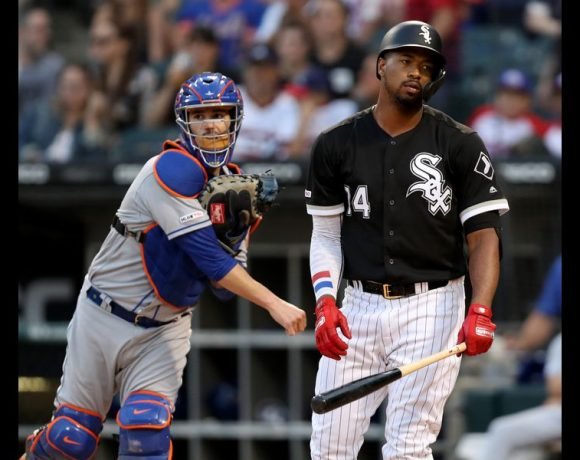
But trading for Andrew Shaw was a move that I cannot understand in any sense other than “this is a guy we are familiar with.” Shaw is still everything he was when the Hawks got rid of him three years ago, which is: not as good as he gets credit for, frustrating as shit with his penalties, and expensive relative to his skill level and production. Let’s just get this over with.

2018-19 Stats (with Canadiens)

63 GP – 19 G – 28 A – 47 P

52.43 CF% (-2.39 CF% Rel) – 50.29 oZS%

53.79 xGF% (-0.29xGF% Rel)

Avg. TOI: 15:55

A Brief History: The common line being used in defense of the trade when it happened was that Shaw was coming off a career year in Montreal. And that is correct. Shaw’s overall contribution of 47 points was by far a career high, marking the first time in that he exceeded the 40-point mark. He also did that despite missing 19 games, putting him on a ~62 point pace had he appeared in all 82 (which he has never done in his career, by the way). That seems good! “So, Adam, why do you hate this trade so much?” you may be asking. Well, dear reader, because all of that production will be as fleeting as a fart in the wind.

Shaw’s shooting percentage of 14.1 last year was the second highest of his career, and tied for the highest-mark he’s ever posted in a “full” season, with only his 16.2% conversion rate in 37 games in rookie campaign being better. Moreover, Shaw had shot right around the 10% mark in the each of the four years prior, going 10.2%, 9.2%, 9.4%, and 10.6% from 2014-15 to 2017-18. Now sure, that was after doing a 14.1 and 13.4 percent in his first two full years, including a 20 goal season in 2013-14, but since then he had been consistently mediocre and had never topped 15 goals until last season.

I would love to be wrong about Shaw here, but I feel like trading future 2nd and 3rd round picks for a guy like Shaw, who projects to regress hard and will still cost you almost $4-million against the salary cap for two more years is going to end up looking like a hugely stupid move in the future. The Hawks are essentially banking on last year not being a fluke, and if we know anything about hockey, it’s that you should always be speculative about a guy having a career year at 27 years old. It was smart to get rid of him when they did back in 2016, and they even ended up with Alex DeBrincat as a result. It would’ve been smarter to adopt a no returns policy on this one.

It Was The Best of Times: Shaw proves that I am a huge fucking idiot with no clue what he is talking about, and goes out there shooting and playing at a similar level to last season, showing that it was not a fluke. He plays in all 82 games, getting some run on multiple lines but ending up a surprising first line right wing with Jonathan Toews and Brandon Saad, and scores 20 goals for the second time in his career. By virtue of keeping up his ’18-’19 scoring pace and playing all 82, he tops 50 points for the first time in his career and gets close to 60, and he has a mutually beneficial relationship as a lineman with 19 and 20, helping to power the Hawks to the playoffs.

It Was the BLURST of Times: The luck pendulum swings to the other side on Shaw, and he ends up a $4-million fourth liner as he shoots 6% and can’t even top 10 goals, the first time in his career failing to meet that mark. Frustrated by his lack of scoring and overall suckage, he starts taking Tom Wilson-esque runs at opponents, and ends up with a career high PIM total, putting the Hawks shit ass PK on the ice way more often than it should be. As a result, the Hawks lose a number of games with opposing PPG’s as the difference, and it costs the Hawks a playoff spot in the end.

Prediction: Shaw ends up returning to what he really is – a somewhat versatile forward with a propensity for stupid plays, who shoots 10% and adds 12-15 goals for you and 30-35 points. I’ll go ahead and call it 14 goals and 18 assists for 32 points. That will all be well and fine on the third line, but it’s not much better than you could’ve gotten from the guys you already had here, and I’m damn near positive it’s not worth the draft capital the Hawks gave up to get him here.

Robin Lehner

Corey Crawford

Adam Boqvist

Carl Dahlstrom

Calvin de Haan

Erik Gustafsson

Duncan Keith

Slater Koekkoek

Olli Maatta

Connor Murphy

Drake Caggiula

Ryan Carpenter

Alex DeBrincat

David Kampf

Patrick Kane

Alex Nylander

Brendan Perlini

Brandon Saad

Zack Smith

Hockey

Patrick Kane is good at hockey. I am not really sure what more we should say about this guy. He’s been the best forward on this team for more than a decade and the best player for a few years, since Duncan Keith‘s mileage caught up to him. But you know all this. I’m not gonna say much in here that will surprise you. Let’s just do it.

2018-19 Stats

81 GP – 44 G – 66 A – 110 P

48.86 CF% (-0.72 CF% Rel) – 64.01 oZS%

44.94 xGF% (-1.32 xGF% Rel)

Avg. TOI: 22:28

A Brief History: In some ways it just about flew under the radar, largely because the Blackhawks had a terrible blue line and a CPR dummy in the crease when Crawford was hurt, but Patrick Kane had the best season of his career in 2018-19. His 110 points were four more than his previous high of 106 in his Hart winning 2015-16 season. Four points doesn’t feel like a lot, but the difference between 106 and 110 is probably a bit more significant than, say, 40 and 44. There is a level of dominance that Kane attained last year that we had previously seen, but it had been three years and we weren’t sure we’d see it again. Then he did it again, in his age-30 season. The guy might be a huge piece of shit, but he’s pretty much undoubtedly the best hockey player you or I will ever see suit up for this team in our lifetimes.

It Was the Best of Times: Realistically, it’s hard to expect Kane to be better than he was last year. Give that he turns 31 this November, I’d say the best case scenario for Kane and the Hawks is that he just plays at that same level again. This team has addressed the blue line (at least on paper) and the crease issues that resulted in his historic 2018-19 being wasted, and it’s reasonable to expect that players like Top Cat and Strome will improve this year and as such take some pressure off Kane. He can give the Hawks 100-ish points, give or take a few, that’s the ideal outcome here.

It Was the BLURST of Times: Being 31 catches up to Kane doesn’t  quickly, and his hands and feet are not even close to as quick as they once were. The vision and feel for the game are still there, because those things will never just go away, but Kane’s body just doesn’t cooperate at the level he’d like and as such the production falls off a bit. This all sounds dramatic, but I don’t think it would happen to the tune of him suddenly becoming a *bad* player, but just that he would be more in the 60-70 point range at season’s end. He did have just 76 points in 82 games in ’17-18, so it’s not like this would be appear as much of a fall-off overall, but that was his second lowest shooting percentage of his career, and the Hawks didn’t have much forward group to help in then. They do now. Anything less than 75 points from Kane this year would be a bad outcome.

Prediction: Kane continues his dominance, and with Cat and Strome taking the step forward that we wanted from Mitchell Trubisky but aren’t getting (I am sensitive about it, okay), his level of production does not fall off very much and finishes the year with 45 goals and 108 points. The Hawks make the playoffs and Kane finishes second in scoring, behind only Connor McDavid of the Oilers who miss the playoffs obviously, so Kane wins another Hart. He wills the Hawks to the playoffs, where they get railroaded in the first round.

Stats from NHL.com and Natural Stat Trick

Previous Previews

Robin Lehner

Corey Crawford

Adam Boqvist

Carl Dahlstrom

Calvin de Haan

Erik Gustafsson

Duncan Keith

Slater Koekkoek

Olli Maatta

Connor Murphy

Drake Caggiula

Ryan Carpenter

Alex DeBrincat

David Kampf

Hockey

Do you ever catch yourself? Maybe you’re sitting at dinner with a friend your significant other, talking about the news or whatever, and you have to stop a moment. A wide, ill-intentioned grin spreads across your face. You must look crazy. You start cackling like a maniac. You can’t stop laughing like you’re the fucking Joker. Your friend looks at you with deep concern in their eyes. People around you are staring. It’s uncomfortable for everyone. But you can’t help it. It’s just too hilarious to believe (You signed up for that look when you decided to write here – ED).

You just remembered that the Blackhawks got Alex DeBrincat in the second round.

Does that ever happen to you? Cuz, same. Now please come tell these cops I’m normal and bail me out of jail.

2018-19 stats

82 GP – 41 G – 35 A – 76 P

49.68CF% (0.48 CF% Rel), 59.75 oZS%

53.66 GF% (5.71 GF% Rel), 46.47 xGF% (0.93 xGF% Rel)

17:42 Avg. TOI

A Brief History: DeBrincat showed that his 2017-18 season was no fluke last year, building upon that and then going above and beyond the production. He became a nightmare for opposing penalty killers under Coach Cool Youth Pastor, posting 24 points (13G, 11A) with the extra man. You may be thinking that kind of PP success is artificially inflating his overall numbers, but as I detailed back in April during player reviews, that’s a pretty normal rate for elite scorers. Believe it or not, good offensive players score on the power play. This is news to Joel Quenneville.

DeBrincat also got something of a personal and personnel favor (folks, you get this kinda wordsmithing for just $3.99 a month, and that’s less than half it’s true value) in the form of the Dylan Strome trade. I don’t need to rehash it all, but obviously for Top Cat it must’ve been nice to get a linemate in Strome that A) he was familiar with and B) was not allergic to shooting the puck like Nick Schmaltz was. All of this resulted in Top Cat cementing himself as this team’s third best forward and likely has him positioned for a healthy contract extension this coming season.

It Was The Best of Times: DeBrincat continues to ascend with his offensive abilities, and being able to play with Strome for more of this season helps both of them elevate their games. It’s hard to ask too much more of a guy fresh off a 41-goal season, but DeBrincat is probably capable of pushing that number closer to 45, especially now that the Hawks will have a full season of the Colliton PP system. On top of that, his scoring ability becomes such a threat that defenses have no choice but to focus in on him, opening up the ice for him to use his vision and passing to find others, and he gets his assist total over 40 as well. He ends the seaon with 90+ points and leads the team in scoring, but not until after the Hawks lock him up at 6x$8.5M which will end up feeling like a huge discount.

It Was The BLURST of Times: The Colliton power play turns out to be a mirage, and even Top Cat can’t save it. Even with all the offensive talent the Hawks have, they return to the dark days of the early 2010’s (power play frustration wise, of course) and his production there drops to a meesly 10 points. Meanwhile, his linemates turn out to be huge duds, and he gets dragged down with them. He ends up with a paltry 55 points (oh, the horror!) and that 6x$8.5M extension feels a little expensive suddenly.

Preiction: It’s hard to ask much more from Top Cat than what we’ve gotten from him. He’s already done more than many scouts believed he would in the NHL, but that’s because hockey scouts are egg-brained. I’m somewhat inclined to believe that the Top Cat we saw last year is the Top Cat we will continue to see moving forward, though he’s certainly capable of giving or taking 10 more points. I predict he finishes the year with 43 goals and 40 assists, with something around 30 of the total points coming on the power play. Oh year, and he signs a 6x$8.5M extension. That feels fair, right?

Stats from NHL.com and Natural Stat Trick

Previous Previews

Robin Lehner

Corey Crawford

Adam Boqvist

Carl Dahlstrom

Calvin de Haan

Erik Gustafsson

Duncan Keith

Slater Koekkoek

Olli Maatta

Connor Murphy

Drake Caggiula

Ryan Carpenter

Hockey

For going on damn near three years now, it’s been obvious to anyone with a brain that the Blackhawks have had lacked a lot on the blue line. We knew that good ol’ Duncan Keith would never be able to keep up his cowboy ways at the elite level he had played at before, and there seemed to be little to-no-help on the way. Last year the Hawks desperately lacked an effective puck mover on the backend who could also defend well. Going into the offseason, they needed to find someone who could shut down the opponent in the defensive zone. Who could, ideally, take away half the ice the way Keith used to, even if not quite as well. They needed someone who could do all that while also being able to get the puck out of the zone once he had it, either by skating or passing. And if they could get all of that in one guy, that’d be ideal.

So they traded for Olli Maatta, who can do none of that.

2018-19 Stats (w/ Penguins)

60 GP – 1 G, 13 A, 14 P

46.51 CF% (-4.42 CF% Rel), 43.36 oZS%

53.75 GF% (-0.08 GF% Rel), 51.53 xGF% (-0.27 xGF% Rel)

15:27 Avg. TOI

A Brief History: At one point Maatta was considered one of the better prospects in the NHL, but due to a series of injuries both on and off the ice, including an unfortunate battle with cancer, he never fully delivered on all the promise. Once considered someone with high offensive upside, especially after having 9 goals and 29 points in 78 games during his rookie season, Maatta has struggled to produce since and has never topped either of those numbers, though he did have 29 points again in 2017-18 when he played all 82 games for the only time in his career. Last year he failed to match that scoring pace and ended up going on IR with yet another injury in March, this one an upper-body injury after taking an uncomfortable hit. He missed all but 5 games from that point on.

Maatta has settled somewhat nicely into your typically “defensive defenseman” role, as despite missing 22 games last year, he finished third on the Penguins in blocked shots and hits. If that sentence sounded positive, it was not meant to. Basically what that means is that despite being a quarter of the season, Maatta spent so much fucking time in his own defensive zone that he had no choice but to throw his dumb body in front of pucks, likely because he was tired of skating around, because that isn’t exactly a strength of his. Blocking a lot of shots is good when you’re Niklas Hjalmarsson, who is good at both preventing shots and getting in front of them, but when you’re getting face-fucked by the opponents at a near-54% clip and 4% below your own team rate, blocking those shots is less impressive skill and more necessary duty.

It Was the Best of Times: Just staying healthy for the full 82 would be a best-case scenario for Maatta as an individual, because again, he’s only done that once. As a player and contributor to the Hawks, it would be ideal if he can return to his scoring pace from ’17-’18 and could end up somewhere in that 23-29 point range. Expecting more than that is foolhardy, but it’s not unrealistic to think he could do that. Moreover, it’d be nice if he cleans up his shit in the defensive zone and is able to fight above the 50% mark on shot attempts. If he can do all of that and be a steady presence on the back end, this could end up being a not-terrible acquisition. On the other hand….

It Was the BLURST of Times: If Maatta plays like he did last year – getting brained by the other team and playing well below team rate on shot attempts, and getting by-and-large lucky on the overall goal differential, while also providing little to nothing of note from a production standpoint, Maatta runs the risk of compounding the issues that ailed the Hawks’ blue line last year rather than offering himself as a solution. If that does end up being the case, him getting injured – which he probably will – would not be such a bad outcome, as bad is that is to say and as harsh as that sounds.

Prediction: Maatta deals with some minor injury stuff but nothing too major, and plays more than 65 but less than 75 games for the Hawks. He makes a modest improvement in the CF% but still finishes below team rate and probably leads the team in blocked shots, which will earn him praise even though it probably shouldn’t. He won’t get back to 2017-18 production but will score 5 goals and 15 points, which will be fine but not make much of a difference.

Stats from NHL.com and Natural Stat Trick.

Previous Previews

Robin Lehner

Corey Crawford

Adam Boqvist

Carl Dahlstrom

Calvin de Haan

Erik Gustafsson

Duncan Keith

Slater Koekkoek

Hockey

One year after the Hawks spent an entire summer backhandely blaming him for them missing the playoffs in the 2017-18 season, Corey Crawford enters 2019 in something of a goalie competition for the long term. With new signee Robin Lehner coming off a career year an potentially primed to take this job out from under him, and his contract expiring after this year and no extension in place yet (which we will get to), Crawford might have some proving to do this year. Let’s dig in.

2018-19 Stats

39 GP – 14 W, 18 L, 5 OTL

.908 SV%, 2.93 GAA

.916 SV% – .920 PP SV% – .853 PK SV%

A Brief History: The Hawks placed a lot of hope in Corey Crawford A) not having jelly for a brain after his concussion-riddled 2017-18 season and B) not playing badly after a concussion-riddled season at 33. He started the year pretty well and actually made it up to halfway through December before he got bumrushed in the crease and had his head smash into the goalpost, giving him his second bad concussion in as many seasons and only raising further concerns about potential jelly brain. He missed two and half months after that before returning at the end of February.

Crawford played pretty fine for most of the season, but ended the year with his worst save percentage since 2011-12 and the worst GAA of his career. Which, really, that just says a lot about how fucking good has been throughout his career, but his overall numbers indicated more of a high-caliber backup goalie rather than the goaltender you want behind a Cup contender. Not that the Hawks are any sort of Cup contender, but you know they want to at least think they are.

It Was The Best of Times: Is it too cliche to say that the best case scenario for Crawford is just to make it through 2019-20 without suffering another brain issue? I feel like I’ve been something of a broken record saying this for a year and a half now, but at a certain point there needs to be more consideration for Corey Crawford’s long term health and not what his value is to a hockey team. This isn’t fucking football where players are essentially willingly mortgaging their long term brain health in the pursuit of sports glory. Sure hockey is physical, and as a goalie you do place yourself at a greater risk of head injury, but this guy’s ability to live a long and happy life should be paramount, at least to himself.

Soapbox aside, given the amount and severity of his head injuries recently, I have to admit I am not expecting a huge amount from Crawford this year. I don’t think that in his age-35 season after having missed more than 90 total games in the past two years (via both sitting out and injury), it is reasonable to think he will ever be a .920 guy again. But with the Hawks seemingly set to run the 1A/1B system with Crawford and Robin Lehner, I think if he can be just a little better than he was last year, maybe post a .910-.915 overall SV% while staying healthy, that will be an excellent year for Crawford and might even let the Hawks sneak in the playoffs.

It Was The BLURST of Times: The worst case scenario for Crawford is that he continues down the unfortunate side of being an over-30 NHL player with a tough recent rash (skypoint Marian Hossa) of injuries and misses a big chunk of the season to more ailments. I obviously pray that wouldn’t be another head injury, but being 35 in sports opens the possibility for more physical ailments as well. What would compound this as worse for Crawford (though maybe not for the Hawks) would be if Robin Lehner proves that his 2018-19 campaign was not a fluke and really grabs the Hawks’ crease by the balls, while Collin Delia proves to be a more than adequate backup with an extremely affordable contract, and the Hawks decide they’d rather move on to younger and less broken players. It would be understandable, but still difficult to process.

I truly pray this worst case scenario does not play out because it would result in Crawford getting the big time Jay Cutler teatment here in Chicago – despite being among the best at his position that the city has even seen, he will never have been appreciated as much as he should have been. But like, way better than Cutler ever was, and yet somehow appreciated even less. He was a top-5 goalie in the NHL for years and got none of the recognition either here or nationally, and the organization seems to have more disdain for him than he does for remaining sober at concerts. And the fans never got over the GLOVE SIDE bullshit that became a fucking stupid narrative in 2013 despite him really being their best player in those playoffs. And while Scott Darling did need to save them slightly in 2015, Crawford was dominant after getting the crease back and probably deserved that Conn Smythe as well.

Prediction: Crawford remains mostly healthy and plays at a similar level to last year, finishing with a .907 SV%. Overall he gets outshined by Robin Lehner, and the two combine for a .910 that keeps the Hawks competitive and they slip into the playoffs, where Lehner is the starter and Crawford only gets in if Lehner struggles. The Hawks re-sign Lehner to a longer-term deal and make it clear to Crawford that his roll going forward is as a year-to-year backup, because if we’ve learned anything throughout Stan Bowman’s tenure as GM it’s that he takes care of extensions for guys he thinks will be part of the future early, regardless of the risk (lookin at you, Nacho) and given that Crow hasn’t had that happen yet, the writing is already on the wall.

Stats from NHL.com and NaturalStatTrick.com

Previous Player Previews

Robin Lehner

Baseball

BOX SCORES

Game 1: Sox 6, Twins 4

Game 2: Sox 4, Twins 14

Game 3: Sox 4, Twins 0

There are few things as frustrating as the White Sox getting their shit kicked in by the Minnesota Twins, but also few things more incredible than the White Sox kicking the Twins’ shit in. This week we got to witness both of these things happen, and it was a little strange but given that Lucas Gi0lito shoved in Wednesday’s game for the dominant win, it felt far more satisfying. Any time we can beat the shit out of those lousy idiots up north is a good time. Let’s do this:

Ivan Nova has slowly grown on me this year, but I feel like it’s more like a disgusting zit and less like a nice beard. Not to say that Nova hasn’t been good, because he has been nothing short of solid in most of his starts for a while now (did I hedge this sentence enough?).  In reality, though, he was just so bad early in the season that he is now pitching less bad and this really is what the Sox were expecting and hoping for when they traded for him to be their innings eater rather than adding someone who could, you know, actually be a difference making starter.

– Fresh among a week in which Rick Renteria adopted the company line and told any fans who might criticize his lineup construction and in game decisions to kiss his ass, he made yet another extremely questionable and crticizable (?) decision by putting on a suicide squeeze with a two run lead and an 0-2 count in the seventh inning. Now to be fair, I also would probably rather not watch Yolmer Sanchez swing  a bat in an important situation, and it’s not like Ricky has a lot of options at his disposal (which I think was at the heart of his comments about critics), but I am just hoping that all of the bunting will go away next year when there is hopefully some real talent here.

– I do not want to talk much about Game 2, because it was very very bad. But Nelson Cruz is still fucking awesome and I am not looking forward to the Sox having to face him next year as well.

– Last comment about Game 2, but it’s tough to see Reynaldo Lopez get shelled after he had been having a strong second half of the season. Hopefully it was just one bad start and we move on.

– I am not sure what more I can say about Lucas Giolito at this point. The man is simply incredible, and it’s pretty cool to think that a huge part of his early struggles were mostly mental. It definitely seemed that way last year, and hearing about all of his neural pathway training (that inspired this recap title, thank you) was pretty fascinating. It was the kinda thing that makes you want to do the weird computer thing and figure out your own brain. But if you put me at full brain power I’d obviousbly be unstobbale and the whole world would be fucked.

– We should get Yoan Moncada back for this next series against the Rangers. So this team will become slightly more likeable and watchable. Thank you God.

Baseball

With the trade deadline gone and the White Sox well on their way to another top-10 draft pick, it’s not a secret that the remainder of this season means next to nothing for the big league club. The obvious catch is that it is still important that Yoan Moncada, Eloy Jimenez, Tim Anderson, Lucas Giolito, Reynaldo Lopez and (to a slightly lesser extent) Dylan Cease perform well moving forward. But outside of those six and a few bullpen arms, there is almost no one on the big league roster who should be considered a lock to be here next year, and even Lopez could be stretch in that regard. You could probably bet your house on Jose Abreu being here, but his performance this year casts some doubt on how worthy he really is of the extension he’s going to get. But I digress.

Looking even beyond next season, there is definitely no one presently on the team, aside from the aforementioned names, that belongs on any sort of Sox roster that is designed with contention in mind. Yolmer Sanchez looked at one point like a potentially useful utility guy for a winning team, but has been awful this year, currently the 59th-worst hitter in baseball according to FanGraphs wRC+. Ryan Cordell and Adam Engel are both near-automatic outs at the plate but solid defensively, so they might be 4th-outfielder types, but neither should be handed a roster spot automatically. James McCann is seemingly regressing to what he once was. The rest of the rotation sucks.

The team is not good. You get it.

Despite Rick Hahn’s stated plans to gather a “critical mass” of prospects, the Sox passed on the chance to add prospect depth to the organization at the deadline. They’ll tell us they kept Alex Colome because they want to compete next year, but really they just couldn’t get what they wanted for him because his peripheral numbers are unfavorable. They likely did keep Aaron Bummer and Jace Fry with contention on the mind, which is understandable but potentially misguided. But with all three still here and likely (though not guaranteed) to be on the 2020 Sox, it is clear that Hahn and company at least have a pipe dream of having a strong team next year.

And if they really do want to be in the thick of things in 2020, it’s time to start building that team now.

I wrote earlier this year that the White Sox should keep their foot on the accelerator when it comes to Luis Robert‘s war path rise through the minor leagues. By promoting him to AAA after just 56 games in AA, they showed that they are willing to do that, at least to the highest minor league level. But at this point, being in Charlotte just a waste of Robert’s time. He’s 18 games into his tenure there and has a .351/.420/.714 slash line with six homers and a 178 wRC+. And hitting the bouncy ball in a sandbox park like Charlotte has, it’s only going to get more superhuman. Robert is simply too tools-y and talented to be challenged at all by minor league pitching.

In the same vein, Nick Madrigal just made his AAA debut on Thursday, but any time spent there is as useful to him as Brent Seabrook is to the Blackhawks – the team thinks it will help, but really it will do nothing for you. Madrigal had solid but uninspiring numbers in High-A but really came on strong in AA, sporting a .341/.400/.451 line with a 152 wRC+ in a Birmingham stadium that suppresses offense like the ’85 Bears. Seriously, go look at the numbers on some of the Birmingham Barons players and you will truly appreciate that line from Madrigal. Getting the bump to AAA is nice and all, but with 70-hit tool that has led to a 2.8% K-rate in the minors and a Joey Votto-esque feel for the strike zone, Madrigal is also simply not going to struggle in AAA. In fact, given that he now gets to hit the same bouncy ball in that same Charlotte launch pad as Robert, his power numbers might see an uptick as well.

And if the Sox are really serious about contending in 2020, Robert and Madrigal need to not only be starting at center field and second base, respectively, but also hitting near at the top of the order. For that to happen, they need to be ready for MLB pitching from the moment they make an MLB lineup. And quite frankly, if that isn’t until mid-April, they likely will not be. Look no further than Eloy’s harsh two-month adjustment period, or Yoan Moncada‘s rough 2018 season as evidence. These guys are too good for the minors but will be seeing a caliber of pitching they almost never even dreamed of in the bigs, so the adjustments could admittedly be harsh. For the Sox to have any shot at the postseason, Robert and Madrigal will likely need to be effective in an MLB lineup as soon as possible, and Opening Day would be preferable.

Which is why getting them to Chicago needs to be done immediately. And I know what you’re going to say – the extra year of control is more valuable. 7 > 6 after all. But in reality, getting them to Chicago immediately would still give the Sox essentially seven years of control of these players. The only way you don’t get that seventh year is if you wait until September or Opening Day to get them here.

And you’ll have to forgive me if I don’t care about Jerry Reinsdorf’s 2027 books after the way the Machado/Harper pursuits turned out. Yes, I’m still bitter.

Finding those guys spots on this roster is easy. I already told you that Yolmer sucks, so DFA him (Sox are out of options, so minor assignments are not possible) and replace him with Madrigal. I’m tired of Cordell, so get Robert in here for him. You’re instantly better, and far, far more interesting.

There’s more they can do here, as well. Welington Castillo is expensive and terrible, and his only purpose in being here until even July 31 was to build potential trade value, and he didn’t do that. Ditch him and bring Zack Collins back, especially since you already started his service clock with no plans to actually use him. Ryan Goins has been pretty good, but the other shoe is going to drop for him soon and you know he won’t be here when you’re good, so just cut the losses there and bring up someone who might, like Danny Mendick.

The remainder of this season is neigh-worthless, with the wins and losses meaning absolutely nothing for this club. Quite frankly, I hope they lose more than they win and move up in the draft. But the process can still prove to be worthwhile, especially if the Sox put it to good use by getting their top-end prospects to the bigs now. Let them take their lumps for six or more weeks, give them an offseason to make the necessary adjustments, and head into 2020 with a group of confident young players and a Opening Day lineup that actually looks respectable, rather than one that is full of two-week placeholders for your real talent.

Baseball

Game 1 Box Score: Mets 5, White Sox 2 (F/11)

Game 2 Box Score: Mets 4, White Sox 2

Game 3 Box Score: Mets 4, White Sox 0

Just when you think that getting swept in a 4-game set by the Royals means the White Sox couldn’t possibly find a new low, they go and get swept by the Mets at home. I mean in some ways it’s unsurprising, because they had to face three of the Mets best pitchers, two of whom are considered among the absolute best in the game. And they had to do with a lineup that ended up missing Yoan Moncada and therefore was comprised of Tim Anderson, Yoan Moncada, and a bunch of replacement level or worse players. Then again, the same could kinda be said about the Mets, but they swept the damn set. So.

Let’s just do this.

– Yoan Moncada getting hurt is obviously a terrible thing, but the manner in which he was hurt makes it a little harder to swallow for me. It’s one thing to strain your hammy running the bases or making an extraordinary play, but doing it on a routine grounder that requires minimal movement is tough. He’s had a number of these seemingly innocuous moments turn into injuries that make him miss time, and some people are starting to call him soft. And it’s a little hard to argue. But he’s still the best player on this team and will be for hopefully the next decade, so I can learn to live with it I suppose.

– If there was any doubt that Lucas Giolito is deserving of recognition as one of the best pitchers in the game, him going toe to toe with Jacob DeGrom should remove it. Sure it was the Mets but it was still Jacob DeGrom, and Giolito kept his team in striking distance of a win for a long time. It’s too bad the lineup was made up of trash and couldn’t get more than one run, even it was Jacob DeGrom.

– The bullpen blowing both of the first games of this series was not exactly surprising, but Alex Colome being the one that blew Game 2 was a little disheartening, but also put many things into perspective. Obviously at that point it meant nothing for his trade value – the Sox had already not traded him before the deadline. And the reason for that was clearly that they didn’t get an offer they liked, because even if he is controllable for next year, relievers are always out there to be had so keeping him to contend does not make sense. It’s just what they’re saying they decided. Colome finally having an epic meltdown, however, did make sense. His peripherals have been bad for a while, which also allows them not getting what they wanted for him to make sense as well. Hopefully he cleans his shit up and actually helps this team contend next year.

Dylan Cease took another loss today moving his record to 1-4, but overall he was solid. He lost control as the game went on, but he finally went 7 and gave up only 3 ER, making it a quality start. Control is going to be an issue for him for a while, but him sorting it out in the bigs makes farmore sense than doing it in AAA. As long as he has the 70 grade fastball and a curveball that is at least a 60 (which is currently leading MLB in average break, by the way) he is going to have a strong ceiling.

Baseball

James McCann’s hot start to this season was easily one of the biggest surprises in the baseball world. He was, well, bad in his first few years in Detroit, never posting a wRC+ better than 95 and never quite adding much defensive value as a catcher either. Most teams will deal with a sub-par bat behind the plate if you can at least be a good framer and/or have a strong arm to control the run game, but if you’re not bringing any of that to the table, you have very little value to the team, even as a backup.

Quite honestly, McCann hasn’t brought much to the table in the framing or strong arm regards this year for the White Sox, either. He ranks 27th in MLB in average pop time, which has him in the 22nd percentile, and he is in the 14th percentile among catchers in framing, per Baseball Savant. There are plenty of good thoughts out there about how valuable framing actually is when we know that by and large umpires are just terrible at their jobs, but it’s still pretty easy to tell who is and isn’t good at it, and McCann is not.

However, the Sox haven’t exactly needed him to be that good at it because he has handled the pitching staff very well, and by “pitching staff” I of course mean Lucas Giolito. While it would unfair to Gio to attribute too much of his 2019 success to McCann, Giolito himself has lauded the catcher for his game planning and preparation, and all of that has certainly helped accentuate (you didn’t know I knew words like that, did ya) all of the mechanical adjustments Giolito made over the offseason to help turn him into the ace-level pitcher he has been this season.

And oh yeah, McCann was smacking the shit out of the ball, which certainly made it all worth it.

McCann’s offensive epiphany was certainly surprising but welcome in a lineup that, on opening day at least, didn’t figure to have more than three or four above average hitters, and that was assuming that Moncada and Anderson progressed (which happened) and Eloy’s natural hitting followed him (which took a month, but also has kinda happened). It was really nice to have a reliable bat that you could slot into the middle of the order and feel comfortable, and nobody in the world thought McCann would be that until it was actually happening. He was seemingly hitting everything, and felt especially reliable in clutch moments. And while I certainly enjoyed it, I always felt like I was waiting for the other shoe to drop.

By “shoe” I mean BABIP. Which until mid-June was over .400, but even when it eventually dipped below that mark on June 14 (if I used FanGraphs’ splits tool correctly) had already been steadily declining. In fact, it dropped quite quick in June, falling from .432 June 1 to .390 on June 14 (but rebounded to a .403 at the end of the month) and now sits at .383.

So, he had been getting very lucky at the beginning of the year, and in a lot of ways that was the source of his outbreak. But that luck at the plate lately has run out. Since the beginning of June he is slashing .241/.310/.447 with a wRC+ of 99, and his BABIP is a much more normal .325. All of that is fine. July is…. ugly.

Since July 1, he’s slashing .197/.234/.377 for a wRC+ of 58, and since coming back from the All-Star Break he is an abysmal .150/.190/.375 with a wRC+ of 42. However, his BABIP in July is just .290 and since the All-Star Break it’s (avert your eyes) .167. So he has been ridiculously unlucky of late, and the results have accordingly looked like Fels on the Monday after an all weekend bender (I have never actually seen what that looks like but I can only assume it’s not pretty) (You’re fired. – ED).

But the big concern is that when look back at his career, a .290 BABIP is actually not an indication of bad luck. In fact, it’d be on the higher end of McCann’s past numbers. In Detroit from 2014-2018 his BABIPs were .300 (in nine games), .325, .283, .300, and .282. That is certainly troublesome when you consider that his season line is currently at .383, meaning there is potential for some serious correction on the way and he could be in for a truly terrible second half.

Or to be a bit less rosy about it, we might be about to see the real James McCann stand up.

There are a lot of questions that are to be raised from this exercise, none of which I have actual answers to. Primarily, as I just referenced, I am curious if the first half had anything real in it that he can build on, or if it was built entirely on luck. There is also a good chance part of this is the result of playing so damn much, as he’s been in 72 of the Sox 99 games this year and caught 66 of them.

In the end, the 2019 season means very little to the White Sox outside of the most important players playing well, so if McCann struggles in the second half it won’t be that big of a deal, it will just make them less fun to watch. But 2020 figures to be very important for this organization, and as such we need to know what McCann is. He’s worth keeping for 2020 if only for Lucas Giolito, and hopefully Michael Kopech and Dylan Cease can have similar success.

The one conclusion I do draw from all of this, though, is that the White Sox should not head into this offseason assuming McCann is their primary catcher next year. More specifically, they should not let McCann’s presence on this roster preclude them from potentially being interested in a guy like Yasmani Grandal. McCann is a good catcher because of his prep work, but if the bat isn’t at least close to average, the glove and arm don’t do much for you either, and he’s back to backup status.

Hockey

Recently I have been reading The MVP Machine, a pretty interesting book about player development in baseball. The opening chapter delves into how the famous Moneyball story led to just about every team in baseball adopting a similar strategy in an effort to build their teams more intelligently. At one point they quote baseball analyst Phil Brinbaum, who once said, “You gain more by not being stupid than you do by being smart.” This quote stuck out to me as one that could apply far more to hockey than baseball, as there are far more GMs in hockey that work themselves into bad situations simply by being stupid rather than helping themselves out by being smart.

And lately Stan Bowman has been pretty fucking stupid.

Heading into this offseason, you would’ve been forgiven if you thought that Bowman’s shopping list was simultanesouly small and difficult to fulfill. Primarily, the Blackhawks were (read: still are) in need of at least two defensemen who could handle at least a top-4 assignment, or at least one or two who could play a much more competent third pair game than Slater Koekkoek and Gustav Forsling. They also could’ve used a more reliable backup/1A goalie, and maybe some forward depth or a top-six guy if they were lucky and the cost was right, but given that they were 8th in the NHL in goals scored but 30th in goals allowed last year, the defense clearly needed far more attention. So let’s call this shopping list: two defensemen, a goalie, and one or two versatile forwards.

On paper, you could easily say they’ve checked off this list. They traded for Calvin DeHann, Olli Maatta, and Andrew Shaw, and signed Robin Lehner and Ryan Carpenter in free agency. But if you’ve been paying attention, you know that even though this group consists of two defensemen, a goalie, and two versatile (used loosely) forwards, the Hawks have done very little to actually move the needle. Maatta stinks, DeHaan could be fine but might only have one shoulder, and neither of them bring anything of value in the puck-moving department which this team also desperately needed and still needs. Lehner could be a great signing, but he’s also been streaky in his career and no one will blame you if you feel icky about him given his politics. Carpenter’s contract bring almost no risk, but he’s a nothing forward and is supposed to be the PK savior apparently even though he was Vegas’ worst penalty killer. We already know Shaw sucks ass, and if you don’t think his 2018-19 production was a fluke I have a bridge to sell you.

A lot of the justification for moves like the above were that Bowman and Coach Cool Youth Pastor apparently thought this team lacked #grit and #toughness. We had “anonymous scouts” telling us that Shaw’s brand of bullshit was fine because of his contract, which it isn’t, and his contract is too much for his role. Maybe it’s the same anonymous scout that thought Top Cat was a 20-goal-max player.

But among all of this, the Hawks passed on a widely-consiered sure thing future 1D in Bowen Byram in favor of skilled but flawed center Kirby Dach at #3 overall. And then there was Tuesday when they went and traded Henri Jokiharju for Alex Nylander. The justification for these moves, both from the Hawks and from some analysts evaluating the trade, was that the Hawks are a team that likes to bet on skill even when there are question marks. And look, in some ways that is true – they did it with guys like Saad, Top Cat, and Strome, and those have all worked out well enough. There are other examples that didn’t work, too, but overall betting on skill is the correct approach, especially in the modern age of hockey.

The problem is that passing on Byram for Dach and trading Jokiharju for Nylander both represent the same mistake – passing on/getting rid of promising defensemen in order to bet on those skilled but flawed forwards. And when you have a giant pile of the Mind Flayer’s melted flesh legions on your blue line, you’re hardly in a position to do that, regardless of how you feel about Boqvist, Mitchell, Beaudin, etc.

But the real issue is that the moves in the Maatta/DeHann/Shaw vein and the moves in the Dach/Nylander vein are contradictory. It makes very little sense to simultaneously load your team up with grinders while also betting on skilled young players, because the best way to help those young players is to surround them with other skilled players. Only a maximum of four players at a time can play with Kane and Toews, and other than those two there are very few skilled veterans on this roster that can truly elevate the talent around them. Dach might not be in the NHL this year, but the Hawks should at least plan for scenarios where he is. If Nylander isn’t, the trade looks even worse. And if both of those guys end up on the roster, you can’t really construct a lineup that maximizes their help without ending up with someone on a third line who should be much higher.

All of this is indicative of a very real and very large problem on Madison St. The Blackhawks have no clue what they are doing. They admitted it earlier this year and then again after they signed Lehner – they don’t have a plan, they’re just flying by the seat of their pants and hoping it works out. They can tell us until they’re blue in the face that they’ve like Maatta and Nylander for years. They can tell us they wanted De Haan last year (if that was the case why did you not sign him instead of Brandon Fucking Manning?). There is zero reason to believe any of it is true, or that it is anything more than lip service. They are a team without a direction, and they keep making it harder on themselves to find one.