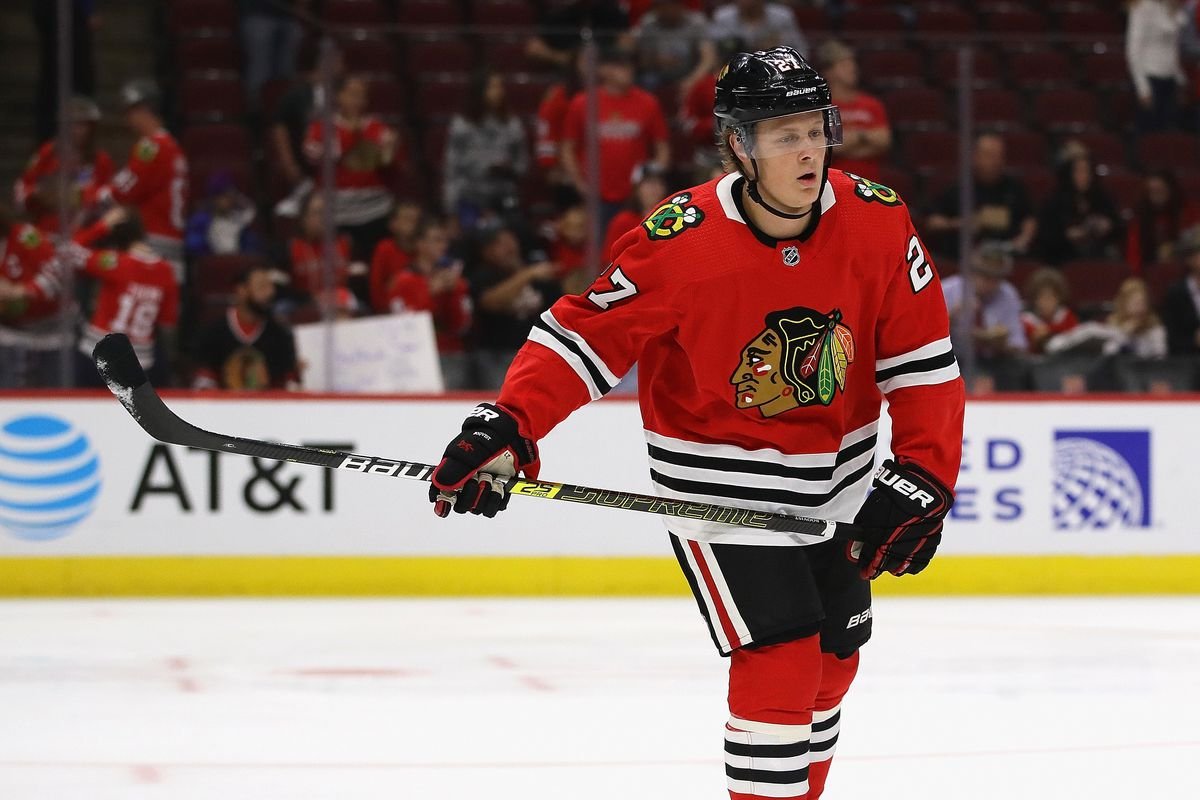
So they’ve gotta fire him right? They’re gonna fire him. They should fire him. Feather, Hess, Sam, Me. No subscription, audio after the break. (more…)
Author: McClure
-

Game #13 – Hawks at Ducks Preview – So Far Away
 at
at 
Game Time: 7:00PM CST
TV/Radio: NBC Sports Chicago, WGN-AM 720
Wabbit Season: Anaheim CallingAfter the absolute shit show that was last night on Figeuroa, the Hawks venture a bit south to complete the Southern California two-step, and hope they don’t once again trip over their own dicks on their way to hell.
-

Live From The Five Hole – Hybrid Moments
Instead of dressing up and talking about something else this Halloween, we’re just going to be scary. No subscription necessary, audio after the jump.
-

Game #10 – Kings vs. Hawks Preview – Shadows Of The Empire
 vs
vs 
Game Time: 6:00PM CDT
TV/Radio: NBC Sports Chicago, WGN-AM 720
Keep Pretending Drew Doughty Isn’t A Rapist: Jewels From The CrownOne thing about hockey’s often asinine scheduling that can be construed as a positive is that teams rarely have to marinate longer than 48 hours on bad losses, even if it comes at the expense of both sides playing their third in 4 nights having both played on the road yesterday, as is the case tonight on West Madison with the visiting Kings. And it’s a pretty clear sign that both teams suck when they are each looking across the bench and seeing an opportunity to get on track.
-
Game #8 – Flyers vs Hawks Preview – Burn After Writing
 vs
vs 
RECORDS: Flyers 3-3-1 Hawks 2-3-2
PUCK DROP: 7:30PM CDT
TV/RADIO: NBC Sports Chicago, ESPN+, WGN-AM 720
BAM, LEAVE YOUR FATHER ALONE: Broad St. HockeyThe homestand at the United Center turns down the final stretch for the Hawks with tonight being the 6th of their seven straight on West Madison, and they’ll welcome their Prague travel mates the Philadelphia Flyers, wrapping up the season series between the two of them before the calendar hits November in another brilliant bit of NHL scheduling.
Since returning home from Europe, things have been back and forth for the Cold Ones, at one point losing four straight (three in regulation), and did so on a Western Canadian swing to boot, so at least they have a plausible travel excuse for their uneven play to this point. Most recently they pretty easily disposed of the Knights on Monday night prior to Vegas being here, though they did so early and often on Oscar Dansk appearing in his first NHL game in two years. Regardless, points in October and against overmatched goalies still count, and the Flyers are going to need every win they can get in a suddenly ultra competitive Metropolitan Division.
While Carter Hart hasn’t gotten off to a fantastic start (.907 at evens, .890 overall), which also included getting the hook in a 6-3 ass waxing in Edmonton, he’s going to get the bulk of the starts in net even if The Terminal Case Of Brian Elliott has been solid in his two starts. If the long term goal is to finally develop a stable goaltending presence in Philly, Hart is going to have to work through some of this stuff, and Alain Vigneault and the Flyera brass will have to resist the temptation of chasing spurious playoff hopes behind the aging and always flattering-to-deceive Elliott. It will he Hart’s net tonight, based on reports from the Flyers’ skate.
In front of him, AV seems to have figured out his defensive pairings with all three of them solidly in the black. Ivan Provorov is the defacto #1 here, at least when pointed towards the other net, though he’s not totally helpless in his own end. He’s paired with Matt Niskanen, whose cowboy days are probably over, but is still smart enough with the puck to keep things moving. Shayne Gostisbehere has been relegated to the third pairing with Robert Hagg, and getting the choice zone starts and matchups has helped give the Flyers push on all three pairings. That’s been possible with the emergence of Travis Sanheim as a legit top-4 defenseman, and he’s baby sat by Justin Braun on the second pairing.
Up front, the Flyers have been jumbling things around recently, and they at least worked against Vegas for a night fairly solidly. Claude Giroux has moved back to the middle with his familiar running mate Jakub Voracek on his right and JVR on his left. Neither Giroux or JVR have scored yet this year, but they’re both certainly in a position to break that bubble given how that line is constructed. Sean Couturier slots behind Giroux and will take whatever AV deems as the toughest matchup on a nightly basis. He’ll have Travis Koneckny on his right, who hasn’t stopped scoring since game 1 in Prague, and leads the team with 10 points. Oscar Lindblom is on the opposite side, and as a unit this line is currently sporting a 65 share of attempts in 50 minutes of even strength time together. Offseason acquisition Kevin “Captain Stairwell” Hayes has found himself as the third center already, which is probably where he ideally slots in on a good team anyway regardless of his paycheck. 2018 first rounder Joel Farabee is ahead of schedule on Hayes’ wing, and made his NHL debut against Vegas on Monday. Chris Stewart somehow caught on to the Flyers’ roster on a PTO, so he and Michael Raffl will assuredly contribute a very irritating goal at some point this evening from the fourth line.
As for the Men of Four Feathers, though the process against a better Vegas team on Tuesday was quite solid for 58 minutes, the results still need to be there, and Coach Kelvin Gemstone will now have to do some regrouping of things now that once again Connor Murphy is having crotch issues. With Murphy out, Slater Koekkoek will get his spot in the lineup, and Dennis “I Have The Name Of A Grandfather” Gilbert has been recalled to take the roster spot. Given the tools available, moving Calvin de Haan to the right side with Duncan Keith is about the only reasonable move here, as de Haan’s game is equally as positionally sound as Murphy’s though not quite as mobile. The hope is that trust can still be maintained from Keith, who has looked sprightly in cutting off entry attempts at his own blue line since being paired with Murphy, reminiscent of four or five years ago. Olli Maata will continue to bail water for Brent Seabrook, the only pairing that will remain unchanged. Koekkoek will play with Erik Gustafsson, whose play in a contract year has been unbelievably bad. Viewers at home with leftover pairs of eclipse glasses from two summers ago would be wise to throw those on when these two are out there.
The forward lines for the Hawks will stay the same, and while these groups haven’t been offensively bad at any juncture, they’re certainly not getting home as much as they need to. Alex DeBrincat is fighting it for the first time in his young career, and as was covered on the podcast last night, he’s still within the margins of getting his normal looks/attempts/chances, so it could be just a case of being snake bitten. But ADB is one of two “bad shot makers” that the Hawks have, and if it one of them isn’t finishing, then the results look like they have so far this season. That’s not likely to change tonight, as Coach Vinny Del Colliton would be very wise to keep Kirby Dach away from Coots as much as his humanly possible before he extinguishes any desire the rookie might have in continuing a career in the sport. Robin Lehner gets the net again tonight after another strong performance, though let it be said that Corey Crawford hasn’t exactly been benched, as Crow currently has a .930 mark at even strength, but the .615 while shorthanded might just be torpedoing that a little bit, and SHOULD rebound a little the longer the season progresses.
Alain Vigneault might be a lot of things (a penis and a crybaby for starters), but he’s not a moron, and he basically pioneered the usage of drastically unbalanced zone starts in Vancouver, and he has such a weapon in Couturier now here in Philadelphia. This stretch at home has shown that Beto O’Colliton is at least willing to get elbow deep into matchups when he’s got last change, but tonight he’ll be playing chess against a guy who has a lot more experience in doing so. There are matchups to be found against this Flyers bottom six, but he’ll need to be diligent in finding them. And stay out of the goddamn box (looking at you, 65). Let’s go Hawks.
-
Live From The Five Hole – The Game Needed Me
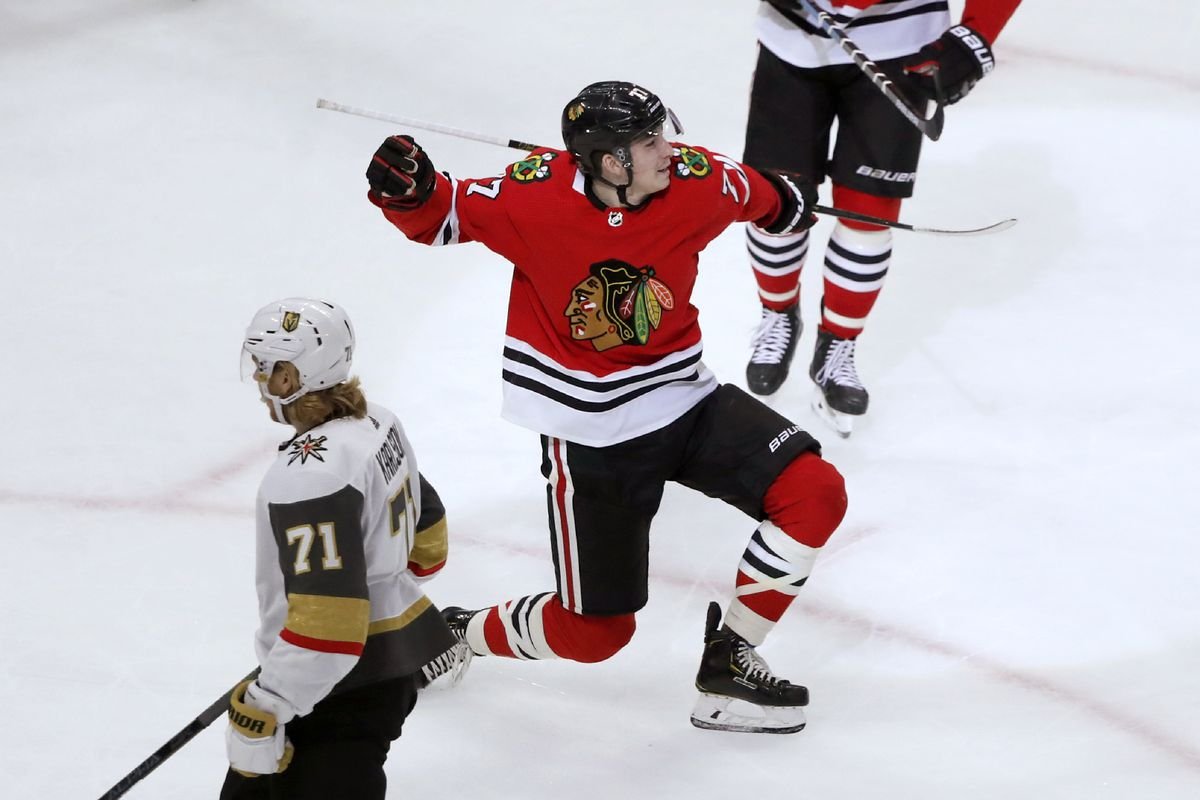
Sam, Slak, and I discuss the call up of Kirby Dach and how he’s looked so far, and how to jump start what’s been a fairly sub par offense to this point. Always free, always after the jump.
-

Game #5 – Blue Jackets vs. Hawks – Far Behind
 vs
vs Game Time: 7:30PM CDT
TV/Radio: NBC Sports Chicago, ESPN+, WGN-AM 720
Bring Back Craig Krenzel: The CannonTonight on West Madison the 7 game homestand rounds the turn and kicks into the final stretch, with four games in the next seven days starting with the visiting Blue Jackets, who have won their last two games, and currently sit at 3-3-0.
-
Live From The Five Hole – Hole In The Earth
After the week long layoff, the Hawks finally have played at least enough games to pretend to have some thoughts regarding, so Fifth Feather John, Sam, and myself have things to tell everyone out there in podcast land. No subscription required, audio after the jump.
-
Game #4 – Oilers vs. Hawks – Tension In The Ranks
 vs
vs 
Game Time: 7:30PM CDT
TV/Radio: NBC Sports Chicago, NHL Network, SportsNet 1, WGN-AM 720
Royal Oil: Copper ‘n Blue, Oilers NationAs the homestand nears its halfway point the Hawks still find themselves winless on the season, and the schedule has done them zero favors with a very early season tilt against the suddenly shit-hot Oilers and arguably the fastest player in the history of the game.
-

Game #2 – Sharks vs. Hawks Preview – Shield Your Eyes
 vs
vs Game Time: 7:30PM CDT
TV/Radio: NBC Sports Chicago, WGN-AM 720
Trillions of Tech Dollars Won’t Solve Homelessness Because It Is Cruel: Fear The FinNo, unfortunately the season isn’t already over after one game 8000 miles away a week ago. In fact, there are still another 80 of these to get through after tonight’s home opener against the visiting Sharks, which will kick off a seven game homestand, which might be the longest this team has had in over a decade. And fortunately for them, tonight’s opponent comes in as an abject mess.